

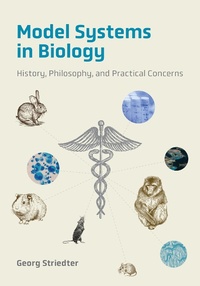
Model Systems in Biology
History, Philosophy, and Practical Concerns
Published on 23. August 2022
304 pages
978-0-262-37003-5 (ISBN)
Description

How biomedical research using various animal species and in vitro cellular systems has resulted in both major successes and translational failure.
In Model Systems in Biology, comparative neurobiologist Georg Striedter examines how biomedical researchers have used animal species and in vitro cellular systems to understand and develop treatments for human diseases ranging from cancer and polio to Alzheimer's disease and schizophrenia. Although there have been some major successes, much of this "translational" research on model systems has failed to generalize to humans. Striedter explores the history of such research, focusing on the models used and considering the question of model selection from a variety of perspectives-the philosophical, the historical, and that of practicing biologists.
Striedter reviews some philosophical concepts and ethical issues, including concerns over animal suffering and the compromises that result. He traces the history of the most widely used animal and in vitro models, describing how they compete with one another in a changing ecosystem of models. He examines how therapies for bacterial and viral infections, cancer, cardiovascular diseases, and neurological disorders have been developed using animal and cell culture models-and how research into these diseases has both taken advantage of and been hindered by model system differences. Finally, Striedter argues for a "big tent" biology, in which a diverse set of models and research strategies can coexist productively.
In Model Systems in Biology, comparative neurobiologist Georg Striedter examines how biomedical researchers have used animal species and in vitro cellular systems to understand and develop treatments for human diseases ranging from cancer and polio to Alzheimer's disease and schizophrenia. Although there have been some major successes, much of this "translational" research on model systems has failed to generalize to humans. Striedter explores the history of such research, focusing on the models used and considering the question of model selection from a variety of perspectives-the philosophical, the historical, and that of practicing biologists.
Striedter reviews some philosophical concepts and ethical issues, including concerns over animal suffering and the compromises that result. He traces the history of the most widely used animal and in vitro models, describing how they compete with one another in a changing ecosystem of models. He examines how therapies for bacterial and viral infections, cancer, cardiovascular diseases, and neurological disorders have been developed using animal and cell culture models-and how research into these diseases has both taken advantage of and been hindered by model system differences. Finally, Striedter argues for a "big tent" biology, in which a diverse set of models and research strategies can coexist productively.
More details
Other editions
Additional editions
Book
08/2022
MIT Press
€53.23
Shipment within 10-20 days
Person
Georg Striedter is Professor in the Department of Neurobiology and Behavior at the University of California, Irvine. He is the author of two books on nervous system evolution, as well as an introductory college-level textbook, Neurobiology: A Functional Approach.
Content
Preface vii
1 Crises in Biomedical Research 1
2 Philosophy of Models in Biology 17
3 A History of Animal Models 43
4 A History of In Vitro Models 77
5 Models and Therapies: Infectious Diseases, Cardiovascular Disease, and Cancer 107
6 Neurological Disorders: Trials and Tribulations 139
7 Diagnosis and Recommendations 175
Appendix 207
References 213
Index 283
1 Crises in Biomedical Research 1
2 Philosophy of Models in Biology 17
3 A History of Animal Models 43
4 A History of In Vitro Models 77
5 Models and Therapies: Infectious Diseases, Cardiovascular Disease, and Cancer 107
6 Neurological Disorders: Trials and Tribulations 139
7 Diagnosis and Recommendations 175
Appendix 207
References 213
Index 283
