

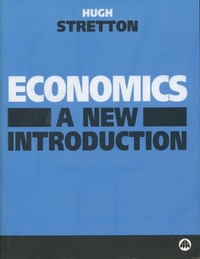
Economics
A New Introduction
1st Edition
Published on 20. October 1999
864 pages
978-1-84964-793-9 (ISBN)
Description

This book provides a fresh introduction to real economics. Highlighting the complex and changing nature of economic activity, this wide-ranging text employs a pragmatic mix of old and new methods to examine the role of values and theoretical beliefs in economic life and in economists' understanding of it.
It attends to the problems which have come with high productivity, rapidly changing technology and skills, changing proportions of earning and non-earning years in most people's lives, and a faltering revolution in childhood and parenting which has brought stress and over-work for many women.
It addresses such issues as rising poverty, inequality, insecurity and the slow progress of environmental reform. In focusing on such abuses of affluence the text draws on institutional, Keynesian, green and feminist theories, while emphasising all approaches to understanding economic life.
It attends to the problems which have come with high productivity, rapidly changing technology and skills, changing proportions of earning and non-earning years in most people's lives, and a faltering revolution in childhood and parenting which has brought stress and over-work for many women.
It addresses such issues as rising poverty, inequality, insecurity and the slow progress of environmental reform. In focusing on such abuses of affluence the text draws on institutional, Keynesian, green and feminist theories, while emphasising all approaches to understanding economic life.
Reviews / Votes
'Exactly what is needed for the thoughtful and concerned student. It introduces the reader to the many different skills required in economics: analysis, a knowledge of history and institutions, philosophical concepts, quantitative precision, judgement, relevance and a sense of time and place.' -- G.C. Harcourt, Cambridge University 'Extremely well-written ... blends a basic grounding in theory with well-judged and genuinely interesting case studies. The text, unlike many others in the field, is actually readable and enjoyable and should attract students rather than repel them as so many do' -- Derek Braddon, University of the West of EnglandMore details
Edition
1. Auflage
Language
English
Place of publication
London
United Kingdom
Target group
Professional and scholarly
Edition type
Digital original
Illustrations
b&w tables
File size
11,82 MB
ISBN-13
978-1-84964-793-9 (9781849647939)
Copyright in bibliographic data and cover images is held by Nielsen Book Services Limited or by the publishers or by their respective licensors: all rights reserved.
Schweitzer Classification
Other editions
Person
Hugh Stretton studied law and classics at Melbourne University, history at Oxford University, and
economics as a visiting fellow at Princeton University. He has been a Fellow and Dean of Balliol College, Oxford and taught at Smith College, Massachusetts, Professor of History and Research Fellow in Economics at the University of Adelaide. He is a Fellow of the Australian Academies of the Humanities and the Social Sciences. His most recent book is Public Goods, Public Enterprise, Public Choice: Theoretical Foundations of the Contemporary Attack on Government (coauthored with Lionel Orchard).
economics as a visiting fellow at Princeton University. He has been a Fellow and Dean of Balliol College, Oxford and taught at Smith College, Massachusetts, Professor of History and Research Fellow in Economics at the University of Adelaide. He is a Fellow of the Australian Academies of the Humanities and the Social Sciences. His most recent book is Public Goods, Public Enterprise, Public Choice: Theoretical Foundations of the Contemporary Attack on Government (coauthored with Lionel Orchard).
Content
PART ONE: STUDYING ECONOMICS
1. What you can know, what you can't know
2. Causes & effects (1) The need to select
3. Causes & effects (2) How to select
4. Explanations and equations
5. The controversial language of economics
6. Efficiency, welfare and the scope of economics
7. Skills and values you will need
PART TWO: ECONOMIC GROWTH AND CHANGE
8. Understanding growth and change
9. Theories of economic growth
10. Institutional studies of economic
development
11. Some economic histories
12. Changing modes of production and sources of income
13. Technology
14. Wants
15. Childhood
16. Threatened social capital
17 Threatened natural resources
18. The rich democracies now
PART THREE: DEMANDS FOR GOODS & SERVICES
19. Dual demands: for goods & services, and for modes of supply
20. How are wants and tastes formed?
21. How do prices, incomes and tastes
influence demand?
22. The elasticity of demand
PART FOUR: THE PRODUCTIVE INSTITUTIONS
23. People as producers
24. Household histories
25. Household capital
26. Housing policies
27. Households: a summary
28. Business powers
29. Theories about firms' purposes
30. How firms work
31. Costs of production: analysis
32. Costs of production: four ways to fix wages
33. Costs of production: how firms minimize their costs
34. How firms price their products
35. How firms invest
36. What private enterprises need from
government: a summary
37. Public growth
38. Public efficiency
39. What public enterprises need from government
PART FIVE: THE DISTRIBUTIVE INSTITUTIONS
40. Market theory
41. Market practice
42. Market examples
43. The composition & distribution
of wealth
44. The composition & distribution of income
45. Income policies
46. Taxation
PART SIX: ECONOMIC STRATEGY
47. The parts and the whole
48. Economic structure
49. How free should trade be?
50. Money and banking: national
51. Money and banking: international
52. Inflation
53. Employment
54. Global markets: Interactive effects of inadequately governed economic structure, trade, banking, exchange and employment
55. An open economy
56. A federal economy
57. Free-trading independence
58. Protected independence
59. Ex-communist options
60. Democracy in a global economy
Index
1. What you can know, what you can't know
2. Causes & effects (1) The need to select
3. Causes & effects (2) How to select
4. Explanations and equations
5. The controversial language of economics
6. Efficiency, welfare and the scope of economics
7. Skills and values you will need
PART TWO: ECONOMIC GROWTH AND CHANGE
8. Understanding growth and change
9. Theories of economic growth
10. Institutional studies of economic
development
11. Some economic histories
12. Changing modes of production and sources of income
13. Technology
14. Wants
15. Childhood
16. Threatened social capital
17 Threatened natural resources
18. The rich democracies now
PART THREE: DEMANDS FOR GOODS & SERVICES
19. Dual demands: for goods & services, and for modes of supply
20. How are wants and tastes formed?
21. How do prices, incomes and tastes
influence demand?
22. The elasticity of demand
PART FOUR: THE PRODUCTIVE INSTITUTIONS
23. People as producers
24. Household histories
25. Household capital
26. Housing policies
27. Households: a summary
28. Business powers
29. Theories about firms' purposes
30. How firms work
31. Costs of production: analysis
32. Costs of production: four ways to fix wages
33. Costs of production: how firms minimize their costs
34. How firms price their products
35. How firms invest
36. What private enterprises need from
government: a summary
37. Public growth
38. Public efficiency
39. What public enterprises need from government
PART FIVE: THE DISTRIBUTIVE INSTITUTIONS
40. Market theory
41. Market practice
42. Market examples
43. The composition & distribution
of wealth
44. The composition & distribution of income
45. Income policies
46. Taxation
PART SIX: ECONOMIC STRATEGY
47. The parts and the whole
48. Economic structure
49. How free should trade be?
50. Money and banking: national
51. Money and banking: international
52. Inflation
53. Employment
54. Global markets: Interactive effects of inadequately governed economic structure, trade, banking, exchange and employment
55. An open economy
56. A federal economy
57. Free-trading independence
58. Protected independence
59. Ex-communist options
60. Democracy in a global economy
Index
