


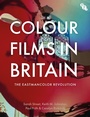
Colour Films in Britain
The Eastmancolor Revolution
1st Edition
Published on 18. November 2021
400 pages
978-1-911239-60-4 (ISBN)
Description

The story of Eastmancolor's arrival on the British filmmaking scene is one of intermittent trial and error, intense debate and speculation before gradual acceptance. This book traces the journey of its adoption in British Film and considers its lasting significance as one of the most important technical innovations in film history.
Through original archival research and interviews with key figures within the industry, the authors examine the role of Eastmancolor in relation to key areas of British cinema since the 1950s; including its economic and structural histories, different studio and industrial strategies, and the wider aesthetic changes that took place with the mass adoption of colour.
Their analysis of British cinema through the lens of colour produces new interpretations of key British film genres including social realism, historical and costume drama, science fiction, horror, crime, documentary and even sex films. They explore how colour communicated meaning in films ranging from the Carry On series to Monty Python's Life of Brian (1979), from Lawrence of Arabia (1962) to A Passage to India (1984), and from Goldfinger (1964) to 1984 (1984), and in the work of key directors and cinematographers of both popular and art cinema including Nicolas Roeg, Ken Russell, Ridley Scott, Peter Greenaway and Chris Menges.
Through original archival research and interviews with key figures within the industry, the authors examine the role of Eastmancolor in relation to key areas of British cinema since the 1950s; including its economic and structural histories, different studio and industrial strategies, and the wider aesthetic changes that took place with the mass adoption of colour.
Their analysis of British cinema through the lens of colour produces new interpretations of key British film genres including social realism, historical and costume drama, science fiction, horror, crime, documentary and even sex films. They explore how colour communicated meaning in films ranging from the Carry On series to Monty Python's Life of Brian (1979), from Lawrence of Arabia (1962) to A Passage to India (1984), and from Goldfinger (1964) to 1984 (1984), and in the work of key directors and cinematographers of both popular and art cinema including Nicolas Roeg, Ken Russell, Ridley Scott, Peter Greenaway and Chris Menges.
More details
Edition
1. Auflage
Language
English
Place of publication
United Kingdom
Publishing group
Bloomsbury Publishing PLC
Illustrations
153 colour illus
ISBN-13
978-1-911239-60-4 (9781911239604)
Copyright in bibliographic data and cover images is held by Nielsen Book Services Limited or by the publishers or by their respective licensors: all rights reserved.
Schweitzer Classification
Other editions
Additional editions
Book
12/2021
BFI Publishing
€34.00
Shipment within 3-4 weeks
Persons
Sarah Street is Professor of Film at the University of Bristol, UK. Her publications on colour film include Colour Films in Britain: The Negotiation of Innovation, 1900-55 (2012), three co-edited collections: Color and the Moving Image: History, Theory, Aesthetics, Archive (2012) and British Colour Cinema: Practices and Theories (2013) (both with Simon Brown and Liz Watkins), and The Colour Fantastic: Chromatic Worlds of Silent Cinema (with Giovanna Fossati, Victoria Jackson, Bregt Lameris, Elif Rongen-Kaynakci and Joshua Yumibe).
Keith M. Johnston is Reader in Film & Television Studies at the University of East Anglia, UK. He is also the author of Coming Soon: Film Trailers and the Selling of Hollywood Technology (McFarland & Co, 2009), Science Fiction Film: A Critical Introduction (Bloomsbury, 2011), and co-editor of Ealing Revisited (BFI 2012).
Paul Frith is a Research Associate at the University of East Anglia, UK. He has published articles in The Journal of British Cinema and Television and Horror Studies.
Carolyn Rickards is a Research Associate at the University of Bristol, UK. She has published articles in the Journal of British Cinema and Television and a chapter in Fantasy / Animation: Connections Between Media, Mediums and Genres (2018).
Keith M. Johnston is Reader in Film & Television Studies at the University of East Anglia, UK. He is also the author of Coming Soon: Film Trailers and the Selling of Hollywood Technology (McFarland & Co, 2009), Science Fiction Film: A Critical Introduction (Bloomsbury, 2011), and co-editor of Ealing Revisited (BFI 2012).
Paul Frith is a Research Associate at the University of East Anglia, UK. He has published articles in The Journal of British Cinema and Television and Horror Studies.
Carolyn Rickards is a Research Associate at the University of Bristol, UK. She has published articles in the Journal of British Cinema and Television and a chapter in Fantasy / Animation: Connections Between Media, Mediums and Genres (2018).
Content
Introduction
Section 1: What is Eastmancolor?
1. Branding and Marketing the Eastmancolor Revolution
2. Eastmancolor, the British Film Industry, and Institutions
Section 2: Eastmancolor and British Genre Films
3. Comedy and Satire
4. Social realism / contemporary drama
5. The Colour of Crime
6. Fantasy, Horror and Science Fiction
7. Historical and costume films
8. Musicals, pop films, and the concert film
Section 3: Eastmancolor Outside the Mainstream
9. Key colourists, 1955-85
10. Art, experimental, and avant-garde practices
11. Eastmancolor and the Amateur Film
12. Short and Documentary Films
13. The Colour of Sex? Eastmancolor and the Sex Film
Section 4: Preservation and Restoration
14. Cultures and Practices of Preservation and Restoration
Conclusion
First Appendix: Eastmancolor Film List, 1954-85
Second Appendix: Technical Appendix
Section 1: What is Eastmancolor?
1. Branding and Marketing the Eastmancolor Revolution
2. Eastmancolor, the British Film Industry, and Institutions
Section 2: Eastmancolor and British Genre Films
3. Comedy and Satire
4. Social realism / contemporary drama
5. The Colour of Crime
6. Fantasy, Horror and Science Fiction
7. Historical and costume films
8. Musicals, pop films, and the concert film
Section 3: Eastmancolor Outside the Mainstream
9. Key colourists, 1955-85
10. Art, experimental, and avant-garde practices
11. Eastmancolor and the Amateur Film
12. Short and Documentary Films
13. The Colour of Sex? Eastmancolor and the Sex Film
Section 4: Preservation and Restoration
14. Cultures and Practices of Preservation and Restoration
Conclusion
First Appendix: Eastmancolor Film List, 1954-85
Second Appendix: Technical Appendix
