

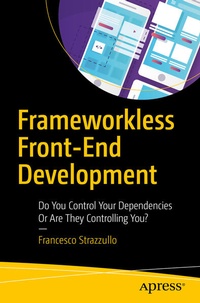
Frameworkless Front-End Development
Description

Explore an alternative method of front-end application development without using frameworks or third-party libraries. This book provides you with the required skills and freedom to consider a "no framework" approach when choosing a technology for creating a new project.
You'll work through the most important issues in a clear and sensible way, using practical methods and tools to gain an understanding of non-functional requirements. This book answers questions on important topics such as state management, making a routing system, creating a REST client using fetch, and reveals the trade-offs and risks associated with choosing the wrong framework or tool for your project, as well as providing sustainable, functional alternatives.
Frameworkless Front-End Development breaks down the concept of technical debt and the ways in which a framework can impact the lifespan of a project. Along with gaining a comprehensive andclear guide on coding effectively from scratch without frameworks, you will also learn some principles of technical decision-making.
WHAT YOU'LL LEARN:
- Review how DOM manipulation works
- Manage the state of a front-end application with different patterns
- Safely migrate existing applications to a new framework or to frameworkless code
- Use decision-making tools such as a Framework Compass Chart and an Architectural Clash
- See how the choice of frameworks can affect the 'health' and lifespan of a codebase
WHO IS THIS BOOK FOR:
JavaScript developers; technical managers responsible for helping teams choose technology stacks for new projects; consultants intending to refactor existing JavaScript front-end codebases
More details
Other editions
New editions
Additional editions
Person
Francesco Strazzullo is an experienced front-end engineer, JavaScript trainer and co-founder of the Marca User Group (MUG). He has presented at tech conferences and meet-ups around Europe, is a technical reviewer for multiple tech publishers, and writes technical articles on his blog. He is always enthusiastic about trying out new APIs, and he is a firm believer that the best way to learn something new is to explain and teach it to somebody else. With a group of friends and fellow developers, he has founded the Frameworkless Movement, a group interested in developing software without using frameworks and spreading knowledge about making informed decisions about the choice and use of frameworks in front-end software development.
Content
1. Let's Talk About Frameworks.- 2. Rendering.- 3. Managing DOM Events.- 4. Web Components.- 5. HTTP Requests.- 6. Routing.- 7. State Management.- 8.The Right Tool for the Right Job.
