

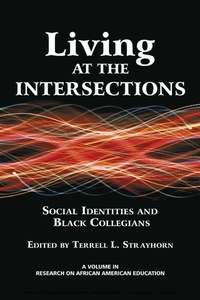
Living at the Intersections
Social Identities and Black Collegians
1st Edition
Published on 1. May 2013
303 pages
978-1-62396-149-7 (ISBN)
Description

Living at the Intersections: Social Identities and Black Collegians brings together 21 diverse authors from 14 different institutions, including our nation's most prestigious public and private universities, to advance the use of intersectionality and intersectional approaches in studying Black students in higher education.
Chapters cover a diversity of topics, ranging from spirituality to sexuality and masculinity, from Black students at HBCUs to those in STEM majors, and a host of issues related to race, class, gender, and other identities. Authors draw upon a wealth of data including national surveys, interviews, focus groups, narratives, and even historical research. A smooth blend of anthropology, historiography, psychology, sociology, and intersectional approaches from multiple disciplines, this book breaks new ground on the "who, what, when, where, and how" of intersectionality applied to social problems affecting Black collegians. The authors go beyond merely stating the importance of intersectionality in research, but they also provide countless examples, recommended strategies, and tools for doing so. This book is an important resource for higher education and student affairs professionals, scholars, and graduate students interested in intersectionality and Black collegians.
All prices
More details
Other editions
Additional editions
Book
02/2013
Information Age Publishing
€70.70
Shipment within 3-4 weeks
Content
- Intro
- Living at the Intersections
- CONTENTS
- Research on African American Education
- Acknowledgments
- CHAPTER 1 Introduction
- INTERSECTIONALITY 101
- WHAT'S INTERSECTIONALITY ANYWAY?
- SO, THEN, WHAT'S THE PURPOSE OF INTERSECTIONALITY?
- WHAT WE haVE ASSUMED ABOUT INTERSECTIONALITY
- 1. Social relations and problems affecting disadvantaged populations (e.g., minorities and poor people) are complex and much of that complexity is hidden by power relations embedded in social structures, policies, and practices.
- 2. To address or solve the problems these groups encounter in society, one must first identify and examine the root of the problem, which requires uncovering-excavating as it were-these relations of power such as race, racialization, and racial f...
- 3. Racialized constructions of groups are often used to maintain systems of inequality. For example, the construction of Black culture as deviant in history is, in part, related to present-day ideologies, perspectives, and representations of Black cu...
- 4. And, despite our best attempts, dimensions of inequality are not readily separable but mutually constituted and, thus, social problems, policies, and practices are not likely the result of either race, or class, or gender alone but rather the prod...
- OBJECTIVES OF THE BOOK
- ORGANIZATION OF THE BOOK
- INTENDED AUDIENCES
- Note
- References
- Figure 1. 2. Illustration of identity intersections.
- Figure 1. 1. Illustration of monocausal explanations.
- Figure 1. 3. Illustration of intersectional approach.
- CHAPTER 2 Black Students in Physics
- Introduction
- Weaving the Segments of Identity
- Being Wholly One-Self
- There is No Place Like Home
- The Collegiate Context
- Becoming a Scientist
- Conclusions
- Acknowledgments
- References
- CHAPTER 3 Many Into One
- INTRODUCTION
- 1. How would our understanding of Black collegians be different if we took an intersectional approach to our study?
- 2. If we adopted an intersectional approach to studying Black undergraduate students who were preparing for graduate school, how would this compare to our past and current approaches to studying such students?
- 3. How might we conduct intersectional research on the topic of graduate school preparation and socialization for Black college students?
- 4. Believing that an intersectional approach offers new and more nuanced understandings, how would the more nuanced understandings affect existing theories, policies, and practices?
- Intersectionality as a Theoretical Framework
- SUMMARY OF THE STUDY
- 1. What role do summer institutes play in students' perceptions of their socialization as prospective graduate students?
- 2. How do summer institutes influence underrepresented students' identity as graduate students/scholars?
- 3. How do underrepresented students in summer institutes describe their support networks (e.g., friends, mentors, families, communities)?
- INTERSECTIONAL INTERVENTIONS INTO THE STUDY
- PROFILES OF INTERSECTIONAL IDENTITIES AMONG BLACK COLLEGE STUDENTS
- Mellow: Being a Black Male English Major From the "Inner-City"
- Jessica: Race, Gender, and Having Faith
- Carlotta: First-Generation, Poor, and Being an "East Coast Chick"
- DISCUSSION
- CONCLUSION
- Notes
- REFERENCES
- CHAPTER 4 "All I Got is You"
- Factors affecting Academic Preparedness among Low-Income Black Males
- Limited School Resources
- Tracking Black Males
- Quality Teachers
- What about College Remediation?
- Effects of Social Networking
- Financing Postsecondary Education
- How Can HBCUs Help Low-Income Black males Finance Their Education?
- Home Environment and Academic Performance
- Conclusion
- References
- CHAPTER 5 Black Doctoral Students Intersections
- Introduction
- Literature Review
- Identity Development and Complexity
- The Role of Socialization
- Doctoral Student Socialization
- Personal Account
- Knowledge Acquisition
- Investment and Involvement
- DISCUSSION
- References
- Figure 5. 1. Conceptualizing graduate and professional student socialization.
- CHAPTER 6 Complicating Belief
- Introduction
- Guiding Premises
- Situating Self
- Seeing You, Seeing Me, Seeing Us
- Representing Religion
- Representing Race
- Representing ideas of Blackness
- From Representational Politics to Ujima
- An Intersectional Lens
- Doing Intersectionality
- Conclusion
- References
- Table 7.1. Educational Aspirations by Race and Sex (In Percent)
- CHAPTER 7 Things Hoped For
- INTRODUCTION
- WHAT'S INTERSECTIONALITY AGAIN?
- WHAT WE KNOW FROM RESEARCH
- THE STUDY
- MAJOR FINDINGS
- DISCUSSION
- Notes
- References
- Table 7.2. Regression Predicting Educational Aspirations
- Figure 8. 1. Reconceptualized model of multiple dimensions of identity.
- CHAPTER 8 Black College Women and Intersectionality
- Examining and Interweaving Core Concepts and Themes
- Charmaine L. Wijeyesinghe and Susan R. Jones
- Introduction
- Intersectionality: Overview and Core Tenets
- Centering the Experiences of People of Color
- Complicating Identity
- Unveiling Power in Interconnected Structures of Inequality
- Promoting Social Justice and Social Change
- Intersectional Models and Black College Women
- Model of Multiple Dimensions of Identity
- The Intersectional Model of Multiracial Identity (IMMI)
- Themes from Literature on Black College Women and their Implications for Intersectionality
- (In)visibility and Silencing
- Negotiating Identity and Authenticity
- Multiple Identities
- Chosen and Unchosen Nature of Identity
- Synthesis
- Conceptualization of Intersectionality
- Researching the Experiences of Black College Women From an Intersectional Perspective
- Institutional Change
- References
- Figure 8. 2. The intersectional model of multiracial identity.
- CHAPTER 9 (Un)doing Homogeneity in Qualitative Research
- Introduction
- Mapping Conceptual Parameters: Manhood as Amalgamated Identities
- Who's Afraid of the Big Black Man?: Reflections on Researcher Positions
- Implications and Recommendations for Qualitative Research(ers)
- Conclusion
- References
- CHAPTER 10 Promoting Black Student Success
- Potential Contributions of Intersectionality for Retention Research
- Sample and Methodology
- Kwami, African American Male, Low SES Background
- On Choosing University West and Adjusting to College
- On Racial Climate and Counterspace
- Denise, African American Woman, High SES Background
- On Choosing Elite University and Adjusting to College
- On Racial Climate and Counterspace
- Jamila, African American Woman, Middle-High SES Background
- On Choosing University West and Adjusting to College
- On Racial Climate and Counterspace
- Amanda, Biracial Woman, Middle-High SES Background(?)
- On Choosing University West and Adjusting to College
- On Racial Climate and Counterspace
- Cynthia, Nigerian Woman, High SES Background
- On Choosing University West and Adjusting to College
- On Racial Climate and Counterspace
- Discussion of Common Themes
- Intersections of Race and Class
- Intersections of Race and Gender
- Intersections of Multiple Salient Identities
- Concluding Thoughts
- Notes
- 1. Tinto's model of academic persistence asserts that success in college is a result of one's academic and social integration into the existing college environment. This model is based on Durkheim's notion of suicide (which Tinto extends to inc...
- 2. The institutions, along with any identifying programs have been assigned pseudonyms. Study participants have also been given pseudonym's to protect their identity.
- 3. Data snapshots presented here were minimally edited to remove extraneous or repeated words but are for the most part exact quotes.
- 4. We discuss intersecting forms of subordination and salient identities that are not connected to systematic oppression together, given that the students discussed them interchangeably. Indeed, some of the discussed salient identity labels were asso...
- References
- CHAPTER 11 Looking Beyond Labels
- Introduction
- Theoretical Frameworks
- Literature Review
- The Current Study
- 1. How do high achieving Black students describe the meaning they ascribe to being an honors student?
- 2. To what extent do Black high achievers embrace their intellectual identity, and how is it integrated with their other identities (e.g., racial and gender identities)?
- 3. How do Black high achievers describe the similarities and differences between their personal and social identities?
- 4. How do these students maintain their self concept and negotiate the space between their personal and social identities?
- Methodology
- Institutional Data
- Sample
- Procedures
- Analysis
- Findings
- Black Achiever Privilege
- Black Achiever's Personal Identities
- Black Achievers' Social Identities
- Negotiating Personal and Social Identities
- Discussion and Conclusions
- References
- Table 11.1. Student Demographic Information
- CHAPTER 12 Black Undergraduates at Historically Black Colleges and Universities and Multiple Identities
- Racial Identity
- Gender Identity
- Class Identity
- Sexual Identity
- Religion
- Multiple Identities Can Inform One Another
- Areas for Potential Research That Considers the Intersections of Identity
- Concluding Thoughts
- Note
- References
- CHAPTER 13 When and Where Race and Sexuality Collide with Other Social Locations
- INTRODUCTION
- LAMONT'S STORY
- A QUICK SYNOPSIS
- WHAT WE KNOW FROM RESEARCH
- Scientific Explanations of Homosexuality
- Gay Identity Development Models
- GLB Students in Higher Education
- Studies on Black Gay Men in College
- Gaps in What We Know
- METHOD
- INTERSECTIONAL ANALYSIS OF NARRATIVE
- Differential Needs
- Differential Commitments to Involvement
- TIPS AND POINTS TO CONSIDER FOR FUTURE RESEARCH
- CONCLUSION
- Notes
- References
- CHAPTER 14 Mentoring at the Intersections
- Introduction
- Literature Review
- Doctoral Student Socialization
- Mentoring
- Theoretical Framework
- Intersectionality and Mentoring: My Personal Narrative
- Discussion
- Implications: An Intersectional Approach to Doctoral Student Mentoring Research
- Conclusion
- References
- CHAPTER 15 Conclusion
- COMMON DEFINITIONS, PURPOSES, and ASSUMPTIONS
- OBJECTIVES OF THE BOOK
- REVIEW OF THE BOOK'S CONTENT
- APPLICATIONS OF INTERSECTIONALITY TO HIGHER EDUCATION
- CONCLUSION
- References
- APPENDIX
- Suggested Readings
- About the Authors

