

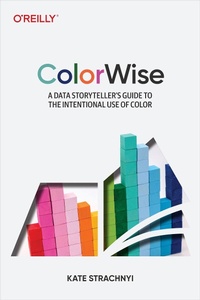
ColorWise
Description

Data has become the most powerful tool in business today, and telling its story effectively is critical. Yet one of the best communicators?color?is the most neglected tool in data visualization. With this book, DATAcated founder Kate Strachnyi provides the ultimate guide to the correct use of color for representing data in graphs, charts, tables, and infographics.
Ideal for data and business analysts, data scientists, and others who design infographics and data visualizations, this practical resource explores color tips and tricks, including the theories behind them and why they work the way they do. ColorWise covers the psychology, history, and culture of many different colors. This book is also a useful teaching tool for learning about proper use of color for data storytelling techniques and dashboarding.
You''ll explore:
- The role that color theory plays in data visualization and storytelling
- Various color techniques you can use to improve data visualizations
- How colors affect your audience''s understanding of data visualizations
- How to use color intentionally to help guide your audience
- Tips for using colors that people with color vision deficiency can interpret
- How to apply the book''s guidelines for use in your own projects
More details
Other editions
Additional editions
Content
- Cover
- Copyright
- Table of Contents
- Preface
- Why I Wrote This Book
- How This Book Is Organized
- Who This Book Is For
- O'Reilly Online Learning
- How to Contact Us
- Acknowledgments
- Chapter 1. Color Theory and History
- So What Is Color?
- How Do We See Color?
- What Is Color Theory?
- Hues, Shades, Tints, and Tones
- Hues
- Shades
- Tints
- Tones
- The Psychology of Color
- Black
- White
- Red
- Blue
- Green
- Yellow
- Purple
- Brown
- Orange
- Pink
- Gray
- Why People Don't Always See the Same Color
- Summary
- Chapter 2. Data Visualization and Data Storytelling
- What Is Data Visualization?
- Deriving Meaning from Data
- Speaking the Same Language
- Power of Visualizing Data
- What Is Data Storytelling?
- Types of Data Visualizations
- Changes over Time
- Determining Frequency
- Determining Relationships
- Examining Networks and Marketing
- Scheduling
- Chart Selector Guide
- Summary
- Chapter 3. Types of Colors Used in Data Visualization
- Three Types of Colors
- Sequential
- Diverging
- Categorical
- Background Colors
- The Power of Dividers in a Data Visualization
- Summary
- Chapter 4. How to Tell a Story with Color
- Keep It Simple
- Data Story Components
- Reduce Color Saturation
- Color for Highlighting
- Color Associations
- Power of Gray
- Color Consistencies
- Summary
- Chapter 5. Selecting a Color Scheme for Your Data Visualization
- Importance of Choosing Colors
- Know Your Audience
- Consider Industry Associations
- Brand Colors
- Suggested Color Schemes
- Selecting Key Colors in a Palette
- Using Colors Found in Nature
- Color Palettes for Comparing Two Things
- Analogous Harmony
- Complementary Harmony with a Positive/Negative Connotation
- Near Complementary Harmony for Highlighting Two Series Where One Is the Primary Focus
- Color Palettes for Comparing Three Things
- Analogous/Triadic Harmony for Highlighting Three Series
- Highlighting One Series Against Two Related Series
- Color Palettes for Comparing Four Things
- Analogous Complementary for One Main Series and Its Three Components
- Double Complementary for Two Pairs Where One Pair Is Dominant
- Rectangular or Square Complementary for Four Series of Equal Emphasis
- Summary
- Chapter 6. Data Visualization Color Tips
- Use Contrasting Color
- Avoid Bright Backgrounds
- Know Your Devices
- Use Gradients
- Summary
- Chapter 7. Accessibility and Addressing Color Blindness
- Why It Matters
- Potential Causes of Color Blindness
- Color Combinations to Avoid
- Best Practices
- Summary
- Chapter 8. Color and Cultural Design Considerations
- Yellow
- Blue
- Red
- White
- Black
- Green
- Orange
- Purple
- Pink
- Summary
- Chapter 9. Common Pitfalls of Color Use in Data Storytelling
- Encoding Too Much Information or Irrelevant Information
- Using Nonmonotonic Colors for Data Values
- Failure to Design for Color Vision Deficiency
- Not Creating Associations with Color
- Not Using Contrasting Colors to Contrast Information
- Not Making the Important Information Stand Out
- Using Too Many Colors
- Summary
- Chapter 10. Additional Examples
- Using Colors Found in Nature
- Using Color to Focus Your Audience
- Designing for a Color Vision Deficiency Audience
- Color Illusions
- Adelson's Checker Shadow Illusion
- Color Cube Illusion
- White and Gray? Maybe Not!
- Colorful Spheres (Or Are They?)
- Colorful Dogs
- Summary
- Conclusion
- Helpful Resources
- Index
- About the Author
