

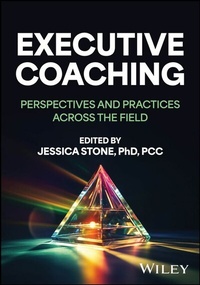
Executive Coaching
Description

Navigate the dynamic landscape of executive coaching with insights from leading practitioners
Executive coaching lacks unified guidance, leaving coaches trying to understand disparate methodologies and evolving practices alone. Executive Coaching: Perspectives and Practices Across the Field solves this problem by gathering a collection of experienced coaches using varied approaches and offering their perspectives on 20 foundational questions. Editor Jessica Stone, a psychologist with 30+ years of experience, creates a comprehensive resource reflecting the field's rich diversity.
Each chapter explores one question through 13 coaches' responses, covering chemistry calls, contracting, foundational approaches, credentialing, cultural humility, ethics, digital tools, resilience, leadership, imposter syndrome, and ROI. The book distinguishes coaching from mentoring, addresses psychological boundaries, examines life impacts beyond work, and explores the profession's future with theoretical frameworks and real-world applications.
Readers will also find:
- Multiple perspectives on each question that reveal commonalities and distinct approaches across the coaching profession
- Practical guidance on establishing rapport, setting expectations, and navigating the contracting process with clients
- Strategies for building self-awareness as a coach and helping clients leverage self-awareness for growth
- Insights on integrating digital tools while addressing diversity, equity, and inclusion in coaching practice
- Synthesis sections that highlight key themes and differences, helping readers understand core insights while appreciating nuanced perspectives
Executive Coaching: Perspectives and Practices Across the Field serves executive coaches, leadership development professionals, organizational consultants, and graduate students. By showcasing diverse thought in coaching practice, this book provides an educational tool for aspiring coaches and a detailed reference guide for experienced practitioners.
More details
Other editions
Additional editions
Person
JESSICA STONE, PhD, PCC, is an executive coach, psychologist, author, and editor specializing in leadership development, executive functioning, and the thoughtful integration of psychology and technology into coaching practice. She works with leaders, professionals, and organizations to strengthen self-awareness, decision-making, relational effectiveness, and sustainable performance. Drawing on decades of experience across psychology, coaching, writing, and training, Stone brings a psychologically grounded, practice-oriented perspective to executive coaching. Her work includes the development of a meaning-based approach to coaching that examines the internal processes shaping perception, behavior, adaptation, and change, explored more fully in her forthcoming book Meaning-Based Coaching. She is the editor of Executive Coaching: Perspectives and Practices Across the Field and the author and editor of numerous books on psychology, technology, and human development.
Content
List of Contributors ix
Author's Note xi
Preface xiii
Bios xv
Generative AI Usage Statement xlv
Foreword xlvii
Introduction: An Exploration of Coaching Perspectives li
Lauren Berlin
1 Chemistry Calls: What Role Do Chemistry Calls Play in Establishing Rapport and Setting Mutual Expectations Between Coach and Client? What Is the Key Component You Find to Have Value in These Calls? 1
2 The Contracting Process in Coaching: Beyond the Basics: What Are the Key Components of An Effective Coaching Contract, Why, and How Do They Set the Stage For a Successful Coaching Relationship? 27
3 Foundational Approach: How Does Your Foundational Coaching Approach Influence Both Your Methodology and the Outcomes For Your Client (Beyond the Basics)? Why is This Important? 51
4 Coaching-Mentoring-Advising: What Are the Distinguishing Components Between Coaching, Mentoring, and Advising? What Are the Slippery Areas Between These and How Can These Be Incorporated Without Compromising the Integrity of the Coaching Engagement? 75
5 Credentialing: What Are the Important Reasons for Credentialing in Executive Coaching? How Does This Impact Credibility and Client Trust, or Not? 99
6 Competency: What Are the Core Competencies of an Executive Coach? How Can Coaches Continuously Improve Their Skill Set? 121
7 Cultural Humility and Intersectionality: How Can Coaches Ensure They Bring Cultural Humility and an Intersectional Lens to Their Coaching Practice? Why Is This Important? 147
8 Early Career Advice: What Are the Most Valuable Lessons for New Executive Coaches in Establishing Their Coaching Point of View and Building a Client Base? What Would You Say to Your Younger Coach Self? 171
9 Handling Emotional/Psychological Topics (Sticky Situations): How Can Executive Coaches Navigate Situations When a Client Presents Psychological or Emotional Issues Beyond the Coach's Expertise? When Is It Time to Refer Elsewhere (Another Coach with Expertise, a Therapist, Psychiatrist, etc.)? 193
10 Coaching Beyond the Workplace: How Can Changes in Communication Style and Personal Development Through Coaching Impact a Client's Relationships and Social Life Outside of Work? 215
11 Ethical Considerations: What Are the Most Significant Ethical Challenges in Executive Coaching, and How Can Coaches Navigate Them Responsibly? 235
12 Assessments: What Are the Best Practices for Using Assessments in Executive Coaching, and How Can They Contribute to Tailored Coaching Solutions? What Are Your Top Two Assessments (If Applicable)? 259
13 Coach-Knowing Self: Why is Self-Awareness Critical for Executive Coaches? How Might Deeper Self-Understanding Cultivate a More Powerful Coaching Engagement? 285
14 Client-Knowing Self: How Can Executive Coaches Help Clients Increase Self-Awareness and Leverage It for Personal and Professional Growth? How Might This Contribute to Their Coaching Journey? 307
15 Digital Tools: How Are Digital Tools Transforming Executive Coaching, and What Are the Benefits and Challenges of Their Use? What Are Your Top Two Digital Tools (if Applicable)? 329
16 Resilience: Resilience Is a Commonly Discussed Concept in Organizations. What Does This Mean to an Individual? To a Team? To a Company? What Strategies Can Executive Coaches Use to Help Their Clients Build Resilience? 353
17 Leadership: What Do You Consider to Be the Key Components of Leadership Development in Coaching? How Can Coaches Identify and Foster Leadership Skills in Their Clients? 377
18 Imposter Syndrome: In What Ways Does Imposter Syndrome Impact Clients? How Can Executive Coaches Help Clients Recognize and Overcome Imposter Syndrome, Particularly in High-Stakes Environments? 401
19 Return on Investment (ROI): What Are Your Successful Ways to Measure and Communicate the ROI of Coaching Services to Organizations and Clients? 423
20 The Future of Coaching: How Is the Landscape of Executive Coaching Evolving? What New Trends and Approaches Should Coaches Prepare for? What Words of Wisdom Would You Like to Impart to Newer Coaches? 447
Conclusion 473
Index 000
Endorsements 000
Bios
LAUREN BERLIN, MA
Lauren Berlin brings a unique perspective to leadership coaching, born from her extensive experience navigating the transition from practitioner to leader in high-stakes environments. Her background in public education revealed a critical gap that exists across industries: talented professionals are regularly promoted based on technical expertise, only to find themselves in leadership roles that require an entirely different skill set-a classic example of the Peter Principle in action.
Berlin witnessed this phenomenon repeatedly as educators became administrators without adequate support for the transition. This observation became deeply personal when she found herself managing seven-figure budgets and leading through natural disasters-fires and flooding that resulted in loss of life. These crisis leadership experiences taught her that effective leadership requires building trusting relationships that allow teams to navigate uncertainty together.
Yet even as Berlin developed expertise in crisis management, she faced a more insidious challenge: the gradual erosion that comes from trying to be everything to everyone. Like many high-functioning leaders, particularly women in service-oriented fields, she experienced what she describes as "death by a thousand cuts"-a slow build of unsustainable demands that left her constantly reactive, never truly present.
The transformation that followed required Berlin to examine deeply ingrained patterns.
She had to unlearn the belief that good leadership meant constant availability and instead develop "strategic boundaries"-not simply learning to say no, but reframing responses to create sustainable timelines. Rather than "yes, I'll get that to you within the hour," her boundaries became "yes, I can deliver that within the week."
This shift allowed her to move from reactive to proactive, from scattered to strategic. No longer rushing between commitments, Berlin began showing up prepared and present, modeling sustainable high performance for younger leaders who were watching to see if it was possible to be both responsive and respected without burning out.
This personal transformation, combined with her crisis leadership experience, revealed Berlin's calling: helping other high-functioning leaders navigate their own transitions from overwhelming success to sustainable impact. Her coaching approach is grounded in her training as a Board Certified Behavior Analyst and Hudson Certified Coach, blending evidence-based behavioral science with practical leadership experience.
As a working parent herself, Berlin brings particular insight to leaders committed to excellence in multiple domains. She understands the unique pressures of wanting to show up fully both professionally and personally, and the tendency for high achievers to give continuously to others while neglecting their own sustainability.
Berlin's client work focuses on leaders who find themselves overextended despite their competence-those who have achieved external success but recognize their current approach is unsustainable. Her methodology acknowledges that leadership challenges rarely exist in isolation, requiring a whole-person approach that integrates professional effectiveness with personal well-being.
Professional Accomplishments and Contact Information
Lauren Berlin holds a BA in Communication Studies and Psychology from New Mexico State University, an MA in School Psychology from Alliant International University, and maintains certifications as both a Board Certified Behavior Analyst, a Hudson Certified Coach, and an Associate Credentialed Coach with the International Coaching Federation. Her leadership experience includes managing seven-figure budgets and successfully guiding organizations through major crises, including natural disasters resulting in community-wide trauma.
Currently based in the San Francisco Bay Area, Berlin offers flexible coaching arrangements, including virtual sessions nationwide and in-person options for Peninsula-area clients. Her primary service is a comprehensive six-month coaching program designed to help high-functioning leaders build sustainable systems for long-term success, followed by quarterly check-ins for continued integration.
For coaching inquiries or speaking engagements, contact hello@laurenberlincoaching.com or visit www.?laurenberlincoaching.?com
JOHN BRADFORD
Founder, Executive Coach-Agile Leadership Specialty Services, LLC
I have spent nearly five decades helping people grow-first as a public educator, then as a corporate executive, and now as an executive coach. Whether working with students, Fortune 100 leaders, or newly promoted managers, I have always believed in the power of practical learning and the importance of helping others achieve meaningful results. I did not come into this profession through a conventional route. I came through the back door-through real-world experience, hard-earned insight, and the belief that good leadership is built in the moment, not just taught in theory.
I grew up in a working-class home in Missouri. My mother worked in a kitchen, and my father drove a cab. They were honest, caring people who believed in hard work, keeping their word, and treating everyone with respect. Their example shaped not only my character but also the way I lead and coach others today.
I began my professional life in public education. Early in my career, I served as a teacher and administrator at the secondary, postsecondary, and collegiate levels. Midway through my journey, I transitioned into corporate leadership. I served as a senior consultant, vice president of human resources, and vice president of training and development. My work spanned small businesses and Fortune 500 companies. Along the way, I learned that leadership challenges are remarkably consistent: aligning people, clarifying direction, and building trust.
Coaching, for me, is not about theory or buzzwords. It is about helping real people navigate real situations. I do not see myself as a sage on the stage. I prefer being a guide on the side-someone who listens deeply, asks purposeful questions, and helps leaders reflect, reframe, and act. One of my clients once said, "You make the complicated feel doable." That comment has stayed with me for years. If I can help someone move from stuck to clear or scattered to focused, I have done meaningful work.
People describe me as authentic, steady, and results-focused. I take pride in that. I do not overcomplicate things. I help leaders identify what matters most, use time wisely, and lead in alignment with their roles and values. My coaching is rooted in trust, clarity, and a shared commitment to growth.
In 2024, I formally retired from full-time corporate work, but I was not finished. I founded Agile Leadership Specialty Services, LLC, because I knew I still had something to offer. Coaching is how I continue to serve. I partner with leaders who are ready to grow and willing to do the work. Leadership is not mastered once-it is developed moment by moment, choice by choice.
Today's workplace demands agility-not just in systems, but in thinking, relationships, and behavior. That is why I coach in real time. I work with clients in the context of their current roles and challenges. I do not believe in coaching that is abstract or disconnected from daily work. I believe in coaching that improves how someone shows up at work tomorrow morning.
One client story stays with me. A regional operations leader was avoiding hard conversations. He hesitated to set expectations, delayed follow-through, and hoped things would resolve on their own. Throughout our engagement, we focused on communication, confidence, and accountability. By our final session, he had not only strengthened his leadership but had begun mentoring others through similar challenges. That is the power of focused, real-time coaching. That is the power of focused, real-time coaching.
My experience in education, corporate leadership, and organizational development shapes my approach. I also rely on assessment tools to deepen insight and support behavioral change. Instruments such as PXT SelectT, CheckPoint 360T, Everything DiSC®, and The Five Behaviors® help clients better understand themselves and lead with greater impact.
What makes coaching meaningful is not only improved performance-it is the personal growth behind it. Confidence, clarity, and courage often emerge when a leader realizes they are not stuck-they are simply ready for a new way forward. Coaching is not about fixing people. It is about equipping them to lead well from where they are.
I bring my whole self to the work-my professional experience, my upbringing, my values, and my steady belief in people's capacity to grow. I coach with purpose and presence, not performance. I am not here to impress. I am here to help.
I hold a Bachelor of Science in Education with an emphasis in vocational and technical education and a Master of Education in School Administration, both from the University of Missouri. I have led teams, built leadership development programs, facilitated executive retreats, and coached leaders across industries and organizational levels. I have had the privilege to work with leaders in North and South America, Europe, Asia, Africa,...
