

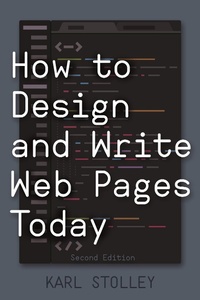
How to Design and Write Web Pages Today
2nd Edition
Published on 24. April 2017
392 pages
978-1-4408-4314-3 (ISBN)
Description

This unique guidebook lays the foundations of contemporary mobile-first, responsive web design, offering writers, designers, and those who teach them a complete and up-to-date approach to web design.
Are you looking to learn web design the right way? Not by using an off-the-shelf software package, but by creating customized sites in a way that gives you full control? This guide provides that ability even if you have no previous coding skills or experience.
One of the critical challenges of modern web design is being able to write for the mobile web to reach those increasingly mobile-connected users. How to Design and Write Web Pages Today addresses this key objective while also explaining how to deliver improved experiences for users of desktop-style devices based on the constraints and challenges of mobile design. This user-friendly tutorial begins with background information to enable a better understanding of the web and its purpose and function as well as how to generate material for a website. Readers then learn about the three overarching concerns in the short- and long-term viability and usefulness of websites: accessibility, usability, and sustainability. Key technologies and techniques for web design-such as the HTML and CSS languages to the conceptual foundations of grid-based design-are next, followed by a thorough explanation of how to publish a site on the open web, from creating a viable site architecture to automating the publishing of content to the open web.
Are you looking to learn web design the right way? Not by using an off-the-shelf software package, but by creating customized sites in a way that gives you full control? This guide provides that ability even if you have no previous coding skills or experience.
One of the critical challenges of modern web design is being able to write for the mobile web to reach those increasingly mobile-connected users. How to Design and Write Web Pages Today addresses this key objective while also explaining how to deliver improved experiences for users of desktop-style devices based on the constraints and challenges of mobile design. This user-friendly tutorial begins with background information to enable a better understanding of the web and its purpose and function as well as how to generate material for a website. Readers then learn about the three overarching concerns in the short- and long-term viability and usefulness of websites: accessibility, usability, and sustainability. Key technologies and techniques for web design-such as the HTML and CSS languages to the conceptual foundations of grid-based design-are next, followed by a thorough explanation of how to publish a site on the open web, from creating a viable site architecture to automating the publishing of content to the open web.
More details
Edition
2nd edition
Language
English
Place of publication
New York
United States
Publishing group
Bloomsbury Publishing Plc
Target group
Interest Age: From 7 to 17 years
ISBN-13
978-1-4408-4314-3 (9781440843143)
Copyright in bibliographic data and cover images is held by Nielsen Book Services Limited or by the publishers or by their respective licensors: all rights reserved.
Schweitzer Classification
Other editions
Additional editions
Karl Stolley
How to Design and Write Web Pages Today
Book
04/2017
2nd Edition
Greenwood Press
€87.60
Shipment within 10-20 days
Person
Karl Stolley, PhD, is associate professor of digital writing and rhetoric in the Humanities Department at the Illinois Institute of Technology in Chicago, IL.
Content
- Cover page
- Halftitle page
- Title page
- Copyright page
- CONTENTS
- PREFACE
- PART I WHAT AM I WRITING?
- CHAPTER 1 Why Write for the Web?
- CHAPTER 2 Reading the Web
- CHAPTER 3 Creating Web Content
- CHAPTER 4 Responsive, Standards-Based Web Pages
- CHAPTER 5 Preparing to Write and Design
- CHAPTER 6 Version Control
- PART II Issues and Challenges
- CHAPTER 7 Accessibility
- CHAPTER 8 Usability
- CHAPTER 9 Sustainability
- PART III Strategies for Success
- CHAPTER 10 Writing with Source
- CHAPTER 11 Structured Content: HTML Overview
- CHAPTER 12 Presentation and Design: CSS Overview
- CHAPTER 13 Performance and Interaction: JavaScript Overview
- CHAPTER 14 Mobile-First Responsive Design Foundations
- CHAPTER 15 Rapid Prototyping and Local Development
- CHAPTER 16 Text Content
- CHAPTER 17 Web Typography
- CHAPTER 18 Page Layout and the Grid
- CHAPTER 19 Responsive Media
- CHAPTER 20 Interactive Elements
- PART IV Problems and Solutions
- CHAPTER 21 Site Architecture
- CHAPTER 22 Preprocessors
- CHAPTER 23 Building Dynamic Sites
- CHAPTER 24 Going Live
- CHAPTER 25 The Social Web
- Resources for the Future
- Glossary
- Index
- About the Author
