


Drinking in Context
Patterns, Interventions, and Partnerships
1st Edition
Published on 13. May 2013
264 pages
978-1-135-91891-0 (ISBN)
Description

Drinking beverage alcohol is a widespread source of individual and social pleasure in most countries around the world. Yet, some drinking patterns can lead to serious physical, mental, and social harms. Drinking in Context is intended to complement existing volumes dealing with international alcohol policy by focusing on three main themes: drinking patterns, targeted interventions, and partnership development.
An understanding that patterns of drinking are important predictors of outcomes has led to a growing realization that alcohol policies and prevention strategies need to focus on excessive or irresponsible drinking. As a result, there has been a shift towards interventions that address the targeted reduction of harm. These approaches recognize socio-cultural differences and avoid trying to impose a one-size-fits-all solution. In this context, multi-stakeholder partnerships offer an excellent opportunity to promote the complex mix of measures required by each society. Shared responsibilities lead to shared solutions.
An understanding that patterns of drinking are important predictors of outcomes has led to a growing realization that alcohol policies and prevention strategies need to focus on excessive or irresponsible drinking. As a result, there has been a shift towards interventions that address the targeted reduction of harm. These approaches recognize socio-cultural differences and avoid trying to impose a one-size-fits-all solution. In this context, multi-stakeholder partnerships offer an excellent opportunity to promote the complex mix of measures required by each society. Shared responsibilities lead to shared solutions.
Reviews / Votes
"This is a very timely book on alcohol drinking prototypes, concerted programmatic interventions, and multi-stakeholder alliances toward alcohol prevention and control. A must read book by all policy makers, program designers, and health professionals."- Manoj Sharma, Editor, Journal of Alcohol and Drug Education, and Health Promotion and Education Faculty, University of Cincinnati
"If policy-makers pay attention, this book could change the way they look at reducing the risks of heavy drinking, and maybe even get them to recognize some of the benefits of moderate drinking. A focus on drinking patterns and the necessity to adapt to local circumstances, combined with an appeal for collaboration among various interested constituencies, is far more realistic than the traditional aim merely to reduce consumption."
- Dwight B. Heath, Ph.D., Professor Emeritus of Anthropology, Brown University
"This volume does exactly as its title suggests. It provides examples of the different cultural contexts within which alcohol problems are evident. It examines interventions, how they fit within their cultures and communities, and offers explanations of why they work. The book acknowledges the difficulties for policy makers and practitioners involved in planning and implementing interventions, and helpfully suggests criteria which could be used in their design. Its value lies in its contribution to the debate about effective interventions in alcohol problems, and the need to achieve a balance between population wide approaches and targeted interventions."
- Jack Law, Chief Executive, Alcohol Focus Scotland, Glasgow "This is a very timely book on alcohol drinking prototypes, concerted programmatic interventions, and multi-stakeholder alliances toward alcohol prevention and control. A must read book by all policy makers, program designers, and health professionals."
- Manoj Sharma, Editor, Journal of Alcohol and Drug Education, and Health Promotion and Education Faculty, University of Cincinnati
"If policy-makers pay attention, this book could change the way they look at reducing the risks of heavy drinking, and maybe even get them to recognize some of the benefits of moderate drinking. A focus on drinking patterns and the necessity to adapt to local circumstances, combined with an appeal for collaboration among various interested constituencies, is far more realistic than the traditional aim merely to reduce consumption."
- Dwight B. Heath, Ph.D., Professor Emeritus of Anthropology, Brown University
"This volume does exactly as its title suggests. It provides examples of the different cultural contexts within which alcohol problems are evident. It examines interventions, how they fit within their cultures and communities, and offers explanations of why they work. The book acknowledges the difficulties for policy makers and practitioners involved in planning and implementing interventions, and helpfully suggests criteria which could be used in their design. Its value lies in its contribution to the debate about effective interventions in alcohol problems, and the need to achieve a balance between population wide approaches and targeted interventions."
- Jack Law, Chief Executive, Alcohol Focus Scotland, Glasgow
"...this well-documented...book presents feasible solutions and action plans...Recommended."
-CHOICE
More details
Language
English
Place of publication
London
United Kingdom
Publishing group
Taylor & Francis Ltd
Target group
College/higher education
Illustrations
14 s/w Tabellen, 2 s/w Zeichnungen
14 Tables, black and white; 2 Line drawings, black and white
File size
2,35 MB
ISBN-13
978-1-135-91891-0 (9781135918910)
Copyright in bibliographic data and cover images is held by Nielsen Book Services Limited or by the publishers or by their respective licensors: all rights reserved.
Schweitzer Classification
Other editions
Additional editions
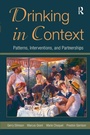
Gerry Stimson | Marcus Grant | Marie Choquet
Drinking in Context
Patterns, Interventions, and Partnerships
Book
07/2016
1st Edition
Routledge
€72.60
Shipment within 10-20 days

Gerry Stimson | Marcus Grant | Marie Choquet
Drinking in Context
Patterns, Interventions, and Partnerships
Book
12/2006
1st Edition
Routledge
€197.60
Shipment within 15-20 days
Persons
Edited by Stimson, Gerry; Grant, Marcus; Choquet, Marie; Garrison, Preston
Content
List of Contributing Authors. Foreword. New Solutions to Changing Problems. Patterns of Drinking and Their Outcomes. Selecting the Right Interventions: The Need for Assessment. Opportunities for Targeted and Tailored Interventions. Targeting Behavior: Alcohol-impaired Driving. Targeting Drinking Contexts: Public Disorder. Targeting Groups: Young People. Feasible Interventions for Minimizing Harm. Key Players and Partnerships. Finding Common Ground: Conflict of Interest or Interest in Partnership? Conclusions. Sartorius, Afterword. Annex. Alcohol and the Global Burden of Disease: Methodological Issues. Index.
