

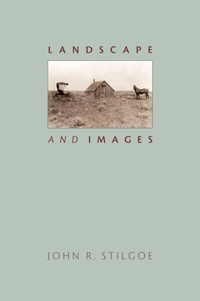
Landscape and Images
Description

John Stilgoe is just looking around. This is more difficult than it sounds, particularly in our mediated age, when advances in both theory and technology too often seek to replace the visual evidence before our own eyes rather than complement it. We are surrounded by landscapes charged with our past, and yet from our earliest schooldays we are instructed not to stare out the window. Someone who stops to look isn't only a rarity; he or she is suspect.
Landscape and Images records a lifetime spent observing America's constructed landscapes. Stilgoe's essays follow the eclectic trains of thought that have resulted from his observation, from the postcard preference for sunsets over sunrises to the concept of "teen geography" to the unwillingness of Americans to walk up and down stairs. In Stilgoe's hands, the subject of jack o' lanterns becomes an occasion to explore centuries-old concepts of boundaries and trespassing, and to examine why this originally pagan symbol has persisted into our own age. Even something as mundane as putting the cat out before going to bed is traced back to fears of unwatched animals and an untended frontier fireplace. Stilgoe ponders the forgotten connections between politics and painted landscapes and asks why a country whose vast majority lives less than a hundred miles from a coast nonetheless looks to the rural Midwest for the classic image of itself.
At times breathtaking in their erudition, the essays collected here are as meticulously researched as they are elegantly written. Stilgoe's observations speak to specialists-whether they be artists, historians, or environmental designers-as well as to the common reader. Our landscapes constitute a fascinating history of accident and intent. The proof, says Stilgoe, is all around us.
All prices
More details
Other editions
Additional editions
Person
John R. Stilgoe, Robert and Lois Orchard Professor of Visual and Environmental Studies at Harvard University, is the author of Outside Lies Magic, Lifeboat (Virginia), and Old Fields: Photography, Glamour, and Fantasy Landscape (Virginia).
Content
Acknowledgments
A Note on the Illustrations
Introduction
Treasured Wastes: Spaces and Memories
The Deep Past and Images
Landschaft and Linearity: Two Archetypes of Landscape
Jack-o'-Lanterns to Surveyors: The Secularization of Landscape Boundaries
Archipelago Landscape
Walking Seer: Cole as Pedestrian Spectator
Smiling Scenes
Fair Fields and Blasted Rock: American Land Classification Systems and Landscape Aesthetics
Rural Looking
The Magic of Pennsylvania Travel Narratives
Mapping Indiana: Nineteenth-Century School Book Views
Narragansett Bay: A Particular Landscape
Deep Cold: Winter as Landscape
Skewing Private Climate
Camouflaged and Saving Energy
Hobgoblin in Suburbia: Origins of Contemporary Place Consciousness
Contemporary Space
Landscape Jellies, Landscape Jams
Rendezvous by Design: The Automobile City and the Loss of Serendipity
Hard Times and the Evolving Vernacular Landscape
Parts Cars, Green Roofs, and Rural Landscape Preservation
Everyday Rural Landscape and Thoreau's Wild Apples
Small Town and Urban Edges
Photographed Landscape
Reflected Light
Scrutinizing Photographs, Tracing Portals
Scrying Xanadu
Landscape in Limbo
Disjunction, Disunion, Daguerreotype
Popular Photography, Scenery Values, and Visual Assessment
Bikinis, Beaches, and Bombs: Human Nature on the Sand
Sunset Beach, Studio Beach
Sparse and Away
End
Four Mornings, Seven Afternoons
Index

