

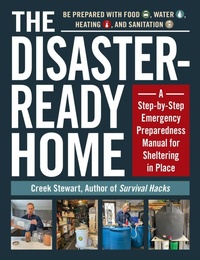
The Disaster-Ready Home
A Step-by-Step Emergency Preparedness Manual for Sheltering in Place
Published on 4. January 2022
224 pages
978-1-5072-1737-5 (ISBN)
Description

A complete, step-by-step manual for safely sheltering-in-place at home so you are prepared for any disaster or disease.
If a disaster forces you to shelter in place, do you think you have everything you need to safely and comfortably stay put in your home? If the answer is no, The Disaster-Ready Home will help you create a safe, well-stocked place to weather out any emergency.
Survival expert and bestselling author Creek Stewart gives you a step-by-step emergency preparedness plan to meet your food, water, heat, and sanitation needs during any disaster. Including detailed lists, photographs, and complete instructions to make the plan easy to follow, this book is the only resource you need for a disaster.
You'll learn how to:
-Create an emergency pantry stocked with enough food for the timeframe of your choice?from two weeks to three months to a full year
-Select and store food that fits your taste, diet, and budget
-Easily rotate and use your emergency food supply, so nothing goes to waste
-Set up long-term water storage and renewable water sources
-Cook food and boil water when your kitchen appliances aren't working
-Safely heat and light your home when the power is out
-Effectively manage sanitation issues if running water is unavailable
-And much more!
With daily headlines dominated by disease and disasters, the need to be prepared has never been more evident. This practical, field-tested guide will help you protect and provide for your family when any situation arises.
If a disaster forces you to shelter in place, do you think you have everything you need to safely and comfortably stay put in your home? If the answer is no, The Disaster-Ready Home will help you create a safe, well-stocked place to weather out any emergency.
Survival expert and bestselling author Creek Stewart gives you a step-by-step emergency preparedness plan to meet your food, water, heat, and sanitation needs during any disaster. Including detailed lists, photographs, and complete instructions to make the plan easy to follow, this book is the only resource you need for a disaster.
You'll learn how to:
-Create an emergency pantry stocked with enough food for the timeframe of your choice?from two weeks to three months to a full year
-Select and store food that fits your taste, diet, and budget
-Easily rotate and use your emergency food supply, so nothing goes to waste
-Set up long-term water storage and renewable water sources
-Cook food and boil water when your kitchen appliances aren't working
-Safely heat and light your home when the power is out
-Effectively manage sanitation issues if running water is unavailable
-And much more!
With daily headlines dominated by disease and disasters, the need to be prepared has never been more evident. This practical, field-tested guide will help you protect and provide for your family when any situation arises.
More details
Other editions
Additional editions
Creek Stewart
The Disaster-Ready Home
A Step-by-Step Emergency Preparedness Manual for Sheltering in Place
Book
03/2022
Adams Media Corporation
€16.50
Shipment within 10-20 days
Person
Creek Stewart is an expert survival instructor and the author of Survival Hacks and the bestselling Build the Perfect Bug Out series of books. Creek is the in-house and on-camera Survival Expert for The Weather Channel and hosts Could You Survive? with Creek Stewart on the network. Creek has been featured as a guest expert in numerous media outlets including, the Today show, Fox & Friends, The Doctors, Men's Fitness, Backpacker, and Outdoor Life. Creek is the owner and founder of Willow Haven Outdoor Survival Training School, located in Central Indiana, and APOCABOX, a bimonthly survival subscription box that ships to thousands of loyal subscribers every other month. He is the recipient of the prestigious Outstanding Eagle Scout Award, which bestowed by the Boy Scouts of America to Eagle Scouts who have demonstrated outstanding achievement at the local, state, or national level.
Content
- Intro
- Title Page
- Introduction
- Part 1: Food
- Chapter 1: The Practical Long-Term Food Storage Pantry
- Making Room for Your Long-Term Food Storage Pantry
- The Three-Tiered Storage System
- The Importance of Rotation
- Chapter 2: How Much Food Will You Need?
- Your Storage Goal
- Calculation Ground Rules
- Simple Calculation Example
- Three Broad Categories of Long-Term Pantry Food
- Ground Rule #7: Don't Break the Rotation Rule
- Chapter 3: Long-Term Food Preservation Methods
- Freeze-Dried Food Products
- Pros and Cons of Freeze-Dried Food
- Canned Goods
- Bulk Dry Goods
- How to Repackage Bulk Dry Goods for Long-Term Storage
- Dry Canning in Jars
- Extending the Use of Bulk Dry Goods with a Grain Mill
- Chapter 4: Types of Food to Store
- Grains
- Protein
- Fresh Meat and Fresh Eggs
- Fruits and Vegetables
- Fresh Produce
- Wild Foraged Food
- Fats
- Flavorings and Spices
- Vitamins
- Chapter 5: Survival Sprouting
- What Is Sprouting?
- Supplies Needed for Survival Sprouting
- Sprouting Seeds
- The Six-Day Survival Sprouting Cycle
- Sprouting Tips
- Part 2: Water
- Chapter 6: Long-Term Water Storage
- The Importance of Water
- Understanding Chlorine
- The Role of Chlorine in Long-Term Water Storage
- Important Considerations
- How Long Will Water Store?
- Chapter 7: Water Storage Containers
- Small Storage Containers
- Medium Storage Containers
- 55-Gallon Plastic Drums
- Preparation and Filling for Long-Term Storage
- How to Use a Drum Siphon
- Water Storage Tanks
- Chapter 8: Renewable Water Sources
- Open Water Sources
- Rain Harvesting
- Installing a Drum Rain Barrel and Gutter Diverter Kit
- Manual Well Pumps
- Manual Pump Recommendations
- Driving Your Own Well Point
- Chapter 9: Water Filters
- Short-Term versus Long-Term Contaminants
- The Big Berkey Water Filter
- The Sawyer PointOne Bucket Filter
- Reverse Osmosis System
- Chapter 10: Off-Grid Cooking and Boiling
- Barbecue Grill
- Wood-Burning Cookstoves
- EcoZoom Rocket Stove
- Twenty-Five-Brick Rocket Stove
- Double-Burner Cinder Block Rocket Stove
- Kelly Kettle
- Open-Fire Cooking
- Part 3: Heating and Sanitation
- Chapter 11: Off-Grid Heating
- Wood-Burning Stove / Fireplace
- Kerosene Space Heaters
- Propane Heaters
- Whole-House Generators
- Chapter 12: Off-Grid Bathroom
- The Problem of Human Sewage
- The Composting Sawdust Toilet
- The Backyard Latrine
- Conclusion
- Let Go of Perfection
- Start Small
- Maintain Your Plan
- Live Drills
- Online Resources
- About the Author
- Index
- Copyright
