

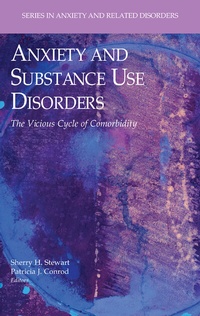
Anxiety and Substance Use Disorders
Description

"It takes my worries away.it helps me unwind when I'm tense."
Those with an anxiety disorder are at two to five times greater risk of having an alcohol or drug use disorder than those without an anxiety disorder. And although anxiety disorders are among the most common co-occurring conditions affecting people with substance issues, mainstream methods often fail to treat both halves of the picture.
Anxiety and Substance Use Disorders: The Vicious Cycle of Comorbidity addresses this gap with dispatches from the frontlines of research and treatment. Thirty-four international experts offer findings, theories, and intervention strategies for this common form of dual disorder both across types of substances (alcohol, tobacco, street and prescription drugs) and the range of anxiety disorders (PTSD, social phobia, panic disorder, OCD) to give the reader comprehensive knowledge in a practical format. Informed by the reciprocal relationship between the two types of disorders (such as the contributions of substance abuse to anxiety-related symptoms), the book: Brings together neurobiological, psychosocial, and cognitive perspectives on its subject; Outlines theoretical models of co-occurring anxiety and substance abuse, its epidemiology, and etiology; Offers up-to-date research findings on the nature, origins, and treatment of specific combinations of substance use and anxiety disorders; Presents detailed reviews of emerging targeted treatment methods-including cognitive-behavioral, personality-based, and medical interventions-with latest data on their efficacy; Pinpoints future directions in understanding and treating the dually diagnosed.
This integrative approach makes Anxiety and Substance Use Disorders: The Vicious Cycle of Comorbidity an important resource for all mental health professionals. It will also serve as an excellent clinical text.
"The first of its kind in providing a critical review of theemerging literature addressing such co-morbid conditions, this book is an excellent step in providing researchers and clinicians with guidance in the understanding and treatment of this complicated presentation. Overall, the current volume will likely be instrumental in further advancing the field of co-occurring anxiety and substance use disorders." -
Lindsay S. Ham, Florida International University, Book Review Editor for Anxiety Disorders: A Quarterly Report, Association for Behavioral and Cognitive Therapies
More details
Other editions
Additional editions
Persons
Sherry H. Stewart, Ph.D., is a professor of psychology at Dalhousie University and is an Associate Editor of the Cognitive Behavior Therapy journal. Since receiving her doctorate from McGill University in 1993, she has published many articles and taken part in numerous scientific presentations on the subjects of anxiety and addictive behaviors (particularly alcoholism and gambling). She is currently conducting research on the co-morbidity of gambling and alcohol use disorders, funded by a grant from the Nova Scotia Gaming Foundation.
Patricia J. Conrod, Ph.D., is a clinical psychologist and Clinical Lecturer at the National Addiction Centre, Institute of Psychiatry, King's College London. She was previously Assistant Professor at the University of British Columbia and at the State University of New York at Stony Brook. Her research focuses on cognitive, personality and biological risk factors for alcohol and drug misuse and the factors that mediate the co-occurrence of addictive behaviors with other mental disorders. Her experimental research focuses on factors that make people more susceptible to seek out behavioral reinforcement from drugs of abuse. She has published several studies demonstrating that personality factors determine the type of reinforcement experienced from substances of abuse. More recently, her research findings have led to the development of new approaches to substance abuse treatment and prevention that target personality risk factors for substance misuse.
