

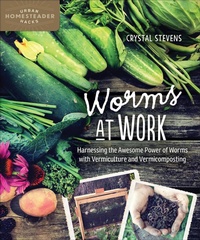
Worms at Work
Description

Fertilize your garden naturally--a guide to growing your plants in healthy, happy soil
People want to know where their food comes from, who grows it and how it is grown. Interest in permaculture, backyard composting, and gardening in general, is growing. So how does the budding gardener ensure that his soil is healthy and nutrient-rich enough to support all the produce he intends to grow? Here's a hint--think worms! Vermiculture is the healthiest and most cost-effective way to ensure that your soil receives the nourishment that it needs. A simple vermicompost bin can produce the completely natural , nutrient-rich fertilizer that can be used to boost soil health and, in turn, increase your crop yield.
In true Crystal Stevens' fashion, Worms at Work is a practical, easy-to-implement guide to fertilizing your garden naturally. It discusses the vital role worms play in boosting soil health, and the reasons why every gardener should use vermicompost in order to decrease reliance on toxic synthetic fertilizers. Coverage includes:
- Simple designs to build your own vermicompost bin
- Caring for your worms
- Garden applications for your worm castings
- Lesson plans to incorporate vermicomposting into the school science curriculum
Whether you're tending to a small backyard garden or managing a large farm, Worms at Work can show you how to start vermicomposting today in order to grow healthy plants in healthy, happy soil.
More details
Other editions
Additional editions
Person
Crystal Stevens and her husband, Eric, have been managing La Vista CSA Farm for the past 6 years. As they operate on a shoestring budget, this forces them to find creative, cost-effective methods to improve soil fertility and plant health in order to boost crop yields. Upon their arrival at La Vista, they built vermicompost bins and added a mail-order bag of 250 worms which have multiplied by the hundreds of thousands since then. They have been teaching Vermiculture 101 workshops for several years, and have both completed the Missouri Master Naturalist and Missouri Master Gardener programs. Crystal is a blogger for Mother Earth News and contributes regularly to The Healthy Planet , Grit Magazine and Permaculture Magazine . She also hosts dozen of workshops on resilient living and teaches a summer gardening camp for kids.
Content
Introduction
1: A Good Garden Begins with Healthy Soil
Compost: A Gardener's Most Valuable Resource
Nitrogen Fixation and Carbon Sequestering
Composting is an Example of Biomimicry
A Good Garden Begins with Healthy Soil
Soil Quality
Nature Is a Good Model to Follow
2: The Essentiality of Worms
Some Worms Pose a Threat
3: All About Worms
The Anatomy of a Worm
What Worms Eat
Worm Reproduction
Types of Worms
4 Vermicomposting Basics
Benefits of Backyard Vermiculture
Purchasing Worms
Home Composting
The Do's & Don'ts of Compost and Vermicompost
Pile Division
Resources
No- to Low-budget Gardening
Gardening Tips: Water Conservation
Standard Worm Bin
5 Compost and Vermicompost Designs for Your Backyard
Simple Compost Boxes
Permaculture Worm Bin Design
Larger Vermicompost Operations
Windrows
Stock Tanks
6 Caring for Your Vermicompost Bin
Feeding Your Worms
Vermicompost Bin Conditions
7 Harvesting Worm Castings, Making Worm Tea, and Garden Applications
Simple Methods for Harvesting Worm Castings
Worm Tea
Garden Applications
8 Sharing the Love in the Community and the Classroom
Sharing Your Worms
Worm Health
Sharing the Knowledge in the Community and the Classroom
Integrating Vermiculture into Science Curriculum, Grade 2 to Grade 8
Garden Field Days
Other Curriculum Applications
Conclusion
About the Author
A Note About the Publisher
