

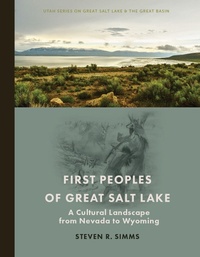
First Peoples of Great Salt Lake
Description

Great Salt Lake is a celebrated, world-recognized natural landmark. It, and the broader region bound to it, is also a thoroughly cultural landscape; generations of peoples made their lives there. In an eminently readable narrative, Steven Simms, one of the foremost archaeologists of the region, traces the scope of human history dating from the Pleistocene, when First Peoples interacted with the lapping waters of Lake Bonneville, to nearly the present day. Through vivid descriptions of how people lived, migrated, and mingled, with persistence and resilience, Simms honors the long human presence on the landscape. First Peoples of Great Salt Lake takes a different approach to understanding the ancients than is typical of archaeology. De-emphasizing categories and labels, it traces changing environments, climates, and peoples through the notion of place. It challenges the "Pristine Myth," the cultural bias that Indigenous peoples were timeless, changeless, primitive, and the landscapes they lived in sparsely populated and perpetually pristine. First Peoples and their descendants modified the forests and understory vegetation, shaped wildlife populations, and adapted to long-term climate change. Native Americans of Great Salt Lake were very much part of their world, and the story here is one of long continuity through dramatic cultural change.
More details
Other editions
Additional editions
Content
- Intro
- Contents
- Preface
- Acknowledgments
- Great Salt Lake Genealogy
- From Bonneville to Great Salt Lake
- Explorers in an Ecological Moment
- Pioneers and First Settlers
- Transformations of Place
- A Human Wilderness
- Indigenes, Immigrants, and First Farmers
- The Most Populous Part of Utah
- Upheaval
- Descendants
- Indigenes Meet Travelers
- Denouement
- Notes
- References
- Index
- About the Author
