

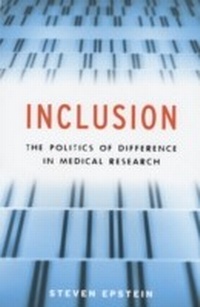
Inclusion
Description

With Inclusion, Steven Epstein argues that strategies to achieve diversity in medical research mask deeper problems, ones that might require a different approach and different solutions.
Formal concern with this issue, Epstein shows, is a fairly recent phenomenon. Until the mid-1980s, scientists often studied groups of white, middle-aged men-and assumed that conclusions drawn from studying them would apply to the rest of the population. But struggles involving advocacy groups, experts, and Congress led to reforms that forced researchers to diversify the population from which they drew for clinical research. While the prominence of these inclusive practices has offered hope to traditionally underserved groups, Epstein argues that it has drawn attention away from the tremendous inequalities in health that are rooted not in biology but in society.
"Epstein's use of theory to demonstrate how public policies in the health profession are shaped makes this book relevant for many academic disciplines. . . . Highly recommended."-Choice
"A masterful comprehensive overview of a wide terrain."-Troy Duster, Biosocieties
All prices
More details
Other editions
Additional editions
Person
Steven Epstein is professor of sociology and director of the Science Studies Program at the University of California, San Diego. He is the author of Impure Science: AIDS, Activism, and the Politics of Knowledge and coauthor of Learning by Heart: AIDS and Schoolchildren in America's Communities.
Content
- Intro
- c o n t e n t s
- acknowledgments
- l i s t of a b b r e v i at i o n s
- Introduction: Health Research and the Remaking of Common Sense
- 1 How to Study a Biopolitical Paradigm
- 2 Histories of the Human Subject
- 3 The Rise of Resistance: Framing the Critique of the Standard Human
- 4 The Path to Reform: Aligning Categories, Targeting the State
- 5 Opposition to Reform: Controversy, Closure, and Boundary Work
- 6 Formalizing the New Regime
- 7 From the Standard Human to Niche Standardization
- 8 Counts and Consequences: Monitoring Compliance
- 9 The Science of Recruitmentology and the Politics of Trust
- 10 To Profile or Not to Profile: What Difference Does Race Make?
- 11 Sex Differences and the New Politics of Women's Health
- 12 Whither the Paradigm?
- Conclusion: Identity, Difference, Disparities, and Biopolitical Citizenship
- chronology
- i n t e r v i e w s
- notes
- index

