

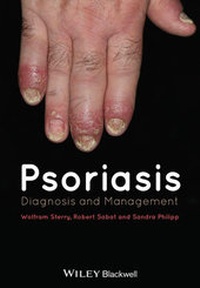
Psoriasis
Description

More details
Other editions
Additional editions
Persons
Wolfram Sterry, MD, Professor of Dermatology, Venereology and Allergy, University Hospital Charité, Berlin, Germany.
Robert Sabat, MD, Head of Psoriasis Research and Treatment Center, Department of Dermatology and Allergy/Institute of Medical Immunology, University Hospital Charité, Berlin, Germany.
Sandra Philipp, MD, Senior Physician, Psoriasis Research and Treatment Center, Department of Dermatology and Allergy/Institute of Medical Immunology, University Hospital Charité, Berlin, Germany
Content
Chapter 1
Epidemiology and economic aspects
Luigi Naldi, Simone Cazzaniga, and Giovanna Rao
Bergamo General Hospital, Bergamo, Italy
Epidemiology
Epidemiologic research should be understood in the light of its main interest, that is, prevention of the disease and its consequences in man.
Descriptive epidemiology
The measures employed are incidence and prevalence. A first step in descriptive epidemiology is to obtain a valid definition of what constitutes a "case." Quite surprisingly, up to now, no widely employed diagnostic criteria have been developed for clinical and population based studies of psoriasis. The first diagnosis made by a physician and the first appearance of skin lesions as reported by the patient have both been taken as markers of "onset" in epidemiologic studies.
Incidence-there are few studies
In a pilot study conducted in Rochester, Minnesota, in the period 1980-1983, incident cases were defined as patients requiring, for the first time in their life, medical care for a condition diagnosed as psoriasis. The age- and sex-adjusted (1980 US white population) annual incidence rate was 60.4 per 100,000 people. The crude rates were 54.4 for men and 60.2 for women. In another study from the United States, a cohort of 1633 adult subjects was followed up from 1970 to 2000. Rates adjusted to the 2000 US population increased significantly over time from 50.8 in the period 1970-1974, to 100.5 per 100,000 in the period 1995-1999. In a third study from the United States, a cohort of people younger than 18 years was followed up between 1970 and 1999. The overall incidence of psoriasis age- and sex-adjusted to the 2000 US population was 40.8 per 100,000. The incidence increased steadily with increasing age. Moreover, incidence increased in most recent years in both boys and girls. In a study based on data from the United Kingdom General Practice Research Database (UKGPRD) where cases were recorded by general practitioners from January 1996 to December 1997, a rate as high as 14 per 10,000 person-years was estimated, much higher than rates in the United States.
Prevalence
Each new case (incident case) enters the prevalence pool and remains there until either recovery or death. If recovery and death are not frequent, even low incidence rates (such as those calculated for psoriasis) produce a high prevalence. Prevalence measures may be relative to a point in time (point prevalence) or to a longer period (period and lifetime prevalence). Prevalence of psoriasis "ever experienced" in the past at any age (i.e. lifetime prevalence) approximates the cumulative incidence in that age group, that is, the proportion of the birth cohort developing the disease until the time of survey, provided that psoriasis does not affect mortality per se and that the recall of past episodes is complete.
Results of selected studies of the prevalence of psoriasis in defined populations provide estimates ranging from 0.05% in China to 4.8% in Norway (Table 1.1). Besides geographic variations, these estimates are expected to change according to the period considered, that is, point prevalence vs "lifetime prevalence." In addition, variations may be expected to arise from differences in case definition and ascertainment, and from differences in age distribution of dynamic populations.
Table 1.1 Selected estimates of the prevalence of psoriasis.
Country Ascertainment method No. of subjects (age) Measurea Estimate ×100 Faroe Islands Clinical examination 10,984 PT 2.8 Norway Questionnaire 14,667 (20-54 years) LT 4.8 Norway Questionnaire 10,576 PT 1.4 Sweden Monitoring of diagnoses 159,200 PP 2.3 Denmark Questionnnaire 3892 (16-99 years) LT 4.2 Croatia Clinical examination 8416 PT 1.5 USA Clinical examination 20,749 (1-74 years) PT 0.8-1.4b China Monitoring of diagnoses 670,000 PT 0.05-0.84 England Questionnaire and clinical examination 2180 PT 0.6-1.6b Australia Questionnaire and clinical examination 1037 (adults) PT 2.3 Italy Questionnaire 3660 (>44 years) LT 3.1 Germany, working adults Examination 90,880 PP 2.0 USA Questionnaire 10,122 LT 3.1 Sweden, male conscripts Examination 1,226,193 (20 years) LT 0.5 United Kingdom UKGPRD Examination 7,533,475 PP 1.5 USA (Caucasians vs African Americans) Questionnaire 21,921 vs 2443 LP 2.5 vs 1.3 Spain Questionnaire 12,938 LP 1.17-1.43 Portugal Questionnaire and clinical examination 1000 PP 1.9a LT: lifetime prevalence; PP: period prevalence; PT: point prevalence.
b Different estimates are provided according to severity indexes, or age groups.
Ethnic and geographic variations
It appears that Mongoloid races in the Far East of Asia have remarkably low prevalence rates. Lower prevalence rates have also been documented in African Americans compared with Caucasians in United States. Duffy et al. analyzed cumulative incidence in 3808 twin pairs and documented significantly higher prevalence rates in southern states of Australia with respect to northern areas. Geographical variations were also described in Norway with the northern regions of Troms and Finmark showing higher rates, and Hedmark and Oppland regions in the south of the country showing lower rates.
Sex and age variations
Most prevalence studies suggest that psoriasis tends to be slightly more prevalent among men than among women. The few studies available providing age-specific incidence rates of psoriasis suggest that incidence increases more or less steadily with age up to the seventh decade of life. If psoriasis appeared throughout life, then both point prevalence and lifetime prevalence would increase with age. However, prevalence estimates in several studies do not increase with age and even decrease, suggesting higher mortality rates in older psoriatics compared with the general population. It has been reported that age at onset in large series of psoriatic patients has a bimodal distribution. This has been taken as evidence for etiologic heterogeneity, and type I and type II psoriasis have been proposed. In fact, variations in numerator data, that is, the number of people experiencing onset at different ages, may simply reflect the age distribution of the population of origin.
Familial aggregation
A history of psoriasis in first degree relatives is given by 20-30% of psoriatics. In a study, the prevalence of psoriasis increased with the number of first-degree relatives affected from 3% with no relative affected to about 40% with two relatives affected.
Analytic epidemiology
The causative model of psoriasis involves interaction between genetic predisposition and environmental factors.
Genetic factors
Heritability quantifies the overall role of genetic factors when a multifactorial model of inheritance is postulated. Measures of the heritability of psoriasis have been provided based on population data and the analysis of concordance of twins. The estimates ranged from 0.5 to 0.9.
Personal habits
Smoking has been consistently linked with psoriasis. Studies that examine the exposure before the onset of psoriasis and control for confounding factors offer the more convincing evidence. There are indications that the risk for smoking may vary according to gender, with it being higher in women. Smoking and alcohol may alter the expression of psoriasis (e.g. pattern distribution, clinical varieties) and its clinical course. Smoking has been linked with acral lesions. Alcohol has been associated with severity of psoriasis and treatment failures.
Body weight and diet
It is well established that increased body mass index (BMI) and increased waist circumference are risk factors for developing psoriasis (Table 1.2). The association has been documented also in infantile psoriasis. Scanty data are available concerning diet. In an Italian case-control study, the risk of psoriasis increased with increasing BMI and was inversely related to...
