

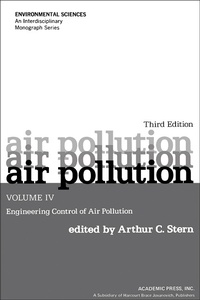
Air Pollution V4
Engineering Control of Air Pollution
3rd Edition
Published on 24. April 2014
970 pages
978-0-323-16200-5 (ISBN)
Description

Air Pollution, Third Edition, Volume IV: Engineering Control of Air Pollution focuses on the sampling, measurement, analysis, and monitoring of air pollution. This book discusses the various gas and air cleaning devices used to eliminate or reduce emissions of air polluting substances. Organized into three parts encompassing 21 chapters, this edition starts with an overview of the methods of air pollution control that are designed to minimize the production or emission of contaminants. This book then discusses the techniques of rational air use management, which is based on the principle that air quality standards have been set at levels that protect the population from harm with an acceptable margin of safety. This text explores as well the waste-disposal process of incineration in which combustible wastes are burned completely under controlled conditions. Other chapters discuss the production of nonferrous metals, which has been very significant in the development of the science of air pollution control. Engineers, physicist, chemists, meteorologists, agronomists, toxicologists, sociologists, physicians, and lawyers will find this book extremely useful.
More details
Other editions
Additional editions
Arthur C. Stern
Air Pollution: Engineering Control of Air Pollution v. 4
Book
01/1977
3rd Edition
Academic Press
€121.52
Article exhausted; check different version
Content
List of ContributorsPrefaceContents of Other VolumesPart A Control Concepts 1. Control of Systems, Processes, and Operations I. Introduction II. Elimination of Air Pollution Emissions III. Minimizing Emissions of Gaseous and Gas-Borne Wastes IV. Concentration of Air Pollutants at the Source for Effective Treatment Prior to Release to the Atmosphere V. Managing the Air Resource VI. Summary ReferencesPart B Control Devices 2. Selection, Evaluation, and Application of Control Devices Nomenclature I. Selection of a Control System II. Gas Pretreatment III. Control Efficiency IV. Cost, Applicability, and Efficiency of Collectors References 3. Source Control by Centrifugal Force and Gravity I. Introduction II. Cyclone Collectors III. Rotary Stream Dust Separators IV. Gravity Settling Chambers V. Inertial Separators References 4. Filtration Nomenclature I. Introduction II. Fabric (Bag) Filters III. Fibrous Mat Filters IV. Miscellaneous Filters V. General Considerations References 5. Electrostatic Precipitation Nomenclature I. Introduction II. Generation of the Corona III. Electric Field IV. Particle Charging V. Particle Collection VI. Removal of Collected Particles VII. Dust Resistivity VIII. Gas Flow IX. Design and Installation References 6. Scrubbing Nomenclature I. Introduction II. Gas Absorption III. Particle Collection IV. Scrubber Energy Requirement V. Diffusional Collection VI. Flux Force/Condensation VII. Economics References 7. Mist Elimination I. Introduction II. Size Distribution and Stability of Mists III. Theory of Mist Elimination IV. Single-Stage Mist Eliminators V. Multiple-Stage Mist Eliminators (Few Stages) VI. Multiple-Stage Impingement Separators (Many Stages) VII. Cyclone Mist Eliminators VIII. Electrostatic Precipitators IX. Ceramic Candles X. Venturi Scrubbers XI. Sonic Agglomerators XII. Measurement of the Effectiveness of Mist Eliminators References 8. Adsorption I. General Principles II. Adsorbents III. Equipment and Systems IV. Applications to Source Control V. Comparative Costs of Adsorbers and Other Systems General References References 9. Combustion I. Introduction II. Principles of Combustion III. Afterburners IV. Furnaces V. Flares ReferencesPart C Process Emissions and their Control 10. Fuels and Their Utilization I. Introduction II. Fuels III. Pollutants Emitted by Combustion Processes IV. Fuel Modification to Reduce Emissions V. Combustion Technology for Clean Fuels from Coal-Conversion Processes VI. Combustion Modification to Reduce Emissions References 11. Space Heating and Steam Generation I. Introduction II. Fuel-Use Patterns III. Types of Combustion Equipment IV. Emissions from Residential Heating Units V. Emissions from Commercial and Industrial Boilers VI. Combustion Modification to Reduce Emissions References 12. Power Generation I. Electric Power Demand II. Meeting the Demand III. Fossil Fuel-Fired Steam Electric Power Plants IV. Emissions from Fossil Fuel-Fired Steam Electric Generating Plants V. Control of Emissions from Fossil Fuel-Fired Steam Electric Generating Plants VI.
