

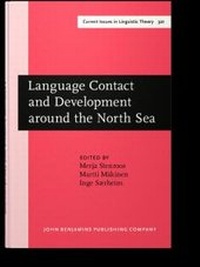
Language Contact and Development around the North Sea
1st Edition
Published on 18. April 2012
XVI, 235 pages
978-90-272-7466-3 (ISBN)
Description

This volume brings together eleven studies on the history of language and writing in the North Sea area, with focus on contacts and interchanges through time. Its range spans from the investigation of pre-Germanic place-names to present-day Shetland; the materials studied include glosses, legal and trade documents as well as place names and modern dialects. The volume is unique in its combination of linguistics and place-name studies with literacy studies, which allows for a very dynamic picture of the history of language contact and texts in the North Sea area. Different approaches come together to illuminate a major insight: the omnipresence of multilingualism as a context for language development and a formative characteristic of literacy. Among the contributors are experts on English, Nordic and German language history. The book will be of interest to a wide range of scholars and students working on the history of Northern European languages, literacy studies and language contact
More details
Other editions
Additional editions
Merja Stenroos | Martti Maekinen | Inge Saerheim
Language Contact and Development around the North Sea
Book
04/2012
John Benjamins Publishing Co
€111.30
Shipment within 10-15 days
Persons
Content
- LANGUAGE CONTACT AND DEVELOPMENT AROUND THE NORTH SEA
- Editorial page
- Title page
- LCC data
- Table of contents
- Preface & Acknowledgments
- Editors' Introduction
- References
- Part I The evidence of place-names
- Celts in Scandinavian Scotland and Anglo-Saxon England
- 1. Introduction
- 2. Name transfers
- 3. The northern isles
- 4. Anglo-saxon england
- 5. Synchronic comparison
- 6. Name functions
- 7. Sense and reference
- 8. Diachronic comparison
- 9. Conclusion
- References
- The colonisation of England by Germanic tribes on the basis of place-names
- 1. Introduction
- 2. Germanic *fani/-ja "bog, moor"
- 3. Old high german horo "mud, mush, dirt, soil"
- 4. Germanic -mar- "moor"
- 5. German Riede "mud, mush, dirt, soil"
- 6. German Hude "timber yard, staple market located at a watery place, ferry point"
- 7. Germanic *lauha- "wood"
- 8. Germanic *tun- "fence"
- 9. German horst "bushes, undergrowth"
- 10. The generic -set
- 11. Suffix -ithi
- 12. Magdeburg
- 13. Summary
- References
- Ancient toponyms in south-west Norway
- 1. Introduction
- 2. Pre-Indo-European toponyms in Scandinavia?
- 3. Islands and fjords
- 4. Rivers and lakes
- 5. Old settlements
- 6. Primary or secondary naming?
- 7. Final remarks
- References
- Part II Code selection in written texts
- On vernacular literacy in late medieval Norway
- 1. Introduction
- 2. The fourteenth century
- 3. The fifteenth century
- 4. Conclusion
- References
- Four languages, one text type
- 1. Introduction
- 2. The structure of settlement
- 3. The neighbours' books
- 4. The manuscripts
- 5. The language contact situation in Bergen
- 6. Language shift
- 7. From danish to norwegian
- 8. Conclusion
- References
- Appendix
- On variation and change in London medieval mixed-language business documents
- 1. Introduction
- 2. Early mixed-language business writing
- 3. Later mixed-language business writing
- 4. Language death
- 5. Implications for speech
- References
- Online Works
- Part III Linguistic developments and contact situations
- Old English-Late British language contact and the English progressive
- 1. Introduction: Aims and organization
- 2. Background
- 2.1 Evidence supporting Late British influence on the Old English progressive
- 2.2 Traditional assumptions about the contact between Britons and Anglo-Saxons in post-Roman Britannia
- 2.2.1 Older historical records, the Germanist view, and the scientific climate of discussions of Late British - Old English contacts
- 2.2.2 The paucity of loan words and Thomason & Kaufman (1988)
- 3. Reviewing the evidence of Late British - Anglo-Saxon contact
- 3.1 The socio-historical conditions and evidence
- 3.1.1 Archaeological and paleobotanical evidence
- 3.1.2 The Laws of Ine and the existence and status of the "Welsh"
- 3.1.3 Place names and loanwords
- 3.1.4 Genetic evidence
- 3.1.5 Discussion of the non-linguistic evidence
- 3.2 Similarity of form and function: the linguistic evidence
- 3.2.1 Evidence from SLA and contact linguistics: contact-effects on aspectual markers
- 3.2.2 Historical studies of the Celtic and English progressives
- 3.2.3 Grammaticalization studies: the instability of aspectual markers
- 3.2.4 Discussion of the linguistic evidence
- 4. Conclusion
- References
- The Old English origins of the Northern Subject Rule
- 1. Introduction
- 2. Reduced verbal morphology in the lindisfarne glosses
- 3. Possible sources for the zero morpheme
- 3.1 Subjunctive morphology in the Lindisfarne glosses
- 3.2 Preterite-present verbal morphology in the lindisfarne glosses
- 3.3 Preterite-indicative morphology in the Lindisfarne glosses
- 3.4 Discussion
- 4. The effects of subject type and adjacency on -s/-ð variation in old northumbrian
- 4.1 Textual evidence
- 4.2 Implications for an Old Northumbrian dating of the NSR
- 5. Conclusion
- References
- Primary sources
- Secondary sources
- For Heaven's Sake
- 1. Introduction
- 2. ON ský vs OE sceo?
- 3. ON lopt vs OE lyft?
- References
- North Sea timber trade terminology in the Early Modern period
- 1. Introduction
- 2. The inventory revisited
- 3. The timber terms
- 3.1 foot
- 3.2 trees
- 3.3 oak
- 3.4 wood
- 3.5 barrels
- 3.6 knee-heads
- 3.7 oars
- 3.8 timber
- 3.9 baulks
- 4. Mutually intelligible terms?
- 5. The sociolinguistic background
- 6. A North Sea pidgin?
- 7. Conclusion
- References
- List of dictionaries used
- 'Nornomania' in the research on language in the Northern Isles
- 1. Introduction
- 2. The emergence of a research project: "The Scandinavian element in Shetland dialect"
- 3. An outline of the linguistic history of the Northern Isles, with special reference to Norn
- 4. The debate on the Norn & Scots 'shift'
- 5. The problem of "unravelling the strands of shetland speech, distinguishing those leading back to norn"
- 5.1 Phonology
- 5.2 Morphosyntax
- 5.3 Lexicon
- 6. Concluding remarks
- References
- Index of subjects, terms & languages
