

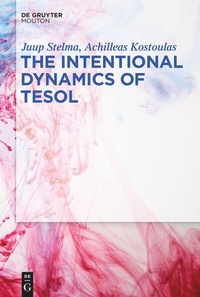
The Intentional Dynamics of TESOL
Description

This book presents intentional dynamics, which is a new perspective on TESOL contexts, activity and outcomes.The key innovation is a synthesis of complex systems and ecological theories, as well as the concept of intentionality from the philosophy of mind, to understand the psychological and social processes of TESOL. One aspect of intentional dynamics is the 'ordinary' intentions of individuals to perform particular actions, and of organisations to achieve planned outcomes. Another aspect is philosophically defined psychological and social forms of intentionality. Psychological intentionality is understood as what language learners' and teachers' (and other stakeholders') beliefs and emotions are 'about' or 'directed at'. Social intentionality is the 'aboutness' expressed by TESOL materials, curricula and policies. The book explores how intentional dynamics both emerge from and give shape to TESOL activity, and outlines what are the practical implications of intentional dynamics for TESOL learners, teachers, researchers, managers and policy-makers.
Reviews / Votes
Stelma and Kostoulas have enriched the potential of the partnership between complex dynamic systems and ecological theories by contributing the concept of intentionality. Importantly, their model of intentional dynamics places meaning and meaning-making at the heart of an ecological and complex dynamic systems account of TESOL. The authors don't stop with theory. They illustrate the power of their model in exemplifying four different contexts and types of activities, reinterpreting them through the lens offered by their model and thereby making a case for its versatility. In so doing, they demonstrate its real-world relevance to the TESOL teaching and research community. In addition to conceiving of language learning as intentional becoming, their understanding affords a critical-intentional perspective on power, freedom, and agency to counter injustice-a perspective that is much-needed in the world today.
Diane Larsen-Freeman, Professor Emerita of Education and of Linguistics, University of Michigan
More details
Other editions
Additional editions
Persons
Juup Stelma , The University of Manchester, UK; Achilleas Kostoulas , University of Thessaly, Greece.
.
Content
- Intro
- Contents
- List of Figures
- List of Tables
- List of Abbreviations
- Chapter 1. Introduction
- Part A: Developing the model of intentional dynamics
- Chapter 2. Everything is connected: Ecological theory
- Chapter 3. Everything is dynamic: Complex dynamic systems theory
- Chapter 4. Meaning is primary: Intentionality
- Chapter 5. A model of the intentional dynamics of TESOL
- Part B: Exemplifying the model of intentional dynamics
- Chapter 6. Individual intentionality: Language teachers becoming researchers
- Chapter 7. Shared intentionality: Task-based activity in a young learner classroom
- Chapter 8. Derived intentionality: A Greek private language school
- Chapter 9. Sociocultural aspects of TESOL as an intentional ecology
- Part C: Extending the model of intentional dynamics
- Chapter 10. Language learning as intentional becoming
- Chapter 11. A critical-intentional perspective for TESOL
- Chapter 12. Researching intentional dynamics in TESOL
- Chapter 13. Intentional dynamics and the future of TESOL
- References
- Index
