

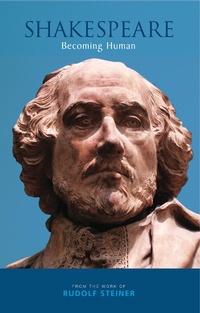
Shakespeare
Description

'Like so much of Renaissance Art, Shakespeare's work bears an open secret. The esoteric spiritual content is undisguised, though it may be unexpected and not always immediately recognized. And, like all the great artistic achievements...this work remains incomplete until we recognize and respond to its open invitation that we become active participants.' - from the Introduction
The perennial universal appeal of Shakespeare's work is well established. His core themes explore the challenges of the human condition whilst celebrating the potential of human beings to achieve and develop in earthly life. But what is it that enables Shakespeare's characters to live and breathe beyond the confines of their written roles, some 400 years after the plays were first performed?
In these collected lectures, edited with an extensive introduction by Andrew Wolpert, Rudolf Steiner throws new light on the Bard's work, describing the on-going life that flows from it, and the profound spiritual origins of Shakespeare's inspirations. He shows how Shakespeare can enliven us in our longing for contemporary ideals and truths; indeed, in our goal of becoming fully human. Our engagement with the plays, not just as actors and directors, but also as students and members of an audience, can thus become a co-creative participation in the redemptive potential of Shakespeare's enduring legacy. Steiner speaks about Shakespeare in connection with the evolution of the arts of poetry and drama, and the transitions between cultural epochs. He reminds us of the sources and characteristics of classical Greek drama, recalling Aristotle's definition of drama as catharsis, and pointing to Shakespeare's connection to these cultural and historical wellsprings.
More details
Other editions
Additional editions
Content
- Intro
- Introduction
- Affinities
- Becoming human
- Some references by Rudolf Steiner to Shakespeare
- Commentary on lectures Rudolf Steiner gave in 1922
- Lecture 1 Dornach, 1 February 1920
- Lecture 2 Dornach, 24 February 1922
- Lecture 3 Stratford-on-Avon, 23 April 1922
- Rudolf Steiner's Report on the Stratford Shakespeare Festival in 1922
- Editor's Acknowledgements
