

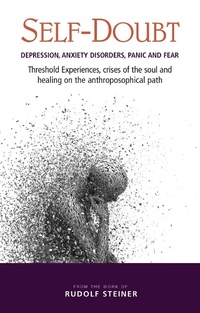
Self-Doubt
Description

Mental and emotional disorders have reached epidemic levels in Western societies. Self-doubt, panic-attacks, anxiety disorders and personal fears of all kinds present major challenges to contemporary medical science. Rudolf Steiner's spiritual research offers a startlingly original and complementary contribution to the problem. True insight into psychological issues requires knowledge of the influences of spiritual beings, he suggests. In everyday life we are all confronted with metaphysical entities that can hinder or progress our development. Many forms of anxiety and self-doubt derive from such meetings on the border - or threshold - of our consciousness. Further, these 'threshold experiences' are exacerbated today by a general loosening of the subtle bodies and components of the human soul.
As these constitutional changes persist, says Rudolf Steiner, a condition of 'dissociation' becomes increasingly common. A healthy emotional life will only be possible if individuals engage in a conscious practice of personal growth, strengthening their constitution through the action of the 'I' or self. The expertly selected and collated texts in Self-Doubt offer numerous cognitive and practical ideas for the improvement of everyday mental and emotional health.
Chapters include: The origin of error, fear, and nervousness; Crossing the threshold in the development of humanity and the individual; The polarity of shame and fear; The polarity of doubt and terrifying disorientation; The polarity of scepticism and claustrophobia, astraphobia, and agoraphobia; The origin of panic; Anxiety; The multi-layered nature of terrifying disorientation; Healing aspects of the anthroposophical path of training; The spiritual-scientific qualities of fear compared with standardized diagnostic terms and as a basis for therapy.
More details
Other editions
Additional editions
Persons
Content
- FrontCover
- Title Page
- Copyright Page
- Introduction
- 1. The origin of error, fear, and nervousness
- 2. Crossing the threshold in the development of humanity and the individual
- 3. The polarity of shame and fear
- 4. The polarity of doubt and terrifying confusion
- 5. The polarity of scepticism and claustrophobia, astraphobia, and agoraphobia
- 6. The origin of panic
- 7. Worry and anxiety
- 8. The multilayered nature of terrifying disorientation/confusion
- Memory and memories
- Compulsive thoughts and depression resulting from trauma
- Nightmares and elemental beings
- Association and dissociation-the components of the soul on the threshold
- Loosening of the subtle bodies
- Demons, spectres, phantoms and their effects on the subtle bodies
- 9. Healing aspects of the anthroposophical path of training
- Development of organs of supersensory perception
- The soul process of light
- Wonder, compassion, conscience
- 10. The spiritual-scientific qualities of fear compared with standardized diagnostic terms and as a basis for therapy
- Appendix
- Notes
- Sources
- Author Page
