

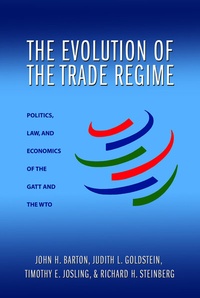
The Evolution of the Trade Regime
Politics, Law, and Economics of the GATT and the WTO
1st Edition
Published on 16. June 2015
256 pages
978-1-4008-3789-2 (ISBN)
Description

The Evolution of the Trade Regime offers a comprehensive political-economic history of the development of the world's multilateral trade institutions, the General Agreement on Tariffs and Trade (GATT) and its successor, the World Trade Organization (WTO). While other books confine themselves to describing contemporary GATT/WTO legal rules or analyzing their economic logic, this is the first to explain the logic and development behind these rules.
The book begins by examining the institutions' rules, principles, practices, and norms from their genesis in the early postwar period to the present. It evaluates the extent to which changes in these institutional attributes have helped maintain or rebuild domestic constituencies for open markets.
The book considers these questions by looking at the political, legal, and economic foundations of the trade regime from many angles. The authors conclude that throughout most of GATT/WTO history, power politics fundamentally shaped the creation and evolution of the GATT/WTO system. Yet in recent years, many aspects of the trade regime have failed to keep pace with shifts in underlying material interests and ideas, and the challenges presented by expanding membership and preferential trade agreements.
The book begins by examining the institutions' rules, principles, practices, and norms from their genesis in the early postwar period to the present. It evaluates the extent to which changes in these institutional attributes have helped maintain or rebuild domestic constituencies for open markets.
The book considers these questions by looking at the political, legal, and economic foundations of the trade regime from many angles. The authors conclude that throughout most of GATT/WTO history, power politics fundamentally shaped the creation and evolution of the GATT/WTO system. Yet in recent years, many aspects of the trade regime have failed to keep pace with shifts in underlying material interests and ideas, and the challenges presented by expanding membership and preferential trade agreements.
All prices
More details
Edition
Core Textbook
Language
English
Place of publication
Princeton, NJ
United States
Publishing group
De Gruyter
Target group
Professional and scholarly
Edition type
Digital original
Product notice
Reflowable
Illustrations
11 line illus. 11 tables.
File size
0,77 MB
ISBN-13
978-1-4008-3789-2 (9781400837892)
Schweitzer Classification
Other editions
Additional editions
John H. Barton | Judith L. Goldstein | Timothy E. Josling
The Evolution of the Trade Regime
Politics, Law, and Economics of the GATT and the WTO
Book
01/2008
Princeton University Press
€46.00
Article not available at the moment
John H. Barton | Judith L. Goldstein | Timothy E. Josling
The Evolution of the Trade Regime
Politics, Law, and Economics of the GATT and the WTO
Book
03/2006
Princeton University Press
€23.64
Article exhausted; check different version
Persons
John H. Barton is George E. Osborne Professor of Law Emeritus at Stanford University Law School. Judith L. Goldstein is professor of political science at Stanford University. Timothy E. Josling is senior fellow at the Freeman-Spogli Institute for International Studies and emeritus professor at the Food Research Institute at Stanford University. Richard H. Steinberg is professor at UCLA School of Law.
Content
List of Illustrations, Box, and Tables ix
Preface xi
Chapter 1: Political Analysis of the Trade Regime 1
1.1 Introduction 1
1.2 Understanding the Political Economy of the GATT/WTO Regime 5
1.3 State Power and International Trade Institutions 10
1.4 Nonstate Actors and Domestic Institutional Design 14
1.5 Ideas and Institutional Design 16
1.6 Accommodating Changes in Power, Interests, and Ideas 18
1.7 Alternative Perspectives on the Trade Regime 22
Chapter 2: Creating Constituencies and Rules for Open Markets 27
2.1 Why Create a Trade Regime? 29
2.2 The GATT 1947 Trade Regime 38
2.3 The Early GATT 41
2.4 Creating the WTO 47
2.5 Making Authoritative Decisions 48
2.6 Alternatives to Multilateralism: Preferential Trade Agreements 52
2.7 Conclusion: The Trade Regime, Domestic Constituencies, and Free Trade 55
Chapter 3: The Politics of the GATT/WTO Legal System: Legislative and Judicial Processes 61
3.1 Legislative Rules and Processes --and Transatlantic Power 61
3.2 Implementation and Dispute Settlement: The Expansion of Judicial Lawmaking --and Transatlantic Power 67
3.3 Conclusion: Prospects for Continued Viability of WTO Legislative and Judicial Rules 87
Chapter 4: Expanding Trade Rules and Conventions: Designing New Agreements at the Border 91
4.1 Introduction 91
4.2 The Uruguay Round Tasks 92
4.3 Extension of Scope of Trade System 94
4.4 Incorporating the "Laggard" Sectors 98
4.5 Consolidating the Codes 108
4.6 The Un ?nished Business 119
4.7 Conclusion 120
Chapter 5: Extending Trade Rules to Domestic Regulations: Developing "Behind the Border" Instruments 125
5.1 Introduction 125
5.2 Bringing in Services: Negotiation of the GATS 127
5.3 Health, Agricultural Regulations, and Industrial Standards 135
5.4 Intellectual Property Protection and the Trading System 139
5.5 The Newest Problems: New Tools, Actors, and Coalitions? 143
5.6 The Search for New Principles and New Coalitions 149
Chapter 6: Expansion of GATT/WTO Membership and the Proliferation of Regional Groups 153
6.1 Introduction 153
6.2 GATT/WTO Membership Conditions 154
6.3 Increasing Involvement of Developing Countries 160
6.4 Different Perspectives and Coalitions 169
6.5 Responding to the Concerns of the Developing Nations 172
6.6 Preferential Trade Arrangements and Developing Countries 174
Chapter 7: Accommodating Nonstate Actors: Representation of Interests, Ideas, and Information in a State-Centric System 182
7.1 The Role of Nonstate Actors 183
7.2 Complaints about Process: "Underrepresentation" of New Nonstate Actors'Interests 192
7.3 Domestic Institutional Processes of Interest Representation and Intermediation 194
7.4 Representation at the WTO: The Legislative Process 198
7.5 Representation at the WTO: The Judicial Process 199
7.6 Conclusions 201
Chapter 8: Conclusions 204
8.1 Is Trade Politics "Low" Politics? 205
8.2 What Is New about the WTO? 208
8.3 An International Bureaucracy 211
8.4 Measuring Success 213
8.5 In Conclusion: Trade Relations in the Twenty-First Century 214
Bibliography 219
Index 233
Preface xi
Chapter 1: Political Analysis of the Trade Regime 1
1.1 Introduction 1
1.2 Understanding the Political Economy of the GATT/WTO Regime 5
1.3 State Power and International Trade Institutions 10
1.4 Nonstate Actors and Domestic Institutional Design 14
1.5 Ideas and Institutional Design 16
1.6 Accommodating Changes in Power, Interests, and Ideas 18
1.7 Alternative Perspectives on the Trade Regime 22
Chapter 2: Creating Constituencies and Rules for Open Markets 27
2.1 Why Create a Trade Regime? 29
2.2 The GATT 1947 Trade Regime 38
2.3 The Early GATT 41
2.4 Creating the WTO 47
2.5 Making Authoritative Decisions 48
2.6 Alternatives to Multilateralism: Preferential Trade Agreements 52
2.7 Conclusion: The Trade Regime, Domestic Constituencies, and Free Trade 55
Chapter 3: The Politics of the GATT/WTO Legal System: Legislative and Judicial Processes 61
3.1 Legislative Rules and Processes --and Transatlantic Power 61
3.2 Implementation and Dispute Settlement: The Expansion of Judicial Lawmaking --and Transatlantic Power 67
3.3 Conclusion: Prospects for Continued Viability of WTO Legislative and Judicial Rules 87
Chapter 4: Expanding Trade Rules and Conventions: Designing New Agreements at the Border 91
4.1 Introduction 91
4.2 The Uruguay Round Tasks 92
4.3 Extension of Scope of Trade System 94
4.4 Incorporating the "Laggard" Sectors 98
4.5 Consolidating the Codes 108
4.6 The Un ?nished Business 119
4.7 Conclusion 120
Chapter 5: Extending Trade Rules to Domestic Regulations: Developing "Behind the Border" Instruments 125
5.1 Introduction 125
5.2 Bringing in Services: Negotiation of the GATS 127
5.3 Health, Agricultural Regulations, and Industrial Standards 135
5.4 Intellectual Property Protection and the Trading System 139
5.5 The Newest Problems: New Tools, Actors, and Coalitions? 143
5.6 The Search for New Principles and New Coalitions 149
Chapter 6: Expansion of GATT/WTO Membership and the Proliferation of Regional Groups 153
6.1 Introduction 153
6.2 GATT/WTO Membership Conditions 154
6.3 Increasing Involvement of Developing Countries 160
6.4 Different Perspectives and Coalitions 169
6.5 Responding to the Concerns of the Developing Nations 172
6.6 Preferential Trade Arrangements and Developing Countries 174
Chapter 7: Accommodating Nonstate Actors: Representation of Interests, Ideas, and Information in a State-Centric System 182
7.1 The Role of Nonstate Actors 183
7.2 Complaints about Process: "Underrepresentation" of New Nonstate Actors'Interests 192
7.3 Domestic Institutional Processes of Interest Representation and Intermediation 194
7.4 Representation at the WTO: The Legislative Process 198
7.5 Representation at the WTO: The Judicial Process 199
7.6 Conclusions 201
Chapter 8: Conclusions 204
8.1 Is Trade Politics "Low" Politics? 205
8.2 What Is New about the WTO? 208
8.3 An International Bureaucracy 211
8.4 Measuring Success 213
8.5 In Conclusion: Trade Relations in the Twenty-First Century 214
Bibliography 219
Index 233

