

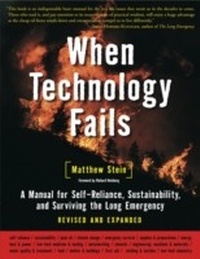
When Technology Fails
A Manual for Self-Reliance, Sustainability, and Surviving the Long Emergency, 2nd Edition
1st Edition
Published on 18. August 2008
493 pages
978-1-60358-095-3 (ISBN)
Description

YOUR GUIDE TO EMERGENCY PREPAREDNESS: Learn to live sustainably so you can survive today-and the disasters of tomorrow-with this comprehensive survival skills primer covering food, water, shelter, first-aid, energy, and more.
Prepare to embark on the path toward sustainability. Unlike any other emergency preparedness book, Matthew Stein not only shows you how to live green in seemingly stable times, but to live in the face of potential disasters-whether they last days or years, or come in the form of social upheaval, economic meltdown, or environmental catastrophe.
Inside, you'll learn:
• The basics of installing a renewable energy system for your home or business
• How to find and sterilize water in the face of utility failure
• How to keep warm if you've been left temporarily homeless
• Practical information for dealing with water-quality issues
• Alternative health and first-aid techniques
Each chapter describes skills for self-reliance in good times and bad.
• A survey of the risks to the status quo
• Supplies and preparation for short- and long-term emergencies
• Emergency measures for survival
• Prepping water, food, shelter, and clothing
• First aid, low-tech medicine, and healing
• Securing energy, heat, and power
• Metalworking
• Utensils and storage
• Low-tech chemistry engineering, machines, and materials
Fully revised and expanded, When Technology Fails ends on a positive, proactive note with a chapter on "Making the Shift to Sustainability," which offers practical suggestions for changing our world on personal, community and global levels.
"This book is an indispensable basic manual for the real-life issues that await us in the decades to come." -James Howard Kunstler, author of The Geography of Nowhere
Prepare to embark on the path toward sustainability. Unlike any other emergency preparedness book, Matthew Stein not only shows you how to live green in seemingly stable times, but to live in the face of potential disasters-whether they last days or years, or come in the form of social upheaval, economic meltdown, or environmental catastrophe.
Inside, you'll learn:
• The basics of installing a renewable energy system for your home or business
• How to find and sterilize water in the face of utility failure
• How to keep warm if you've been left temporarily homeless
• Practical information for dealing with water-quality issues
• Alternative health and first-aid techniques
Each chapter describes skills for self-reliance in good times and bad.
• A survey of the risks to the status quo
• Supplies and preparation for short- and long-term emergencies
• Emergency measures for survival
• Prepping water, food, shelter, and clothing
• First aid, low-tech medicine, and healing
• Securing energy, heat, and power
• Metalworking
• Utensils and storage
• Low-tech chemistry engineering, machines, and materials
Fully revised and expanded, When Technology Fails ends on a positive, proactive note with a chapter on "Making the Shift to Sustainability," which offers practical suggestions for changing our world on personal, community and global levels.
"This book is an indispensable basic manual for the real-life issues that await us in the decades to come." -James Howard Kunstler, author of The Geography of Nowhere
More details
Other editions
Additional editions
Matthew Stein
When Technology Fails
A Manual for Self-Reliance, Sustainability, and Surviving the Long Emergency, 2nd Edition
Book
03/2008
2nd Edition
Chelsea Green Publishing Co
€37.50
Shipment within 3-4 weeks
Person
Over the course of his life and career as an engineer and building contractor, Matthew Stein built hurricane-resistant, energy-efficient, and environmentally friendly homes and designed consumer water-filtration devices, commercial water-filtration systems, and automated assembly machinery among other things. His books include When Technology Fails and When Disaster Strikes. Matthew passed away in 2018.
Content
- Intro
- Title Page
- Copyright Page
- Dedication
- Table of Contents
- Foreword
- 1: An Introduction to Self-Reliance
- An Uncertain Future
- Technology Failures are Common
- Why this Book?
- Be Prepared
- Preindustrial Self-Sufficiency
- Old-Fashioned Self-Reliance and Modern Sustainable Technology
- References
- 2: Present Trends, Possible Futures
- Do the Right Thing
- The Main Threats to Our Future
- A Perspective on Relative Threats
- The Eco-Threat
- Greenhouse Gases and Global Warming
- Deforestation
- Systems Modeling and Systems Response
- Feedback
- Overshoot and Carrying Capacity
- Limiting Factor and Drawdown
- Collapse
- Sources and Sinks
- Sustainability and Limits to Growth
- The World's Oceans
- The Economics of Climate Change
- Peak Oil
- EROEI, Petroleum, and Biofuels
- Facts about Oil and other Energy Sources
- The Bio-Threat
- The Terrorism Threat
- Other Important Trends
- Water and Food
- Depletion of the Ozone Layer: A Modern Eco-Success Story
- Polar Ice Caps
- Earthquakes and Volcanoes
- Prophecies
- What Can I Do?
- References
- Resources
- 3: Supplies and Preparations
- Are You Prepared?
- Planning for the Short Term
- Short-Term Preparedness Checklist
- 72-Hour "Grab-and-Run" Survival Kits
- First-Aid Kits
- Earthquake Precautions
- In the Event of an Earthquake
- Long-Term Planning and Storage
- Basic Supplies and Portable Equipment
- Calculating a Year's Food Supply
- Storage Tips
- Dry Ice Fumigation
- Vacuum Packaging
- Mouse Traps and Rat Poisoning
- Shelf-Life Guide
- Notes on Camping Gear
- Tents
- Clothing
- Sleeping Bags
- Insulating Sleeping Mats
- Backpacks
- Stoves
- Cookware
- Footgear
- Firearms
- Planning for the Long-Term Future
- References
- Resources
- 4: Emergency Measures for Survival
- Survival Strategies
- Basic Strategies
- Compact Survival Kit
- Developing a Survivor Personality
- Typical Survivor Personality Traits
- Intuition: A Survivor's Powerful Ally
- Water
- Requirements
- Recommended Emergency Measures
- Dehydration
- Conserving Water
- Fire
- Starting a Fire with Matches
- Starting a Fire with Flint and Steel
- Starting a Fire with Bow and Drill
- Starting a Fire with a Hand Drill
- Starting a Fire with a Fire Plough
- Food
- Basic Guidelines
- Plants
- Insects, Grubs, and Worms
- Shelter
- Location
- Squirrel's Nest
- Building on Fallen Trunks and Trees
- Scout Pits and Coal Beds
- Snow Shelters
- Emergency Snow Shoes
- Cordage
- Recommended Plant Fibers
- Fiber Test
- Preparing Fibers
- Spinning Fibers into Cord
- Splicing
- Simple Tools
- Discoidal Stone Knives
- Bone Tools
- Surviving a Nuclear Disaster
- Types of Nuclear Threats
- Protecting Yourself from Direct Radiation
- Protecting Yourself from Radioactive Contamination
- References
- Resources
- 5: Water
- Water Requirements
- Stocking Up for Emergencies
- Guidelines for Coping with Disaster
- The World's Water Crisis
- Fossil Aquifers and Virtual Water
- Water Pollution
- Types of Contamination
- Disinfecting Your Water
- Heat Sterilization
- Portable Water Filters
- UV Sterilization-"SteriPEN"
- Mixed Halogens-MSR's MIOX Purifier
- My Water-Treatment Recommendations
- Chemical Sterilization
- Preserving Water
- Using Silver to Preserve Water
- Treating and Finding Water the Low-Tech Way
- Treating Water
- Finding Water
- Wells
- Protecting Your Water Source
- Modern Water Treatment
- Chlorine Treatment
- Ozone Treatment
- Activated Carbon Filtration
- Reverse Osmosis
- Distillation
- References
- Resources
- 6 Food: Growing, Foraging, Hunting, and Storing
- World Population and Food Supply
- Agricultural Productivity
- Irrigation Gains and Losses
- Genetically Engineered Foods
- Soil Health and Soil Losses
- Sustainable Agriculture
- Permaculture
- Grow Biointensive
- Double-Dug, Raised Beds
- Intensive Planting
- Composting
- Companion Planting
- Whole Gardening
- Seed Propagation
- Pest Control
- Extending the Harvest in Cold Climates
- Sprouting: Your Own Minigarden on a Windowsill
- The Sprouting Process
- Foraging for Food
- Brief Guide to Wild Edible Foods
- Poisonous Plants to Avoid
- Preserving and Storing Food
- Root Cellars and other Cold Storage
- Drying and Smoking Food
- Preserving Meat
- Dairy, Tofu, and Tempeh
- Making Butter
- Ghee
- Yogurt
- Cheese
- Making Rennet for Cheese
- Raising Animals
- Hunting and Trapping
- Bow and Arrow
- Traps
- Skinning and Cleaning
- Fishing
- Angling
- Catching Fish by Hand
- Spearing Fish
- Fishing with Net
- References
- Resources
- 7: Shelter and Buildings
- Green Buildings
- Green Certification and "Greenwashing"
- A Survey of Various Green Building Systems: Straw Bales
- In-Fill (Non-Load-Bearing) Straw Bale Construction
- Load-Bearing Straw Bale Construction
- Finishing Straw Bale Walls
- ICF
- SCIP
- "Green" Concrete
- Pumice-Crete
- SIP
- Earth-Based Building Systems
- Rammed Earth
- Adobe
- Cob
- Cast Earth
- Fire-Resistant Green Building
- Lessons from the 1993 Laguna Fire
- Green and Fire Resistant
- Bamboo as a Green Building Material
- Passive Solar Design
- Passive Solar "Rules of Thumb"
- James Kachadorian's Patented Solar Slab
- Preventing and/or Battling Mold
- Health Effects of Mold
- Identifying a Mold Problem
- Dealing with Mold
- Construction Tips for Preventing Mold
- Mat's Mold Wisdom
- Traditional Low-Tech Structures
- Log Cabins
- Timber-Frame Construction
- Tipis, Yurts, Wickiups, and Wigwams
- Earthquake Resistance
- Improving Earthquake Resistance
- References
- Resources
- 8: First Aid
- Initial Evaluation
- Survey the Scene
- Consent and Liability
- ABCs of First Aid
- Treatment Priority
- Unconscious Victim
- CPR
- Survey for Injuries and to Control Bleeding
- Pressure Points
- Tourniquets
- Wounds
- Abrasions
- Incisions
- Puncture Wounds
- Abdominal Wounds
- Head Wounds
- Chest Wounds
- Choking
- Heimlich Maneuver (Abdominal Thrusts)
- Bandages and Dressings
- Shock
- Symptoms
- Treatment for Shock
- Fractures and Dislocations
- General Guidelines for Treating Dislocations and Fractures
- Special Precautions for Fractures
- Reducing Dislocations
- Sprains and Strains
- Heat-Related Trauma
- Heat Stroke
- Heat Exhaustion
- Bites and Stings
- Animal Bites
- Snakebites
- Spider Bites
- Tick Bites
- Stings
- Eyes
- First Aid for a Foreign Object in the Eye
- Moving Injured People
- Clothing Drag for Single Rescuer
- Multi-Helper "Stretcher" Rescue
- One- and Two-Person Carries
- Emergency Childbirth
- Signs of Impending Delivery
- Stages of Labor
- Emergency Childbirth Supplies
- Delivery
- After Delivery
- References
- 9: When High-Tech Medicine Fails
- The Holistic Health Movement
- The Low-Tech Medicine Cabinet
- Simple, Effective Remedies and Supplements to have on Hand
- The Essence of Healing
- Genetics and Cellular Growth
- Body Energy
- Colloidal and Ionic Silver
- Making Your Own Colloidal Silver Generator
- Using Your Colloidal Silver Generator
- Solutions of Metallic Silver Nano-Particles
- Healing with Herbs
- Types of Herbal Preparations
- Powerful Herbal Combinations for Better Health
- Caisse's Tea (Essiac)
- Jason Winters' Herbal Tea
- Dr. Clark's Herbal Parasite Cleanse
- Kidney Cleanse
- Liver Cleanse
- Detoxification
- Naturopathic Healing
- Fasting
- Supplements and Food
- Homeopathy
- The Origins of Homeopathy
- Homeopathic "Potencies"
- Effectiveness of Homeopathy
- Homeopathy Practice
- Sinus Health and Molds
- Health Effects of Molds and other Fungi
- Treatment for Molds and other Fungi
- Electromagnetic Fields
- The Beck Protocol
- Healing with Energy
- A Few Useful Guidelines (No Fixed Rules)
- The Power of Prayer
- Hypnosis for Pain Control and Healing
- Fractional Relaxation Induction
- Hypnotic Suggestion
- Awakening Technique
- Visualization and Mind-Body Healing
- General Guidelines
- Visualization for Mending a Broken Bone
- Egyptian Healing Visualization
- Some Notes on Death and Dying
- References and Resources
- 10: Clothing and Textiles
- Fiber Arts
- Preparing Fibers
- Sustainable Fibers
- Spinning
- Weaving
- Knitting and Crocheting
- Furs and Skins
- Brain Tanning Overview
- Dealing with Furs
- Bark Tanning Leather
- Patterns and Custom-Tailored Clothing
- Sinews
- Footwear
- References
- Resources
- 11: Energy, Heat, and Power
- Shifting to Renewable Energy (RE)
- Why Renewable Energy?
- Energy Conservation,"Negawatts," and RE Net Metering
- RE Systems
- Net Metering
- AC Versus DC
- Alternatives for High-Energy-Consuming Appliances
- Photovoltaics Versus Wind Versus Micro-Hydro
- Batteries
- Backup Generators
- System Sizing
- Photovoltaics
- Insolation
- Solar Array Sizing
- Panel Orientation
- Maximum Power Point Tracking
- Wind Power
- Wind-Energy Tips
- Micro-Hydropower
- Micro-Hydro Considerations
- Solar Hot Water
- Passive Solar "Batch" Heating
- Direct Pump Solar Hot-Water Heating
- Active Solar Hot Water
- Solar Space Heating
- Solar Water Pumping
- Biofuels
- Steam Energy
- Fuel Cells
- How Fuel Cells Work
- Efficiency and Environmental Considerations
- Fuel Cells in the Home
- Heating with Wood
- Efficient Stove Features
- Energy, Power, and Electricity Primer
- Energy
- Power
- Electricity
- Proper Wire Sizing
- Battery Voltage: 12 Volts, 24 Volts, or 48 Volts?
- Capacitance
- Inductance
- References
- Resources
- 12: Metalworking
- A Brief Introduction to Metals
- Casting Metal
- Sand Casting
- Furnace
- Forging
- Low-Tech Heat Treating
- References
- Resources
- 13: Utensils and Storage
- Making a Simple Wooden Cup or Bowl
- Basket Basics
- Materials
- Making a Basket
- Gourds
- Growing Gourds
- Curing Gourds
- Cleaning Gourds
- Sealing Gourds
- Storing Fluids in Skins and Other Animal Parts
- Primitive Pottery
- Clay
- Pinch Pots
- Coil Pottery
- Slab Pottery
- Throwing on the Wheel
- Firing Pottery
- References
- 14: Better Living Through Not-So-Modern Chemistry
- Soap
- Soapy Plants
- Lye Soap
- Candles
- Wicking
- Making Candles
- Alcohol
- Malt
- Mash
- Fermentation
- Distillation
- Vinegar
- Natural Glues
- Pitch Glue
- Hide Glue
- Vegetable Oils
- References
- 15: Engineering, Machines, and Materials
- Engineering
- Forces and Statics
- Stress and Strength (Mechanics)
- Fluids
- Materials
- Mathematics
- Trigonometry
- Logarithms
- Conversions
- References
- Resources
- 16: Making the Shift to Sustainability
- A Poor Track Record
- Proactive Success Stories
- Limitations to a Free-Market Economic Policy
- Tragedy of the Commons
- Sustainable Communities
- Sustainable Cities
- Cradle to Cradle
- The Natural Step
- Backcasting
- Ecological Footprint
- Negative Population Growth
- Getting a Grip on "King Coal"
- Doing Your Part
- Planning for the Future
- The "Hundredth Monkey Phenomenon"
- Plan B: Live Locally, Think Globally
- Effective Action
- Choose Wisely
- References
- Resources
- Bibliography
