

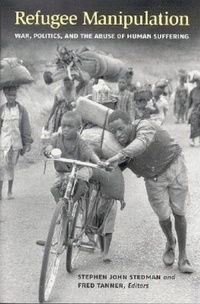
Refugee Manipulation
War, Politics, and the Abuse of Human Suffering
1st Edition
Published on 13. May 2004
202 pages
978-0-8157-8089-2 (ISBN)
Description

Since World War II, refugee organizations have faced a recurrent challenge: the manipulation of refugees by warring parties to further their own aims. Some armies in civil wars, facing military defeat, use refugees as assets to establish the international legitimacy of their cause, treat refugee camps as sanctuaries and recruitment pools, and limit access to refugees to ensure that they will not repatriate. Focusing on the geopolitical security environment surrounding militarized camps and the response of humanitarian agencies, the contributors to this volume examine the ways armed groups manipulate refugees and how and why international actors assist their manipulation. They then offer suggestions for reducing the ability of such groups to use the suffering of refugees to their own advantage. The contributors examine three cases: Cambodian refugees along the Thai border in the 1970s and 1980s, Afghan refugees in Pakistan in the 1980s and 1990s, and Rwandan refugees in Eastern Zaire from 1994¿96. They argue that refugee manipulation occurs because warring parties gain resources in their fight for power and other actors, often the host government and regional and major powers encourage and support it. Manipulation is allowed to occur because the international refugee regime and major states have not identified a consistent approach to stopping it. In the post-Cold War era the United Nations and its members have chosen to treat the issue as a humanitarian problem instead of a security problem. As the contributors make clear, however, manipulation of refugees has important ramifications for international security, turning some civil wars into larger protracted regional wars. They argue that the geopolitics of refugee manipulation leads to sanguine conclusions about stopping it. Solutions must change the moral, political, and strategic calculations of states that are implicated in the manipulation. As long as the problem is not deemed a security threat
More details
Edition
1. Auflage
Language
English
Place of publication
New York
United States
Publishing group
Bloomsbury Publishing Plc
ISBN-13
978-0-8157-8089-2 (9780815780892)
Copyright in bibliographic data and cover images is held by Nielsen Book Services Limited or by the publishers or by their respective licensors: all rights reserved.
Schweitzer Classification
Other editions
Additional editions
Stephen John Stedman | Dr. Fred Tanner
Refugee Manipulation
War, Politics, and the Abuse of Human Suffering
Book
06/2003
Brookings Institution
€75.65
Article exhausted; check different version
Persons
Stephen John Stedman is a senior fellow at the Center for International Security and Cooperation at Stanford University and a nonresident senior fellow at the Brookings Institution. He recently served as the research director of the United Nations High Level Panel on Threats, Challenges, and Change and as assistant secretary-general and special advisor to the secretary-general of the United Nations. Fred Tanner is deputy director for Academic Affairs at the Geneva Centre for Security Policy.
Content
- Front Cover
- Title Page
- Copyright Information
- Table of Contents
- Preface
- Refugees as Resources in War
- Ain't Enough Blanket: International Humanitarian Assitance and Cambodian Political Resistance
- The Geopolitics of Afghan Refugees in Pakistan
- The Use and Abuse of Refugees in Zaire
- Legal and Normative Dimensions of the Manipulation of Refugees
- Conclusions and Policy Recommendations
- Contributors
- Index
- Back Cover
