

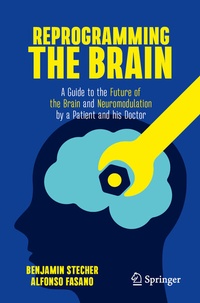
Reprogramming the Brain
Description

In June 2021, Doctor and Patient decided that time had come to surgically implant two six-inch-long metal alloy spikes all the way through Ben's brain. It was felt that the medications Ben was taking to control his Parkinson's disease had become unmanageable.
Back then, Ben was taking about 20 different pills a day. Each pill, if it absorbed properly, would activate the dopamine pathways in his brain and induce uncontrollable writhing movements that would last for about an hour. He would then get about 20 minutes where he'd feel somewhat normal before the slowness and tremor kicked in again. So, he'd take another pill and the cycle would repeat.
After months of adjusting his medication and finding just the right settings on his deep brain stimulator, it was decided, for the first time ever in a clinical trial in North America, to flip on the adaptive settings.
This is the story of how that decision was made and what happened next.
More details
Other editions
Additional editions
Persons
Benjamin Stecher is a patient advocate who chairs a number of advisory boards. He also recently had an adaptive deep brain stimulator implanted to better manage his symptoms of Parkinson's Disease. He is co-author of Brain Fables, which won the Prose Award in Neurosciences in 2020.
Alfonso Fasano, MD, PhD, FAAN is a movement disorder specialist at the University of Toronto's Movement Disorder Clinic and has over 25 years of experience with various neuromodulation techniques. He has published over 430 scientific manuscripts and written or edited 12 books and book chapters.
Content
Patient Prelude.- Physician Prelude.- What's in a Name?.- Dysko Joy Ridin'.- To DBS or Not to DBS, that is the Question.- The Black Forest.- The Cards We're Dealt.- The Future of Cell Replacement Therapies.- From Cooper To FUS.- ADD: Adaptive vs. Directional vs. Distance.- The Three Pillars of DBS.- The Surgeon.- The Family.- Time, Healing and Patience.- The Caregiver's Burden.- The Day I Thought I Could be Prime Minister of Canada.- Oscillopathies and You.- What's it like letting an Algorithm Run Your Brain.- Is aDBS a Cure?.- Brain Conquistadores.- The Coming Wave.- The Art of Neuroscience.- The Alignment Problem.- DBS in Crisis.- The Future of Neuromodulation.- Epilogue - To Elon Musk, On the Future of Our Brains.
