

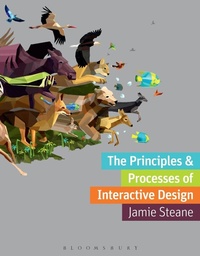
The Principles and Processes of Interactive Design
Published on 30. January 2014
208 pages
978-2-940447-66-4 (ISBN)
Description

The Principles & Processes of Interactive Design is aimed at new designers from across the design and media disciplines who want to learn the fundamentals of designing for interactive media. This book is intended both as a primer and companion guide on how to research, plan and design for increasingly prevalent interactive projects.
With clear and practical guidance on how to successfully present your ideas and concepts, Jamie Steane introduces you to user-based design, research and development, digital image and typography, interactive formats, and screen-based grids and layout.
Using a raft of inspirational examples from a diverse range of leading international creatives and award-winning agencies, this is required reading for budding digital designers. In addition, industry perspectives from key design professionals provide fascinating insights into this exciting creative field, and each chapter concludes with workshop tutorials to help you put what you've learnt into practice in your own interactive designs.
Featured contributors include: AKQA, BBC, Dare, Edenspiekermann, Electronic Arts, e-Types, Komodo Digital, Moving Brands, Nordkapp, Onedotzero, Onformative, Preloaded and Razorfish.
With clear and practical guidance on how to successfully present your ideas and concepts, Jamie Steane introduces you to user-based design, research and development, digital image and typography, interactive formats, and screen-based grids and layout.
Using a raft of inspirational examples from a diverse range of leading international creatives and award-winning agencies, this is required reading for budding digital designers. In addition, industry perspectives from key design professionals provide fascinating insights into this exciting creative field, and each chapter concludes with workshop tutorials to help you put what you've learnt into practice in your own interactive designs.
Featured contributors include: AKQA, BBC, Dare, Edenspiekermann, Electronic Arts, e-Types, Komodo Digital, Moving Brands, Nordkapp, Onedotzero, Onformative, Preloaded and Razorfish.
Reviews / Votes
Up to this point, the recommendation of a wide range of texts has been required to adequately introduce students to the expansive array of perspectives, processes, techniques, and considerations necessary in understanding and making strong interactive design. This book is a reliable, consolidated source for many of the most important principles and strategies to know when beginning in interactive design. * Department of Visual Arts, Northern Kentucky University, Kentucky, USA * This is a beautifully illustrated book that gives clear and relevant information and essential practical advice through workshop exercises and discussions with industry practitioners. A thorough, comprehensive and essential book for all Design students. * Ros Allen, University of Sunderland, UK * The Web is full of articles and videos about interactive design - but you'll be hard pressed to get an equally comprehensive overview as is offered by this book. A great guide for anyone venturing into this dynamic and exciting field! * Senior Lecturer, Central Saint Martin's and Co-Founder of Flowli.com * Author Jamie Steane is generous with information. The quality of information is just so and therefore means this is a good companion guide, and it would be comprehensive enough, on the subject of Interactive Design, to act as a core text guide alone ... Editorially speaking this book is masterful ... The book is written with clarity and with conviction .... Steane says in his own Conclusion 'With all the content covered, I hope that the subject of interactive design has been made clearer, and that it appears a little less magical and not so shrouded in mystery' - and we acknowledge this to be the case, and we say this is why this book stands out as credible commentary on the subject in hand. * tssreviews * This is a beautifully illustrated book that gives clear and precise information and essential practical advice through workshop exercises and discussions with industry practitioners. An essential book for all design students. * Alison Davies, Cardiff Metropolitan University, UK *More details
Series
Language
English
Place of publication
United States
Publishing group
Bloomsbury Publishing PLC (Digital)
Target group
Professional and scholarly
Illustrations
200 colour illus
File size
65,16 MB
ISBN-13
978-2-940447-66-4 (9782940447664)
Copyright in bibliographic data and cover images is held by Nielsen Book Services Limited or by the publishers or by their respective licensors: all rights reserved.
Schweitzer Classification
Other editions
Additional editions
Jamie Steane
The Principles and Processes of Interactive Design
Book
10/2018
Bloomsbury Visual Arts
€69.51
Article exhausted; check different version
Person
Jamie Steane is the Head of Visual Communication and Interactive Media Design at Northumbria University, UK, where he leads the strategic development and management of a multidisciplinary group of courses including Graphic Design, Interactive Media Design and Motion Graphics and Animation Design.
Content
Introduction: What is interactive design?
Chapter 1: Research for Interaction: Understanding the brief
Market research
User research
Visual research
Industry perspective - Eilidh Dickson & Helle Rohde Andersen, CIID
Workshop I: 'Connected life'
Chapter 2: Design Development: Conceptual thinking
Organizing information, Site maps and task flows
Navigation systems
Designing learnable interfaces
Creating prototypes and wireframes
Storyboarding and animatics
Feedback and user-testing
Industry perspective - Campbell Orme, Moving Brands
Workshop II: 'The cube'
Chapter 3: Colour and Image: Colour meaning and psychology
Colour in technical detail
Working with colour
Using colour systems
Encoding and decoding images
Preparing images
Using image libraries
Industry perspective - Tim Beard, Bibliotheque Design
Workshop III - 'Taste after taste'
Chapter 4: Digital Typography: Fundamentals
Classification and selection
Legibility and readability
Using type on television
Using type as image
Using type for information
Type on the web
Using type on small and dedicated devices
Industry perspective - Mathias Jespersen, e-Types
Workshop IV - 'Semi-precious'
Chapter 5: Grids and Layout: A short history
Principles of composition
What are grids? Screen size and layout
Laying out web content
Fluid, responsive and adaptive design layouts
Television screen layout and standards
Industry perspective - Matt Verity, TrueView
Workshop V: 'Its all news to me'
Chapter 6: Interactive Formats: Web publishing
An enhanced web experience
Online advertising and banners formats
Mobile and tablet
Games
Dual screens
TV graphics components
Interactive television
Formats without boundaries: experiences and events
Industry perspective - Charles Batho
Workshop VI: 'One message, many formats'
Chapter 7: Presenting your Ideas: Preparing for a presentation
Digital presentations
Physical presentations
Creating portfolios
Industry perspective - William Lidstone, Razorfish
Workshop VII: 'Perfect pitch'
Conclusion
Glossary
Bibliography
Useful Resources
Index
Acknowledgements and Credits
Chapter 1: Research for Interaction: Understanding the brief
Market research
User research
Visual research
Industry perspective - Eilidh Dickson & Helle Rohde Andersen, CIID
Workshop I: 'Connected life'
Chapter 2: Design Development: Conceptual thinking
Organizing information, Site maps and task flows
Navigation systems
Designing learnable interfaces
Creating prototypes and wireframes
Storyboarding and animatics
Feedback and user-testing
Industry perspective - Campbell Orme, Moving Brands
Workshop II: 'The cube'
Chapter 3: Colour and Image: Colour meaning and psychology
Colour in technical detail
Working with colour
Using colour systems
Encoding and decoding images
Preparing images
Using image libraries
Industry perspective - Tim Beard, Bibliotheque Design
Workshop III - 'Taste after taste'
Chapter 4: Digital Typography: Fundamentals
Classification and selection
Legibility and readability
Using type on television
Using type as image
Using type for information
Type on the web
Using type on small and dedicated devices
Industry perspective - Mathias Jespersen, e-Types
Workshop IV - 'Semi-precious'
Chapter 5: Grids and Layout: A short history
Principles of composition
What are grids? Screen size and layout
Laying out web content
Fluid, responsive and adaptive design layouts
Television screen layout and standards
Industry perspective - Matt Verity, TrueView
Workshop V: 'Its all news to me'
Chapter 6: Interactive Formats: Web publishing
An enhanced web experience
Online advertising and banners formats
Mobile and tablet
Games
Dual screens
TV graphics components
Interactive television
Formats without boundaries: experiences and events
Industry perspective - Charles Batho
Workshop VI: 'One message, many formats'
Chapter 7: Presenting your Ideas: Preparing for a presentation
Digital presentations
Physical presentations
Creating portfolios
Industry perspective - William Lidstone, Razorfish
Workshop VII: 'Perfect pitch'
Conclusion
Glossary
Bibliography
Useful Resources
Index
Acknowledgements and Credits
