

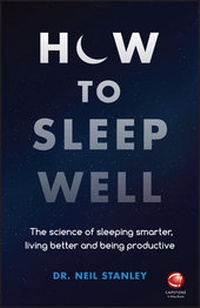
How to Sleep Well
Description

It has never been more important to sleep well.
Stop sabotaging your own sleep and finally wake up energised and refreshed
How to Sleep Well is a guidebook that can change your sleep and help you live your life more fully. Whether you struggle to fall asleep, sleep too lightly, wake too often or simply cannot wake up, this book can help you get on track to sleeping well and living better. It all starts with the science of sleep: how much you really need, what your body does during sleep and the causes behind many common sleep problems. Next, you'll identify the things in your life that are disrupting your sleep cycle and learn how to mitigate the impact; whether the pressure of workplace or you simply cannot quiet your own mind, these expert tips and tricks will help you get the sleep you need. Finally, you'll learn how to support healthy sleep during the waking hours - what works with or against your sleep - and you'll learn when the problem might be best dealt with by your GP.
Don't spend another restless night waiting for a bleary, groggy morning and sleepy day. Take control of your sleep tonight!
- Learn how sleep - or a lack thereof - affects every aspect of your life
- Identify the root causes of your sleep issues and cut them off at the source
- Discover the sleep advice that works, and the tips that are just plain daft.
- Create a healthy, calming bedtime routine that will help you get the rest you need
Sleep affects everything. Work and school performance, relationships, emotional outlook, your appearance and even your health. Sleeping poorly or not sleeping enough can dramatically impact your quality of life, but most sleep problems can be solved with a bit of self-adjustment. How to Sleep Well puts a sleep expert with over 36 years' experience at your disposal to help you finally get the restful, restorative sleep you need to live better and be productive.
More details
Other editions
Additional editions
Person
Dr Stanley is a member of the?European Sleep Research Society; American Academy of Sleep Medicine; British Sleep Society(Chairman 2000-2004, Committee member 1998-2000); European Society of Sleep Technologists. He was a member of the Executive Committee of the Assembly of National Sleep societies (2004 to 2009) and through that he is co-author of the Guidelines for Accreditation of Sleep Medicine Centres; Guidelines for Sleep Medicine Education in Europe and Standard Procedures for Adult Sleep Medicine.
In addition to setting up a clinical sleep service at the HPRU, Dr Stanley was also involved in the setting up and development of the clinical sleep service at The London Clinic. He has also worked clinically at ScanSleep, Copenhagen and Lovisenberg Hospital, Oslo.?Dr Stanley?now spends most of his time travelling the UK and abroad lecturing on the benefits of good sleep to healthcare professionals, companies and members of the public. This includes clients and organisations such as Shell, EPC-Groupe, Vispring beds, Perrigo, Pfizer, GE Healthcare, Goldsmiths College of music and drama, The Mindfulness professional, WeSleep, SleepWell Milk, Vispring, Evotec, Sanofi-Aventis, Astellas, Ferring, Lunbeck, BOC, Takeda, Boots, GSK, Passion for Life, Soothsoft, Lightsleeper, John Cotton, Perrigo, Maribo -Medica and ScanSleep.
Dr Stanley is regularly quoted as a sleep expert in the UK and international media, and?has worked with numerous PR companies to provide sleep expertise for product messaging for brands such as:?Department of Transport,?Chessington World of Adventures,?Disney,?Horlicks, Nytol, British Cheese Council, The Sleep Council, Snoreeze,?Crampex, Hillarys Blinds,?Norwich Theatre Royal (Northern Ballet Theatre A Midsummer's night Dream),?H7, Deep Relief and?Furniture Village.
Content
About the Author ix
Introduction xiii
Prologue xvii
1.What is Sleep? 1
An Introduction to Sleep 2
Why do we Sleep? 2
What is Sleep? 3
Circadian Rhythms 6
How Much Sleep do I Need? 7
The Eight-Hour Myth 8
Are you a lark or an owl? 10
Sleepy or Tired? 11
An Hour before Midnight 12
Is Daylight Saving Time Incredibly Disruptive? 13
Dreams and Dreaming 14
Children and Sleep 19
Why do Teenagers Sleep so Much? 22
Sleep as we Age 26
Women and Sleep 28
Why Men Fall Asleep After Sex 30
Napping30
2.Why is Sleep Important?35
Sleep and Health 36
Sleep and Relationships 37
Sleep and Business/Leadership 39
Economic Cost of Insomnia 42
Sleep and Academic Performanc43
Sleep and Athletic Performance 44
Sleep and Healthy Eating 46
Sleep and Weight 48
Sleep and Exercise 50
Sleep and Driving 50
Beauty Sleep 53
3. Why we are not Sleeping 55
Fads 56
How Business Impacts Sleep 58
The 24-Hour Society 66
Worry/Stress 68
Children 69
Bed Partners 72
4. Sleep Disorders 75
Insomnia 76
Periodic Limb Movement Disorder (PLMD) 82
Restless Legs Syndrome (RLS) 82
Nocturia 83
Snoring and Obstructive Sleep Apnoea 84
Teeth Grinding or Clenching (Bruxism) 85
Circadian Rhythm Disorders 86
Night Cramps 87
Narcolepsy 87
Parasomnias (or Things That Go Bump in the Night) 88
Jet lag 92
5. Treatments for Sleep Problems 95
When to Consider Sleeping Pills 96
Over-the-Counter Sleep Aids 97
Prescription Sleeping Pills 97
Cognitive Behavioural Therapy for Insomnia (CBT-I) 102
Sleep Technology is the Future! 107
6. How to Sleep Well 111
Tips and Techniques That May Help You Get Better Sleep 113
The Bedroom 118
The Bed 122
Sleep Foods and Supplements 130
How to Sleep in the Heat 132
7. How to Get Your Child to Sleep 135
How to Get Your Child to Sleep 137
Is Co-sleeping With my Child Wrong? 138
8. Businesses and Sleep 141
How to Make Shift Work Tolerable 146
9. Why You Should Actually be Able to Sleep in Hotels 153
How to Sleep in a Hotel 156
10. 36 Things You Don't Need to Do to Sleep Better 159
Do I Need 'Professional' Help? 160
Do I Have to Buy the Latest Sleep Book? 162
Do I Have to Eat a Banana Before Bed? 163
Do I Really Need to Stop Drinking Coffee at Noon? 163
What About a Nice Cup of Tea? 164
Don't Take my Chocolate Away From Me 164
Must I Avoid Spicy Foods 4-6 Hours Before Bedtime? 165
Am I a Bear, Lion, Wolf or Dolphin? 165
Should I Buy a 'Bed in a Box'166
Should I Take Melatonin? 167
Does it Matter What Position I Sleep in? 168
I'll Sleep When I am Dead 169
Early Nights Don't Work 169
You Cannot Catch up on Sleep 170
Morning People are Better 170
Do I Need to 'Ground' or 'Earth' Myself or my Bed? 171
I Have a Bad Back so I Need a Firm Mattress 172
Stanley087683_ftoc.indd vii
Should I Paint my Bedroom a Particular Colour? 172
It's Hot, do I Need to Sleep Like an Egyptian? 173
Is it Natural to Sleep in Two Segments? 173
'I am Superman': Polyphasic Napping 175
Do I Need to Sleep in 90-minute Cycles? 175
Do I Have to Avoid Alcohol to get Good Sleep? 176
I Hear Voices in my Head: Autonomous Sensory Meridian Response (ASMR) 177
The Rhythm of the Night: Binaural Beats 177
Do I Need to Sleep Like a 'Caveman'? - Palaeo Sleep 178
Get to Sleep in Under 60 Seconds: 4-7-8 Breathing 179
You'll Sleep Better Naked 180
Do I Need to Avoid Blue Light? 181
Do I Need an Alarm to Remind me to go to Sleep? 182
Do I Have to Ban my Pets from the Bedroom? They are so Cute! 182
Counting Sheep, Surely that Works? 183
Do I Need to go to a Sleep 'Spa'? 183
Help! My Room is Cluttered 184
Must I Eat Breakfast Within 30 Minutes of Waking Up? 184
Mindfulness and Sleep 185
Conclusion 187
Appendix 1 189
Appendix 2 193
Index 215
PROLOGUE: THE END OF THE WORLD IS NIGH!
Our ancestors were using fire, for heat, protection and light, between 300 000-400 000 years ago, before Homo sapiens evolved. Thus, for our entire history we have not been slaves to going to sleep with the rising and setting of the sun. The idea that this only happened recently, because of Edison and his lightbulb, is frankly ridiculous. The oldest evidence for something that specifically functioned as a bed dates back at least 77 000 years. Approximately 10 000 years ago we started building substantial structures, first in wood and later of stone, as our houses. Then about the same time we stopped believing in ghosts, witches and the devil, we started putting glass windows in our humble abodes. All these trappings of civilisation mean that we now sleep in an environment where
- There is a low risk from pathogens.
- We, and our livestock, are safe from predators and our enemies.
- We are dry and warm, without the need to tend the fire.
- We sleep privately with at most one other person, with little if any body contact.
- Our bedrooms are quiet, dark, fresh-smelling with access to clean fresh air.
- We sleep in a comfortable bed with clean dry bedding, free from biting parasites.
- We are secure behind locked and alarmed doors and windows so we no longer need someone to remain on watch or be woken by our guard dogs.
- The eight-hour day and working time directives exist to ensure we have adequate time for sleep.
- Computers and robots are promised to allow us to work even less.
These should be halcyon days for sleep.
However, it has been claimed that we are actually living in the midst of a 'catastrophic' sleep loss epidemic, which is having a 'catastrophic' impact on our health, our life expectancy, our safety and our productivity. Furthermore, claims are made that virtually every major disease is said to be linked to sleep loss and this lack of sleep is perhaps the greatest curable disease in the world right now.
Scary stuff I think you will agree, but is it actually true?
Well the first issue with this idea is one of definition, because it is not clear as to what the research is actually referring to when they talk about poor/ insufficient /short sleep. Is it people who naturally only need <6 hours sleep a night, i.e. they have a genetic disposition to short sleep, or is it someone who only sleeps <6 hours and by doing so is getting less sleep than they their genetics dictate. These are two different things, the first person cannot change nor can the risk of any negative effects, whereas the second person can, and probably should, change.
Are we really in the midst of a sleep-loss epidemic, 'catastrophic' or otherwise?
Despite what is claimed, there is actually very little reliable data about how we slept during the last hundred years and absolutely none from before that time. In light of all the recent scaremongering it is hard to believe that there is actually very little evidence to support the assertion that adult sleep duration has decreased in recent decades.
In a review of data from 15 countries from the 1960s until the 2000s, self-reported average sleep duration of adults was found to have actually increased in 7 countries: Bulgaria, Poland, Canada, France, Britain, Korea, and the Netherlands (range: 0.1-1.7 min per night each year) and decreased in 6 countries: Japan, Russia, Finland, Germany, Belgium, and Austria (but only by 0.1-0.6 min per night each year). Inconsistent results were found for the United States and Sweden. There was no clear social or economic grouping of the countries that might explain the diverse trends. So even where there has been a decrease in sleep duration it could hardly be considered 'catastrophic'.
A further study of data from 10 developed countries found that instead of the anticipated increase in short sleep, longer sleep durations had become more common across these nations. Short sleep had increased only in Italy and Norway but had decreased in Sweden, the United Kingdom, and the United States. Long sleep had increased in Australia, Finland, Sweden, the United Kingdom, and the United States but had decreased in Canada and Italy. No changes were observed in Germany or the Netherlands. The limited increases in short sleep duration challenge the claim of increasingly sleep-deprived societies, especially as long sleep has become more widespread than short sleep, at least when reported in time-use diaries. The worldwide decline in adult sleep duration seems to have been somewhat overstated.
A recent meta-analysis of objective sleep duration in healthy volunteers, as measured by polysomnography, (recording a person's brainwaves and other physiological variables in order to accurately measure sleep), also demonstrated that sleep time has not declined over the past 50 years.
But one might point out that the Centers for Disease Control and Prevention (CDC) states more than one third of US respondents reported typically sleeping less than 7 hours in a 24-hour period. While that may be true, it is only relevant firstly if you accept that fewer than 7 hours is the definition of short sleep and, secondly, if you can demonstrate using precisely the same survey methodology that there has been a change over time in the numbers of people having short sleep. Such data does not exist.
Is there evidence of a 'catastrophic' impact of poor sleep on our health, our life expectancy, our safety and our productivity?
The idea that an epidemic of insufficient sleep is a contributor to the development of major diseases, such as to Parkinson's, dementia, cancer, heart disease, obesity, diabetes, etc., rests largely on the question of whether sleep duration has declined in the last few decades. As shown above, evidence to support this notion does not in fact exist, at least in healthy sleepers.
Poor sleep may be associated with all of these illnesses, and doubtless many more, but a large study of middle-aged adults found that insomnia complaints did not predict an increased risk of death, nor interestingly did use of sleeping tablets.
The suggestion that there has been a 'catastrophic' impact of poor sleep on our life expectancy would seem hard to justify given the steady and significant increase in life expectancy over the last 150 years or so, for instance in the UK, data from the Office for National Statistics, has shown that over the last 100 years life expectancy at birth has increased by nearly 3 years per decade, essentially doubling since 1841.
Male Female 1841 40.17 42.16 years 1900 44.13 47.77 years 1950 66.42 71.54 years 2000 75.96 80.59 years 2010 78.97 82.80 yearsData from a large study showed that taking 7 hours sleep as the norm, people sleeping 6 hours had a 7% relatively greater risk of dying. This may seem to be worrying proof of the negative effects of short sleep on longevity, however this is not the whole story, the increased risk of dying in the group having 8 hours sleep was actually 12%, and for those sleeping 9 hours as much as 42% when compared to 7 hours.
With regards to safety, figures from the Bureau of Labor Statistics in the US shows that the number of non-fatal occupational injuries and illnesses per 100 full-time employees has fallen from 11 in 1973 to 2.9 in 2016.
Other data from the Bureau of Labor Statistics concerning productivity shows that US business sector output has increased more than ninefold since 1947 while the hours worked to produce that output have not quite doubled.
Of course, there are a number of contributory factors which account for the change in these figures, but to make the argument that there has been a 'catastrophic' effect of poor sleep seems problematic unless you are able to show that these figures would be appreciably different if we all slept better.
A survey attempted to quantify the benefit of the complete eradication of insomnia on work performance due to presenteeism, (this is where you are at work but are doing nothing productive), they found that it would lead to a reduction of between 5.4% and 7.8% of work performance lost.
A recent report found that a person sleeping less than six hours loses six more working days due to absenteeism or presenteeism per year than a worker sleeping seven to nine hours.
So, it is not really evident that there is a large negative impact of poor sleep, let alone one that is 'catastrophic'.
Is virtually every major disease linked to sleep loss?
Poor sleep may be linked with various diseases. However, these are associations not evidence of causation. Data from large studies mean that even a very small effect can become statistically significant, but that does not in any way mean that it is clinically relevant. For instance, data from the 'Sleep Heart Health Study' shows that people sleeping 6-7 hours had a significantly higher risk of hypertension that people sleeping 7-8 hours. However, the difference in blood pressure between the two groups was actually very small (systolic 2.1mmHg and diastolic 0.7mmHg).
Many of the modern-day illnesses such as Parkinson's, dementia,...
