

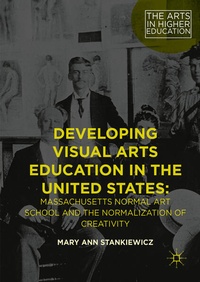
Developing Visual Arts Education in the United States
Description

This book examines how Massachusetts Normal Art School became the alma mater par excellence for generations of art educators, designers, and artists. The founding myth of American art education is the story of Walter Smith, the school's first principal. This historical case study argues that Smith's students formed the professional network to disperse art education across the United States, establishing college art departments and supervising school art for industrial cities. As administrative progressives they created institutions and set norms for the growing field of art education. Nineteenth-century artists argued that anyone could learn to draw; by the 1920s, every child was an artist whose creativity waited to be awakened. Arguments for systematic art instruction under careful direction gave way to charismatic artist-teachers who sought to release artistic spirits. The task for art education had been redefined in terms of living the good life within a consumer culture of work and leisure.
More details
Other editions
Additional editions
Person
Mary Ann Stankiewicz is Professor of Art Education at Penn State University, USA. Former president of the National Art Education Association and current Senior Editor of Studies in Art Education , she received the National Art Education Association's 2014 National Art Educator award.
