

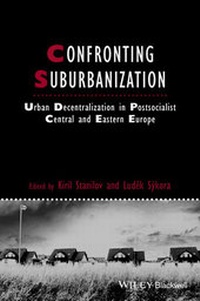
Confronting Suburbanization
Urban Decentralization in Postsocialist Central and Eastern Europe
Published on 4. November 2014
360 pages
978-1-118-29588-5 (ISBN)
Description

This fascinating book explains the processes of suburbanizationin the context of post-socialist societies transitioning from onesystem of socio-spatial order to another. Case studies of sevenCentral and Eastern Europe city regions illuminate growth patternsand key conditions for the emergence of sprawl.
* Breaks new ground, offering a systematic approach to theanalysis of the global phenomenon of suburbanization in apost-socialist context
* Tracks the boom of the post-socialist suburbs in seven CEEcapital city regions - Budapest, Ljubljana, Moscow, Prague,Sofia, Tallinn, and Warsaw
* Situates the experience of the CEE countries in the broadercontext of global urban change
* Case studies examine the phenomenon of suburbanization alongfour main vectors of analysis related to development patterns,driving forces, consequences and impacts, and management ofsuburbanization
* Highlights the critical importance of public policies andplanning on the spread of suburbanization
Reviews / Votes
'This book provides a wealth of novel insights into aprocess that has received very little systematic attention in amongresearchers and policy-makers alike: the vast process of urbandispersal unfolding throughout European countries situated east ofthe former Iron Curtain. Moving seamlessly across a wide range ofgeographical contexts - from the urbanization of thecountryside seen around Ljubljana to Moscow's regionalsuburbanization model - the authors demonstrate an acuteability to detect the local nuances and generic trends thatcharacterize such dynamics. This edited collection can thus serveas both a foundational text for scholars as well as a guidancedocument for practitioners and decision-makers.' Stefan Bouzarovski, Professor of Geography and Director of theCentre for Urban Resilience and Energy, University ofManchester 'Confronting Suburbanization sheds a bright lighton the processes of contemporary metropolitan growth in afascinating region with a long and rich urban history, andcommunist legacies which formed a springboard for unprecedentedpost-socialist dynamics. In this volume, a set of renownedinternational authors with close local knowledge try to untanglethe complexities resulting from both external and internal forces -political reform, economic liberalization, social and demographiccontext - as they manifest themselves in terms of metropolitandevelopment. The authors offer numerous insights, and clearly notethat there is much both East and West can learn from this dynamicenvironment where intensified societal and physical transformationis happening before oureyes.' Zorica Nedovic-Budic, Professor Chair of Spatial Planning,University College DublinMore details
Other editions
Additional editions
K. Stanilov
Confronting Suburbanization - Urban Decentralization in Postsocialist Central and Eastern Europe
Software
11/2014
Wiley
€95.73
No shipping information available
Kiril Stanilov | Ludek Sykora
Confronting Suburbanization
Urban Decentralization in Postsocialist Central and Eastern Europe
Book
10/2014
Wiley
€39.00
Article not available at the moment
Kiril Stanilov | Ludek Sykora
Confronting Suburbanization
Urban Decentralization in Postsocialist Central and Eastern Europe
Book
10/2014
Wiley
€71.90
Shipment within 3-4 weeks
Persons
Kiril Stanilov is a Senior Research Associate at theMartin Centre for Architectural and Urban Studies, University ofCambridge. His research interests are centred on explorations ofcontemporary patterns of urban growth and change, and the roleplayed by public policies in shaping urban form transformations.His book publications include Twenty Years of Transition(2009), The Post-Socialist City (2007), and SuburbanForm (2003).
Ludek Sykora is a Professor in the Facultyof Science, Charles University in Prague. His research is focusedon conceptualization and empirical studies of urban transformationsin post-communist cities. He is the joint author of RegionalPolicy and Planning in Europe (with Paul Balchin and GregoryBull, 1999) and author of a number of journal articles and bookchapters dealing with urban change in Central and East Europeancities.
Content
Notes on Contributors vii
List of Illustrations x
Glossary xvi
Series Editors' Preface xx
Preface xxi
1 The Challenge of Postsocialist Suburbanization 1
Ludìk Sykora and Kiril Stanilov
2 Urban Sprawl on the Danube: The Impacts of Suburbanization in Budapest 33
Zoltán Kovács and Iván Tosics
3 Confronting Suburbanization in Ljubljana: From "Urbanization of the Countryside" to Urban Sprawl 65
Natasa Pichler-Milanoviæ
4 Suburbanization of Moscow's Urban Region 97
Isolde Brade, Alla Makhrova, and Tatyana Nefedova
5 Prague: Urban Growth and Regional Sprawl 133
Ludìk Sykora and Ondre^ j Mulíce^ k
6 Sprawling Sofia: Postsocialist Suburban Growth in the Bulgarian Capital 163
Kiril Stanilov and Sonia Hirt
7 Suburbanization in the Tallinn Metropolitan Area 192
Kadri Leetmaa, Anneli Kährik, Mari Nuga, and Tiit Tammaru
8 Lessons from Warsaw: The Lack of Coordinated Planning and Its Impacts on Urban Sprawl 225
Andrzej Lisowski, Dorota Mantey, and Waldemar Wilk
9 Postsocialist Suburbanization Patterns and Dynamics: A Comparative Perspective 256
Kiril Stanilov and Ludìk Sykora
10 Managing Suburbanization in Postsocialist Europe 296
Kiril Stanilov and Ludìk Sykora
Index 321
1.1a Location of socialist housing estates and industrial zones in Prague. Source: the authors. 1.1b Location of socialist housing estates and industrial zones in Sofia. Source: the authors. 1.2 Urban development in Greater Prague, 1989-2010. Source: the authors. 2.1 Structure of Budapest's metropolitan region (BMR). Based on data from Dövényi and Kovács, 2006. 2.2 Net migration in the municipalities of Budapest's urban region, 1990-2007 (immigrants/1,000 inhabitants). Based on data from the Hungarian Central Statistical Office, 1991 and 2008. 2.3 Volume of newly built dwelling units in Budapest and its agglomeration, 1990-2010. Based on data from the Hungarian Central Statistical Office, 1991 and 2011. 2.4 Development poles in Budapest's urban region. Adapted from Dövényi and Kovács, 2006. 3.1 Administrative boundaries within Ljubljana's metropolitan area. Based on data from Pichler-Milanovic, 2005a, various statistical yearbooks of the Statistical Office of the Republic of Slovenia (SURS), and the Surveying and Mapping Authority of the Republic of Slovenia (GURS). 3.2 Population change in municipalities in Slovenia. Based on data from Benini and Naldi, 2007, various statistical yearbooks of the Statistical Office of the Republic of Slovenia (SURS), and the Surveying and Mapping Authority of the Republic of Slovenia (GURS). 3.3 Housing construction in Ljubljana's metropolitan area. Based on data from Pichler-Milanovic, 2005a and the Statistical Office of the Republic of Slovenia (SURS) for 2012 (methodology of census in 2011). 3.4 An example of a new single-family detached house in Ljubljana's urban region. Photo by Pichler-Milanovic. 3.5 An example of a new mansion-style house in settlements within Ljubljana's suburban periphery. Photo by Pichler-Milanovic. 4.1 Concentric and sectoral structure of Oblast Moscow. Based on data from Ioffe and Nefedova, 2000: 52. 4.2 Typical Russian dachas. Photo by Tatyana Nefedova. 4.3 Distribution of new suburban settlements in Moscow's suburban region. Based on data from Makhrova, 2006. 4.4 Townhouse community in Dubrovka. Photo by Tatyana Nefedova. 4.5 Raion ring (a) and sector share (b) in new residential construction in Moscow Oblast: 1990, 2001, and 2005. Based on data from Roskomstat, 2006. 4.6 Construction of Moscow City. Photo by Tatyana Nefedova. 4.7 Raion ring share in retail trade in Oblast Moscow: 1990, 2000, 2005, and 2010. Based on data from Makhrova, Nefedova, and Treivish, 2008; Rosmosoblkomstat, 2011. 5.1 Prague's city region and its zones. Source: the authors. 5.2 Housing construction: number of annually completed dwellings in 1997-2010 according to (a) territorial zones; (b) type of building in core; (c) inner suburbs; and (d) outer suburbs. Based on data from the Czech Statistical Office. 5.3 Housing construction: number of completed dwellings in Prague boroughs and suburban municipalities in 1997-2010. Based on data from the Czech Statistical Office. 5.4 Population change, 1991-2001 (relative increase per 1,000 inhabitants). Based on data from the Czech Statistical Office. 5.5 Population change, 2001-2011 (relative increase per 1,000 inhabitants). Based on data from the Czech Statistical Office. 5.6 Number of jobs in towns and cities in Prague and Central Bohemia in 2001. Based on data from the Czech Statistical Office. 5.7 Nonresidential suburbanization in the Prague city region. Source: the authors. 6.1 Greenbelt between Sofia and villages at the foothills of Vitosha Mountain. Photo by K. Stanilov. 6.2 Commercial advertisement of new housing development at the edge of Sofia. Source: K. Stanilov. 7.1 Map of Tallinn's metropolitan area (TMA). Source: the authors. 7.2 Net annual migration to Estonian urban settlements in the Soviet period. Based on data from Sakkeus 1991 and Leetmaa 2008. 7.3 Socialist housing construction in the agricultural centers of Tallinn's metropolitan area (TMA) (Tabasalu). Photo by Kadri Leetmaa. 7.4 New construction and renovation in summer home settlements. Source: Summer Home Areas Survey, 2007. 7.5 Housing types in suburban area of migrants from Tallinn, 1989-2000. Based on data from the Estonian Statistical Office, 2000 and from Leetmaa and Tammaru, 2007: 136. 7.6 Merging new suburban settlements on the borders of Tallinn (Tiskre). Photo by Kadri Leetmaa. 7.7 New retail and service facilities on the edges of the city (Tallinn, Tabasalu roundabout). Photo by Kadri Leetmaa. 7.8 Annual residential building completions in Tallinn and its suburbs, 1993-2010 (m2). Based on data from the Estonian Building Register. 7.9 Annual nonresidential building completions in Tallinn and its suburbs, 1998-2009 (m2). Based on data from the Estonian Building Register. 7.10 Share of Tallinn in national residential and nonresidential building completions (apartment buildings, single-family houses and nonresidential buildings: % of m2 issued). Based on data from the Estonian Building Register. 7.11 Nonresidential building completions by type of nonresidential buildings in Tallinn and its suburbs, 1998-2009 (m2). Based on data from the Estonian Building Register. 8.1 Warsaw's metropolitan area (WMA). Source: the authors. 8.2 Demographic changes. Based on publications by the Central Statistical Office.
(a) Change in population (1988-2002; 1988 = 100).
(b) Immigrants (1989-2002) as percentage of the total population change in 2002.
(c) Population at post-working age (percentage change; 1988-2002).
(d) People with higher education (percentage; 2002). 8.3 Housing changes. Based on publications by the Central Statistical Office.
(a) Changes in the number of dwellings (1988-2006; 1988 = 100).
(b) Changes in residential floor space (1988-2002; 1988 = 100).
(c) Changes in residential floor space per person (1988-2002; in m2).
(d) Dwellings with a water pipeline system (percentage change; 1988-2002). 8.4 Economic changes. Based on publications by the Central Statistical Office (national census results from 1988 and 2002) and on the Regional Data Bank.
(a) Change in the number of enterprises (1995-2006; 1995 = 100).
(b) Number of enterprises per 1,000 inhabitants (2006).
(c) Number of commercial companies with foreign capital participation (change in 1995-2006; 1995 = 100).
(d) Population with non-agricultural sources of maintenance (change in percentage; 1988-2002). 8.5 Large-format stores and modern warehouses in Warsaw's metropolitan area (WMA), outside Warsaw. Source: the authors. 8.6 Concentric zonal division of municipalities in Warsaw's metropolitan area (WMA). Source: the authors. 9.1 Diagram of population density gradients in socialist, postsocialist, and western cities. Source: the authors. 9.2 Relative growth of urban and suburban population, 1991-2011. Source: data from national census statistics. 9.3 Relative growth of urban and suburban population by decade, 1991-2001 and 2001-2011. Source: data from national census statistics. 9.4 Proportion of metropolitan population residing outside central cities, 1991, 2001, and 2011. Source: data...
List of Illustrations
Figures
1.1a Location of socialist housing estates and industrial zones in Prague. Source: the authors. 1.1b Location of socialist housing estates and industrial zones in Sofia. Source: the authors. 1.2 Urban development in Greater Prague, 1989-2010. Source: the authors. 2.1 Structure of Budapest's metropolitan region (BMR). Based on data from Dövényi and Kovács, 2006. 2.2 Net migration in the municipalities of Budapest's urban region, 1990-2007 (immigrants/1,000 inhabitants). Based on data from the Hungarian Central Statistical Office, 1991 and 2008. 2.3 Volume of newly built dwelling units in Budapest and its agglomeration, 1990-2010. Based on data from the Hungarian Central Statistical Office, 1991 and 2011. 2.4 Development poles in Budapest's urban region. Adapted from Dövényi and Kovács, 2006. 3.1 Administrative boundaries within Ljubljana's metropolitan area. Based on data from Pichler-Milanovic, 2005a, various statistical yearbooks of the Statistical Office of the Republic of Slovenia (SURS), and the Surveying and Mapping Authority of the Republic of Slovenia (GURS). 3.2 Population change in municipalities in Slovenia. Based on data from Benini and Naldi, 2007, various statistical yearbooks of the Statistical Office of the Republic of Slovenia (SURS), and the Surveying and Mapping Authority of the Republic of Slovenia (GURS). 3.3 Housing construction in Ljubljana's metropolitan area. Based on data from Pichler-Milanovic, 2005a and the Statistical Office of the Republic of Slovenia (SURS) for 2012 (methodology of census in 2011). 3.4 An example of a new single-family detached house in Ljubljana's urban region. Photo by Pichler-Milanovic. 3.5 An example of a new mansion-style house in settlements within Ljubljana's suburban periphery. Photo by Pichler-Milanovic. 4.1 Concentric and sectoral structure of Oblast Moscow. Based on data from Ioffe and Nefedova, 2000: 52. 4.2 Typical Russian dachas. Photo by Tatyana Nefedova. 4.3 Distribution of new suburban settlements in Moscow's suburban region. Based on data from Makhrova, 2006. 4.4 Townhouse community in Dubrovka. Photo by Tatyana Nefedova. 4.5 Raion ring (a) and sector share (b) in new residential construction in Moscow Oblast: 1990, 2001, and 2005. Based on data from Roskomstat, 2006. 4.6 Construction of Moscow City. Photo by Tatyana Nefedova. 4.7 Raion ring share in retail trade in Oblast Moscow: 1990, 2000, 2005, and 2010. Based on data from Makhrova, Nefedova, and Treivish, 2008; Rosmosoblkomstat, 2011. 5.1 Prague's city region and its zones. Source: the authors. 5.2 Housing construction: number of annually completed dwellings in 1997-2010 according to (a) territorial zones; (b) type of building in core; (c) inner suburbs; and (d) outer suburbs. Based on data from the Czech Statistical Office. 5.3 Housing construction: number of completed dwellings in Prague boroughs and suburban municipalities in 1997-2010. Based on data from the Czech Statistical Office. 5.4 Population change, 1991-2001 (relative increase per 1,000 inhabitants). Based on data from the Czech Statistical Office. 5.5 Population change, 2001-2011 (relative increase per 1,000 inhabitants). Based on data from the Czech Statistical Office. 5.6 Number of jobs in towns and cities in Prague and Central Bohemia in 2001. Based on data from the Czech Statistical Office. 5.7 Nonresidential suburbanization in the Prague city region. Source: the authors. 6.1 Greenbelt between Sofia and villages at the foothills of Vitosha Mountain. Photo by K. Stanilov. 6.2 Commercial advertisement of new housing development at the edge of Sofia. Source: K. Stanilov. 7.1 Map of Tallinn's metropolitan area (TMA). Source: the authors. 7.2 Net annual migration to Estonian urban settlements in the Soviet period. Based on data from Sakkeus 1991 and Leetmaa 2008. 7.3 Socialist housing construction in the agricultural centers of Tallinn's metropolitan area (TMA) (Tabasalu). Photo by Kadri Leetmaa. 7.4 New construction and renovation in summer home settlements. Source: Summer Home Areas Survey, 2007. 7.5 Housing types in suburban area of migrants from Tallinn, 1989-2000. Based on data from the Estonian Statistical Office, 2000 and from Leetmaa and Tammaru, 2007: 136. 7.6 Merging new suburban settlements on the borders of Tallinn (Tiskre). Photo by Kadri Leetmaa. 7.7 New retail and service facilities on the edges of the city (Tallinn, Tabasalu roundabout). Photo by Kadri Leetmaa. 7.8 Annual residential building completions in Tallinn and its suburbs, 1993-2010 (m2). Based on data from the Estonian Building Register. 7.9 Annual nonresidential building completions in Tallinn and its suburbs, 1998-2009 (m2). Based on data from the Estonian Building Register. 7.10 Share of Tallinn in national residential and nonresidential building completions (apartment buildings, single-family houses and nonresidential buildings: % of m2 issued). Based on data from the Estonian Building Register. 7.11 Nonresidential building completions by type of nonresidential buildings in Tallinn and its suburbs, 1998-2009 (m2). Based on data from the Estonian Building Register. 8.1 Warsaw's metropolitan area (WMA). Source: the authors. 8.2 Demographic changes. Based on publications by the Central Statistical Office.
(a) Change in population (1988-2002; 1988 = 100).
(b) Immigrants (1989-2002) as percentage of the total population change in 2002.
(c) Population at post-working age (percentage change; 1988-2002).
(d) People with higher education (percentage; 2002). 8.3 Housing changes. Based on publications by the Central Statistical Office.
(a) Changes in the number of dwellings (1988-2006; 1988 = 100).
(b) Changes in residential floor space (1988-2002; 1988 = 100).
(c) Changes in residential floor space per person (1988-2002; in m2).
(d) Dwellings with a water pipeline system (percentage change; 1988-2002). 8.4 Economic changes. Based on publications by the Central Statistical Office (national census results from 1988 and 2002) and on the Regional Data Bank.
(a) Change in the number of enterprises (1995-2006; 1995 = 100).
(b) Number of enterprises per 1,000 inhabitants (2006).
(c) Number of commercial companies with foreign capital participation (change in 1995-2006; 1995 = 100).
(d) Population with non-agricultural sources of maintenance (change in percentage; 1988-2002). 8.5 Large-format stores and modern warehouses in Warsaw's metropolitan area (WMA), outside Warsaw. Source: the authors. 8.6 Concentric zonal division of municipalities in Warsaw's metropolitan area (WMA). Source: the authors. 9.1 Diagram of population density gradients in socialist, postsocialist, and western cities. Source: the authors. 9.2 Relative growth of urban and suburban population, 1991-2011. Source: data from national census statistics. 9.3 Relative growth of urban and suburban population by decade, 1991-2001 and 2001-2011. Source: data from national census statistics. 9.4 Proportion of metropolitan population residing outside central cities, 1991, 2001, and 2011. Source: data...
