

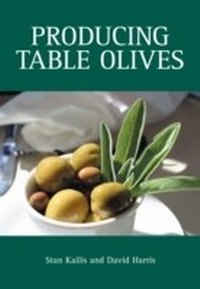
Producing Table Olives
1st Edition
Published on 1. February 2007
383 pages
978-0-643-09438-3 (ISBN)
Description

Australia has the ideal conditions for growing and processing table olives. In a climate where the majority of table olives eaten by Australians are imported, real opportunities exist for a domestic table olive industry. Attention to quality and safety will ensure that Australian table olive producers are in a position to tackle and make inroads into the international export market. The aim of this manual is to provide olive growers and processors with internationally based guidelines for ensuring the quality and safety of processed table olives. This manual covers all aspects essential for the production of safe, nutritious and marketable table olives including site selection, recommended varieties, pest and disease control, primary and secondary processing, and quality and safety testing.
More details
Other editions
Additional editions
S. Kailis | D. Harris
Producing Table Olives
Book
02/2007
Landlinks Press
€101.71
Article exhausted; check different version
Content
- Intro
- Title
- Copyright
- Contents
- Foreword
- Preface
- Acknowledgments
- About the authors
- Chapter 1: Table olive perspectives
- Introduction
- Historical aspects of table olives
- Historical aspects of Australian table olives
- Cultural perspectives regarding table olives
- International table olive trade
- Australian table olive trade activities
- Australian table olive perspectives
- Table olive activities in Australia
- Australian table olive trade
- Activities undertaken by Australian table olive growers/processors
- Australian table olive production
- Australian table olive imports
- Australian table olive exports
- Australian table olive consumption
- Olive growing in Australia
- Conceptual approach to the Australian table olive industry
- Chapter 2: The olive tree Olea europaea
- The olive tree
- Natural history of the olive tree
- Natural history of olive production
- Principal components of the olive tree
- Olive leaves
- Olive roots
- Olive trunk, branches and stems
- Olive suckers
- Annual olive events
- Critical water requirements
- Vegetative growth in the olive
- Reproductive development in the olive
- Olive flower fertilisation and fruit set
- Olive fruit development and growth
- Stages of olive fruit growth
- Biennial bearing (alternate bearing) and the olive tree
- Olive fruit
- Description of olive fruit
- Olive fruit shape and size
- General physical features of olive fruit
- Olive exocarp (epidermis and cuticle)
- Olive fruit flesh (mesocarp)
- Olive endocarp and embryo
- Moisture content of raw olives
- Flesh to stone ratio of olives
- Oil content of raw olive flesh
- Carbohydrate levels in raw olive flesh
- Phenolic substances in raw olive flesh
- Protein levels in raw olive flesh
- Pigments in raw olive flesh
- Mineral content of raw olive flesh
- Further components in raw olive flesh
- Natural microbiological flora on olive fruit
- Changes in olive flesh resistance during maturation
- Internationally important table olive varieties
- Important table olive varieties
- Selected characteristics for table olive varieties
- Additional table olive varieties grown in Australia
- Chapter 3: Producing quality raw olives
- Introduction
- Basic requirements of raw olives
- Planning for table olive production
- Starting to grow table olives
- Planning the table olive orchard
- Local government and agency requirements for growing olives .
- Climatic considerations
- Chilling hours
- Heat degree-days and radiation
- Frost prone areas and extremely low temperatures
- Hot dry areas
- Water availability
- Site requirements
- Other considerations
- Varietal considerations for table olives
- Olive pollinating varieties
- Olive varieties and table olive processing
- New varietal considerations for table olives in Australia
- Establishment of the table olive orchard
- Olive orchard design
- Soil requirements
- Olive tree maintenance for quality olive production
- Soil management
- Fertilisers and manures
- Organic manures
- Nitrogen fertilisers
- Potassium fertilisers
- Phosphate fertilisers
- Olive orchard nutrition specifics
- Trace elements for olive trees
- Fertiliser requirements and monitoring nutritional status
- Irrigation requirements for olive production
- Olive productivity
- Maintenance of the olive tree
- Pruning tips for olive trees
- Stress factors and diseases that can affect olive trees
- Pests and disease management
- Integrated pest management
- Maturation states for table olive production
- Harvesting for table olive production
- Post-harvest handling of raw olives
- Undesirable qualities of raw olives for table olives
- Concluding remarks
- Chapter 4: Table olive processing: general aspects
- Introduction
- Table olive processing methods and varieties
- Good Manufacturing Practice (GMP) and table olives
- Water requirements for table olive production
- Planning table olive processing facilities
- Functional table olive processing facility
- General facilities and equipment required
- Protocol for cleaning and sanitising equipment
- Protocol for cleaning and sanitising food contact surfaces
- Table olive processing
- Table olive methods and styles
- Raw olives used for table olive production
- Common trade preparations of table olives
- Specialty table olive products
- Table olive styles
- Common table olive methods and products
- Primary processing specifications for table olives
- Secondary table olive processing specifications
- Finished table olive product specifications
- Generic processing protocol for table olives
- Acceptance of raw olives by processors
- Correct storage of raw olives at the processing facility
- Raw olives enter the table olive processing line
- Placement of table olives into processing tanks
- General methods for processing table olives
- Microorganisms relevant in table olive processing
- Manipulation of microbial activity
- Fermentation and table olives
- Anaerobic fermentation
- Environmental considerations with table olive processing
- Common methods of preservation for table olives
- Packaging of table olive products
- Pasteurisation of table olives
- Alternative procedures
- Chapter 5: Specific table olive processing methods
- Processed table olives available in Australia
- Wholesale table olive trade in Australia
- Sale of loose table olives in Australia
- Packaged table olive products in Australia
- Processing olives with water (water-cured)
- Step-by-step procedure for water-cured olives
- Processing olives with brine (brine-cured)
- Naturally black-ripe olives processed in brine
- Features of anaerobic conditions
- Green-ripe olives processed in brine
- Turning colour olives processed in brine
- Step-by-step method for processing untreated olives in brine under anaerobic conditions
- Bruised/cracked olives processed in brine
- Processing Kalamata-style table olives
- Traditional short method for processing Kalamata-style olives
- Long method for processing Kalamata-style olives
- Processing olives with lye (sodium hydroxide)
- Processing tips for treating green-ripe olives with lye
- Step-by-step method for processing green-ripe olives with lye
- Potential problems: stuck fermentations and corrective actions
- Stuck fermentations and their management
- Lye treated green-ripe olives without fermentation
- Step-by-step procedure for lye treated green-ripe olives without ferme
- Step-by-step method for Olive de Nimes
- Californian/Spanish-style black olives
- Step-by-step method for preparing Californian/Spanish-style black olives .
- Lye treatment 1
- Lye treatment 2
- Lye treatment 3
- Washing step
- Colour enhancing step
- Brining step
- Further steps
- Processing dried table olives (shrivelled olives)
- Salt-dried olives
- Step-by-step method for preparing salt-dried black olives
- Heat-dried table olives
- Step-by-step method for preparing sun/heat-dried olives
- Ferrandina-style table olives
- Step-by-step method for processing Ferrandina olives
- Post-processing table olive operations (secondary processing)
- Packing solutions for table olives
- Secondary table olive processing
- Adding vinegar and olive oil
- Recipe for packing solutions with brine, vinegar and olive oil
- Adding herbs, spices and marinades to table olives
- Recipes
- Antipasto
- Oil cured olives
- Pitting and stuffing table olives
- Step-by-step method for stuffing table olives
- Olive pastes
- Tapenade
- Step-by-step method for making tapenade
- Final table olive products
- Chapter 6: Quality and safety
- Introduction
- General qualities of packed table olives
- Quality and safety evaluation of processed olives
- Physical testing/evaluation of processed table olives
- Physical quality criteria for table olives
- Description of physical defects for processed table olives
- Chemical quality criteria for table olives
- Brine analysis
- ClinistixT and DiastixT test strips
- ClinitestT tablets
- High pressure liquid chromatography
- Salt refractometer
- Salometer
- Volhard titration method for sodium chloride estimation
- Accurate pH measurements using a pH meter
- Titration method with colour indicator (phenolphthalein)
- Titration method with pH meter
- Evaluation of table olive brines
- Table olive flesh analysis
- Carbohydrate and sugar levels in processed olive flesh
- Mineral content of processed olive flesh
- Microscopic examination of fermentation brines
- Microbiological evaluation of table olives
- Microbiological analysis of processed olive flesh and brines
- Organoleptic evaluation of table olive products
- Proposed IOOC organoleptic assessment of table olives
- Table olive spoilage and deterioration
- Malodorous deterioration of processed olives
- Packaging and labelling olive products
- Food-borne disease and table olives
- Physical contaminants: foreign matter
- Chemical contaminants
- Microbial contaminants
- Final table olive products
- Bibliography and additional reading
- Index
