

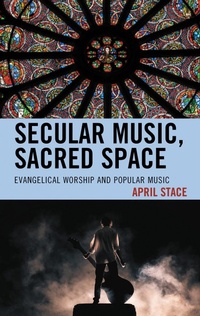
Secular Music, Sacred Space
Evangelical Worship and Popular Music
1st Edition
Published on 13. June 2017
1 pages
978-1-9787-8768-1 (ISBN)
Description

Easter Sunday, 2009, was the Sunday heard 'round the evangelical internet: NewSpring Church, the second-largest church in the Southern Baptist Convention and among the top one hundred largest churches in the US, had begun their service with the song "Highway to Hell" by hard rock band AC/DC. They had brazenly crossed the sacred/secular musical divide on the most important Sunday of the year, and commentary abounded on the value of such a step. Many were offended at the "desecration" of such a holy day, deriding Newspring as the "theater of the absurd." Others cheered NewSpring's engagement with "the culture" and suggested that music could be used to convert non-Christians. No mere debate over stylistic preferences, many expressed that foundational aspects of evangelical identity were at stake.
While many books have been written about religious music that utilizes popular music styles (a.k.a. "contemporary Christian music"), there has yet to be a scholarly treatment of how and why popular, secular music is utilized by churches. This book addresses that lacuna by examining this emerging trend in evangelical and "emerging" churches in America. What is the motivation behind using music that seemingly has no connection to Christian theology, values, or themes-such as music by Katy Perry, AC/DC, or Van Halen-and what can we learn about post-denominational evangelical churches in America by uncovering these motives?
In this book, April Stace uncovers several themes from an ethnographic study of these churches: the increasingly-porous boundary between the sacred and the secular, the importance placed on "authenticity" in contemporary American culture, how evangelicals are responding to what they perceive is an increasingly-secular society, the "turn to the subject" of contemporary culture, the desire to leave a space for expression of doubt in the worship service without fully authorizing that doubt, and the individualization of the construction of religious identity in the modern era.
While many books have been written about religious music that utilizes popular music styles (a.k.a. "contemporary Christian music"), there has yet to be a scholarly treatment of how and why popular, secular music is utilized by churches. This book addresses that lacuna by examining this emerging trend in evangelical and "emerging" churches in America. What is the motivation behind using music that seemingly has no connection to Christian theology, values, or themes-such as music by Katy Perry, AC/DC, or Van Halen-and what can we learn about post-denominational evangelical churches in America by uncovering these motives?
In this book, April Stace uncovers several themes from an ethnographic study of these churches: the increasingly-porous boundary between the sacred and the secular, the importance placed on "authenticity" in contemporary American culture, how evangelicals are responding to what they perceive is an increasingly-secular society, the "turn to the subject" of contemporary culture, the desire to leave a space for expression of doubt in the worship service without fully authorizing that doubt, and the individualization of the construction of religious identity in the modern era.
More details
Edition
1. Auflage
Language
English
Place of publication
United States
Publishing group
Bloomsbury Publishing Plc
Target group
Professional and scholarly
ISBN-13
978-1-9787-8768-1 (9781978787681)
Copyright in bibliographic data and cover images is held by Nielsen Book Services Limited or by the publishers or by their respective licensors: all rights reserved.
Schweitzer Classification
Other editions
Additional editions
Book
06/2017
Lexington Books
€119.30
Shipment within 15-20 days
Person
April Stace is affiliate professor at General Theological Seminary.
Content
Introduction
Chapter One: The Highway to Hell: Orientations in Ethnomusicology, Liturgical Studies, and Religious Studies
Chapter Two: Falling Slowly: The Context for Popular Music in Worship Services
Chapter Three: Blurred Lines: How We Define "Sacred" and "Secular"
Chapter Four: Roar: The Power of Music In and Against the "Culture"
Chapter Five: I Still Haven't Found What I'm Looking For: The Deficits of "Sacred" Music
Chapter Six: Hallelujah: Popular-Secular Music as a Language of Lament
Conclusion
Chapter One: The Highway to Hell: Orientations in Ethnomusicology, Liturgical Studies, and Religious Studies
Chapter Two: Falling Slowly: The Context for Popular Music in Worship Services
Chapter Three: Blurred Lines: How We Define "Sacred" and "Secular"
Chapter Four: Roar: The Power of Music In and Against the "Culture"
Chapter Five: I Still Haven't Found What I'm Looking For: The Deficits of "Sacred" Music
Chapter Six: Hallelujah: Popular-Secular Music as a Language of Lament
Conclusion
