

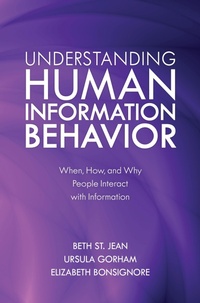
Understanding Human Information Behavior
When, How, and Why People Interact with Information
1st Edition
Published on 25. March 2021
306 pages
979-8-8818-5359-4 (ISBN)
Description

This introductory textbook aims to provide undergraduate students in information science and related disciplines with an applied grounding in information behavior. The book's primary focus is to provide explicit links between information behavior and the careers that students will pursue within the information professions. With a deeper understanding of information behavior, students will be better equipped to address the many types of barriers that frequently prevent people from effectively and efficiently accessing, understanding, managing, and/or using the information they need in the "real world."
The first six chapters of the book provide students with the fundamental building blocks of information behavior, introduce them to important related concepts, and provide a deep dive into information literacy, digital literacy, the digital divide and digital inclusion.
Chapters 7 through 12 introduce students to the scholarly communication system, providing guidance on how to find, read, and critically evaluate information behavior studies. Also explored in these chapters are the various methods used to investigate and understand people's information behaviors. Topics covered include research design, research methods, research ethics, user needs assessment, and human-computer interaction and associated design methods. This part of the book also covers some of the major information behavior models and theories that have been developed to describe, predict, and/or explain people's information behaviors.
In chapters 13 through 16, the authors provide an in-depth look into their own information behavior research areas, including consumer health information behavior and health justice; youth information behavior; legal information behavior and access to justice; and information behavior in libraries.
In the final chapter, students are first introduced to a wide range of careers within the information professions and then taken along on a deep dive into 10 specific jobs, with a special focus on the thread of information behavior that pervades the roles and responsibilities commonly associated with these positions.
Each chapter begins with one or more scenarios illustrating concepts covered in the chapter and ends with discussion questions.
The first six chapters of the book provide students with the fundamental building blocks of information behavior, introduce them to important related concepts, and provide a deep dive into information literacy, digital literacy, the digital divide and digital inclusion.
Chapters 7 through 12 introduce students to the scholarly communication system, providing guidance on how to find, read, and critically evaluate information behavior studies. Also explored in these chapters are the various methods used to investigate and understand people's information behaviors. Topics covered include research design, research methods, research ethics, user needs assessment, and human-computer interaction and associated design methods. This part of the book also covers some of the major information behavior models and theories that have been developed to describe, predict, and/or explain people's information behaviors.
In chapters 13 through 16, the authors provide an in-depth look into their own information behavior research areas, including consumer health information behavior and health justice; youth information behavior; legal information behavior and access to justice; and information behavior in libraries.
In the final chapter, students are first introduced to a wide range of careers within the information professions and then taken along on a deep dive into 10 specific jobs, with a special focus on the thread of information behavior that pervades the roles and responsibilities commonly associated with these positions.
Each chapter begins with one or more scenarios illustrating concepts covered in the chapter and ends with discussion questions.
More details
Edition
1. Auflage
Language
English
Place of publication
United States
Publishing group
Bloomsbury Publishing Plc
Illustrations
28 b/w photos; 14 tables
ISBN-13
979-8-8818-5359-4 (9798881853594)
Copyright in bibliographic data and cover images is held by Nielsen Book Services Limited or by the publishers or by their respective licensors: all rights reserved.
Schweitzer Classification
Other editions
Additional editions
Beth St. Jean | Ursula Gorham | Elizabeth Bonsignore
Understanding Human Information Behavior
When, How, and Why People Interact with Information
Book
03/2021
Rowman & Littlefield Publishers
€76.00
Shipment within 3-4 weeks
Persons
Beth St. Jean is associate professor in the College of Information Studies, associate director of the Information Policy and Access Center (iPAC), and an affiliate faculty member of the Horowitz Center for Health Literacy at the University of Maryland, College Park. She holds a PhD in information and a Master's degree in information (library & information services specialization) from the University of Michigan School of Information.
Ursula Gorham is senior lecturer in the College of Information Studies at the University of Maryland, College Park (the iSchool). She currently serves as the director of the Master of Library and Information Science Program in the iSchool. She is admitted to practice law in Maryland and previously served as a law clerk in Maryland appellate and federal bankruptcy courts.
Elizabeth (Beth) Bonsignore is an assistant research scientist at the College of Information Studies (the iSchool) and the University of Maryland's (UMD) Human-Computer Interaction Lab (HCIL). As the director of KidsTeam, an intergenerational, participatory design team at Maryland's iSchool, her research efforts involve codesign partnerships and meaningful play with youth. She has also served as an associate chair for the Association for Computing Machinery's (ACM's) Computer-Human Interaction (CHI), CHI-PLAY, and Interaction Design and Children (IDC) conferences since 2016.
Ursula Gorham is senior lecturer in the College of Information Studies at the University of Maryland, College Park (the iSchool). She currently serves as the director of the Master of Library and Information Science Program in the iSchool. She is admitted to practice law in Maryland and previously served as a law clerk in Maryland appellate and federal bankruptcy courts.
Elizabeth (Beth) Bonsignore is an assistant research scientist at the College of Information Studies (the iSchool) and the University of Maryland's (UMD) Human-Computer Interaction Lab (HCIL). As the director of KidsTeam, an intergenerational, participatory design team at Maryland's iSchool, her research efforts involve codesign partnerships and meaningful play with youth. She has also served as an associate chair for the Association for Computing Machinery's (ACM's) Computer-Human Interaction (CHI), CHI-PLAY, and Interaction Design and Children (IDC) conferences since 2016.
Content
Lists of Figures and Tables
Preface
Chapter 1: Introduction to Information Behavior
Chapter 2: Fundamental Concepts
Chapter 3: Historical Development of the Field
Chapter 4: Related Concepts
Chapter 5: Information Literacy
Chapter 6: Digital Divide and Digital Inclusion
Chapter 7: Finding, Reading, and Critiquing Information Behavior Studies
Chapter 8: Research Methods
Chapter 9: Assessing User Information-Related Preferences and Information Needs
Chapter 10: Investigating User Information Behavior
Chapter 11: Connecting Information Behavior and Human Computer Interaction: User Experience, Accessibility, and Usability
Chapter 12: Information Behavior Models and Theories
Chapter 13: Consumer Health Information Behavior and Health Justice
Chapter 14: Youth Information Behavior
Chapter 15: Legal Information Behavior and Access to Justice
Chapter 16: Information Behavior in Libraries
Chapter 17: The Information-Related Professions: The Underlying Thread of Information Behavior
Acronyms
Glossary
About the Authors
Preface
Chapter 1: Introduction to Information Behavior
Chapter 2: Fundamental Concepts
Chapter 3: Historical Development of the Field
Chapter 4: Related Concepts
Chapter 5: Information Literacy
Chapter 6: Digital Divide and Digital Inclusion
Chapter 7: Finding, Reading, and Critiquing Information Behavior Studies
Chapter 8: Research Methods
Chapter 9: Assessing User Information-Related Preferences and Information Needs
Chapter 10: Investigating User Information Behavior
Chapter 11: Connecting Information Behavior and Human Computer Interaction: User Experience, Accessibility, and Usability
Chapter 12: Information Behavior Models and Theories
Chapter 13: Consumer Health Information Behavior and Health Justice
Chapter 14: Youth Information Behavior
Chapter 15: Legal Information Behavior and Access to Justice
Chapter 16: Information Behavior in Libraries
Chapter 17: The Information-Related Professions: The Underlying Thread of Information Behavior
Acronyms
Glossary
About the Authors
