

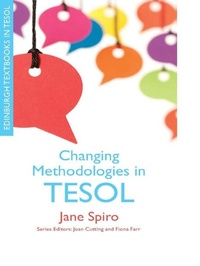
Changing Methodologies in TESOL
Description

Introduces core concepts in methods and teaching approaches
Covering core topics from vocabulary and grammar to teaching, writing speaking and listening, this textbook shows you how to link research to practice in TESOL methodology. It emphasises how current understandings have impacted on the language classroom worldwide and investigates the meaning of ''methods'' and ''methodology'' and the importance of these for the teacher: as well as the underlying assumptions and beliefs teachers bring to bear in their practice. By introducing you to language teaching approaches, you will explore the way these are influenced by developments in our understanding of language, learning technologies, learners, and their socio-cultural world.
Three main areas in TESOL methods are covered: the impact of learner needs, context and culture on language, learning and teaching approaches; knowledge of language and its impact on methods, from the word to whole texts; and multiple literacies and competences for the modern world, including academic literacy and web literacy, socio-cultural and intercultural competence. The impact on teacher choices and methods of World Englishes, approaches to grammar, and learner development is also discussed.
Each chapter illustrates core principles in practice using case studies of English teaching worldwide. Guided tasks, including article critique, case study analysis, and small-scale classroom research, prepare you to engage critically with research literature and use this analysis to inform your own practice.
Key features
- Written specifically for those studying TESOL teaching
- First book to teach methods and practice in a global context, including links to the latest developments in the field
- Encourages students to adopt a reflective approach to their teaching
- Concepts and research are presented in an accessible way, regardless of the student''s level of teaching experience
More details
Other editions
Additional editions
Content
- Intro
- Title Page
- Imprint
- Contents
- USEFUL ABBREVIATIONS
- TEACHING CASE STUDIES
- Series Editors' Preface
- Acknowledgements
- 1 The Meaning of Methods
- SECTION ONE: METHODS AND THE LANGUAGE LEARNER
- 2 Learning Theories and Methods
- 3 The place of the learner in methods
- SECTION TWO: THE LANGUAGE IN METHODS
- 4 Grammar in Methods
- 5 Vocabulary in Methods
- 6 Teacher knowledge and the four language skills: understanding written and spoken language
- 7 Methods and principles for integrating the four skills: reading, writing, speaking and listening
- SECTION THREE: THE WORLD IN THE CLASSROOM
- 8 Multiple literacies: professional, academic and web literacies in methods
- 9 Cultural competences in methods
- 10 Windows into TESOL classrooms: where are we and where are we going?
- Bibliography
- INDEX
