

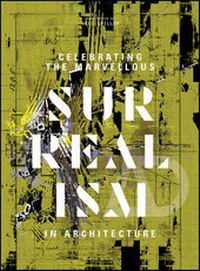
Celebrating the Marvellous
Description

We are entering a new era of architecture that is technologically enhanced, virtual and synthetic. Contemporary architects operate in a creative environment that is both real and digital; mixed, augmented and hybridised. This world consists of ecstasies, fears, fetishisms and phantoms, processes and spatiality that can best be described as Surrealist. Though too long dormant, Surrealism has been a significant cultural force in modern architecture. Founded by poet André Breton in Paris in 1924 as an artistic, intellectual and literary movement, architects such as Le Corbusier, Diller + Scofidio, Bernard Tschumi and John Hejduk realised its evocative powers to propel them to 'starchitect' status. Rem Koolhaas most famously illustrated Delirious New York (1978) with Madelon Vriesendorp's compelling Surrealist images.
Architects are now reviving the power of Surrealism to inspire and explore the ramifications of advanced technology. Architects' studios in practices and schools are becoming places where nothing is forbidden. Architectural languages and theories are 'mashed' together, approaches are permissively appropriated, and styles are not mutually exclusive. Projects are polemic, postmodern and surreally media savvy. Today's architects must compose space that operates across the spatial spectrum. Surrealism, with its multiple readings of the city, its collage semiotics, its extruded forms and artificial landscapes, is an ideal source for contemporary architectural inspiration.
Contributors include: Bryan Cantley, Nic Clear, James Eagle, Natalie Gall, Mark Morris, Dagmar Motycka Weston, Alberto Perez-Gomez, Shaun Murray, Anthony Vidler, and Elizabeth Anne Williams.
Featured architects: Nigel Coates, Hernan Diaz Alonso, Perry Kulper, and Mark West.
More details
Other editions
Additional editions
Person
Content
Introduction: That was Then, This is Now and Next 6
Architecture After the Rain 16
Surrealism and Architectural Atmosphere 24
Moody Attunement in Giorgio de Chirico's Metaphysical City 30
Alien Ossuary: The HR Giger Museum Bar 36
Making A Spectacle Of Society (Thoughts on Surreality) 42
A Simply Marvellous Reaction: Autonomous Sensory Meridian Response and the Desk Tutorial 50
As the Levee Breaks: Entrusting the Surreal Mississippi 58
Hearing Trumpets, Errant Furniture and Architectural Magic: Arch Combinatoria and the Horizontal Forest 64
The Shadowy Thickening of Space and Time with Chance: An Interview with the Quay Brothers 72
Surrealist Thames-side Piers: Tellurian Relics 78
Silver Parrots: Mischievous Characters and Feathered Aerialists 84
Magic Craftsmanship: A Glimpse into Bryan Cantley's Thirdspace 92
Architecture in Aqueous Flux: The CaCO3 Depositional House 98
Transcending Geometry: The Longhouse 106
Directions for Getting Lost: Or How to Change Your Mind 114
Subterranean Speculations: The Chthonopolis 120
Counterpoint: 'Sur' Realism: After Surrealism Comes Hyperrealism 128
Contributors 134
