

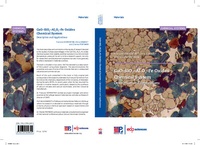
CaO-SiO2-Al2O3-Fe Oxides Chemical System
Description and Applications
1st Edition
Published on 8. February 2021
352 pages
978-2-7598-2536-3 (ISBN)
Description

No detailed description available for "CaO-SiO2-Al2O3-Fe Oxides Chemical System".
More details
Series
Language
English
Place of publication
Les Ulis
France
Target group
Professional and scholarly
US School Grade: College Graduate Student
File size
20,36 MB
ISBN-13
978-2-7598-2536-3 (9782759825363)
Copyright in bibliographic data and cover images is held by Nielsen Book Services Limited or by the publishers or by their respective licensors: all rights reserved.
Schweitzer Classification
Other editions
Additional editions
Francois Sorrentino | Denis Damidot | Charles Fentiman
CaO-SiO2-Al2O3-Fe Oxides Chemical System
Description and applications
Book
02/2021
1st Edition
EDP sciences
€132.50
Shipment within 3-4 weeks
Persons
Sorrentino François:
Dr. François SORRENTINO worked as project manager and senior scientist at the Lafarge research laboratories, and also as Research Director of CNRS.Damidot Denis:
Prof. Denis DAMIDOT is Professor at Institut Mines-Télécom Lille Douai where his research is devoted to cementitious materials through a mainly physico-chemical approach based on experiments and numerical simulation.Fentiman Charles:
Dr. Charles FENTIMAN works as a materials consultant and is organiser of international conferences about Calcium Aluminate Cements.
Dr. François SORRENTINO worked as project manager and senior scientist at the Lafarge research laboratories, and also as Research Director of CNRS.Damidot Denis:
Prof. Denis DAMIDOT is Professor at Institut Mines-Télécom Lille Douai where his research is devoted to cementitious materials through a mainly physico-chemical approach based on experiments and numerical simulation.Fentiman Charles:
Dr. Charles FENTIMAN works as a materials consultant and is organiser of international conferences about Calcium Aluminate Cements.
Content
- Intro
- CaO-SiO2-Al2O3-Fe Oxides Chemical System
- Preface
- Aim of the Book
- Summary of Part I - Description of the CaO-SiO2-Al2O3-Fe Oxides Chemical System
- Summary of Part II - Applications of the CaO-SiO2-Al2O3-Fe Oxides Chemical System
- Acknowledgement
- PART-I
- One-Component Chemical Systems: CaO, SiO2, Al2O3 and Fe Oxides
- CaO
- Introduction
- Mineralogy, Structure and Stability
- Properties and Applications
- First Level of Applications
- Second Level of Application
- End Level of Applications
- SiO2
- Introduction
- Mineralogy
- Structure and Stability
- Properties and Applications
- First Level of Applications
- Second Level of Application
- End Level of Applications
- Al2O3
- Introduction
- Mineralogy
- Structure and Stability
- Properties and Applications
- First Level of Applications
- Second Level of Applications
- Fe Oxides
- Introduction
- Mineralogy
- Structure and Stability
- FeO
- Fe2O3
- Fe3O4
- FeOOH
- Synthesis
- Properties and Applications
- The First Level of Applications
- The Second Level of Applications
- Binary Chemical Systems
- CaO-SiO2 system
- Introduction
- Mineralogy
- Structure, Polymorphism and Solid Solution
- Ca3SiO5 (C3S)
- Structure and Polymorphism
- Solid Solution
- Ca2SiO4 (C2S)
- Structure and Polymorphism
- Solid Solutions
- Ca3Si2O5 (C3S2)
- Structure and Polymorphism
- CaSiO3 (CS)
- Structure and Polymorphism
- Solid Solutions
- Stability and Phase Diagram of CaO-SiO2 System
- Experimental Phase Diagram
- Thermodynamic Approach of the Phase Diagram
- Synthesis of Calcium Silicates
- General Features
- Direct or Solid-State Sintering
- Indirect Synthesis
- Coprecipitation of Calcium Salt
- Dehydration of a Synthetic Hydrate
- Polyacrylamide Route
- Sol-gel Processing Method
- The Pechini Method
- Modified Pechini Process
- Self-Propagating Combustion Synthesis
- Mastering the Crystallisation
- Al2O3-SiO2 System
- Introduction
- Mineralogy
- Structure, Polymorphism and Solid Solutions
- Structure and Polymorphism
- General Characteristics
- Kyanite
- Andalusite
- Sillimanite
- Metakaolin
- Mullite/Sillimanite Solid-Solutions
- Structure of Liquid and Glass - Transition from Liquid to Solid
- Stability and Phase Diagram
- At Atmospheric Pressure
- Stability in Presence of Liquid
- Immiscibility Gap
- Thermodynamic Modelling
- At High Pressure
- Synthesis of Alumino-Silicates
- Synthesis Depending Mainly on the Starting Materials
- Synthesis Dependent Mainly on the Process
- Al2O3-Fe Oxides System
- Introduction
- Mineralogy
- Structure, Polymorphism and Solid Solution
- Stability and Phase Diagram
- Synthesis of Iron Aluminates
- CaO-Al2O3 System
- Introduction
- Mineralogy
- Structure, Polymorphism and Solid Solution
- Structure and Polymorphism
- Ca3Al2O6
- Ca12Al14O33
- Ca2Al2O7
- Ca5Al6O13
- CaAl2O4
- CaAl4O7
- CaAl12O19
- Solid Solutions
- Ca3Al2O6
- Ca12Al14O33
- CaAl2O4
- CaAl4O7
- CaAl12O19
- Structure of Liquid, Glass and Transition from Liquid to Glass and Crystals
- Stability and Phase Diagram
- Synthesis of Calcium Aluminates
- Introduction
- Direct or Solid-State Synthesis
- Indirect Synthesis
- Coprecipitation of Calcium and Aluminium Salt (Nitrate or Oxalate)
- Dehydration of Synthetic Hydrates
- Sol-gel Method
- The Pechini Method
- Self-Propagating Combustion Synthesis
- Special Process
- Crystallisation from the Melt, Devitrification of Glass, Single Crystal Synthesis
- Ion Exchange
- Synthesis of Special Aluminates
- SiO2-Fe Oxides System
- Introduction
- Mineralogy
- Fayalite (Fe22+SiO4)
- Ferrosilite (Fe2+SiO3)
- Laihunite (Fe2+Fe3+2Si2O8)
- Iscorite (Fe52+Fe23+SiO10)
- Skyagite (Fe32+Fe23+Si3O12)
- Structure, Polymorphism and Solid Solution
- Fe2SiO4 (Fayalite)
- Fe2+SiO3 (Ferrosilite)
- Fe2+Fe3+2Si2O8 (Laihunite)
- Fe52+Fe23+SiO10 (Iscorite)
- Fe32+Fe23+Si3O12 (Skyagite)
- Liquid FeO-Fe2O3-SiO2
- Stability and Phase Diagram of the FeO-Fe2O3-SiO2 System
- Synthesis of Iron Silicates
- Fayalite
- Ferrosilite
- Glass Formation
- CaO-Fe Oxides System
- Introduction
- Mineralogy
- Structure, Polymorphism and Solid-Solutions
- Ca2Fe2O5 (C2F)
- CaFe2O4 (CF)
- CaFe4O7 (CF2)
- Compounds of the CaO-FeO-Fe2O3 System
- Stability and Phase Diagram
- Solidus in the System CaO-FeO-Fe2O3
- CaO-Fe2O3 System
- CaO-FeO System
- Liquidus of the Ternary CaO-FeO-Fe2O3 System
- Synthesis of Calcium Ferrite
- Ternary Chemical Systems
- General Introduction
- CaO-Al2O3-SiO2 System
- Ternary Constituents of the CaO-Al2O3-SiO2 System
- Mineralogy
- Anorthite (CaAl2Si2O8)
- Gehlenite (Ca2Al2SiO6)
- Grossularite (Ca3Al6Si3O12)
- Calcium Tschermack's Molecule (CaAl2SiO6)
- Kushiroite (CaAlSiO6)
- Yoshiokaite (Ca7.3Al15SiO32)
- Zeolitic Compounds
- Structure and Solid Solutions
- Anorthite (CaAl2Si2O8)
- Gehlenite (Ca2Al2SiO6) (LIS 1981)
- Grossularite (Ca3Al6Si3O12)
- Calcium Tschermack's Molecule (CaAl2SiO6)
- Stability and Phases Diagrams (At One Atmosphere)
- Solidus
- Liquidus
- Structure of Liquid
- Viscosity
- Structure of Glass
- Crystallisation from Melts and Glass
- Compounds Obtained in Special Conditions
- Yoshiokaite (Ca7.3Al15SiO32)
- Ca3Al6Si2O14 (C3A3S2=C2AS+CA2)
- Ca2AlSiO5.5
- Stability Relative to Temperature or Pressure and Both
- CaAl2Si2O8 (Anorthite)
- Ca2Al2SiO6 (Gehlenite)
- Ca3Al6Si3O12 (Grossularite)
- CaAl2SiO6 (Ca Tschermack's Molecule)
- Thermodynamic Models
- Synthesis of Calcium Silicoaluminate
- CaAl2Si2O8 (Anorthite)
- Ca2Al2SiO6 (Gehlenite)
- Ca3Al6Si3O12 (Grossularite)
- Calcium Tschermack's Molecule
- C3A3S
- Ca1.82Al3.64Si0.36O8
- Ca2AlSiO5.5
- Al2O3-SiO2-Fe Oxides
- Introduction
- Mineralogy
- Almandine (Fe2+3Al2Si3O12)
- Sekaninaite (Fe2+2Al4(SiO2)5)
- Structure and Solid Solution
- Almandine (Fe2+3Al2Si3O12)
- Sekaninaite
- Stability and Phase Diagram
- Synthesis
- CaO-SiO2-Fe Oxides
- Introduction
- Mineralogy
- Hedenbergite
- Andradite
- Kirschsteinite
- Calcic-Fayalite
- Iron-Wollastonite
- SFC ss
- Structure and Solid Solution
- Hedenbergite
- Andradite
- Calcic-Fayalite
- Iron-Åkermanite
- Iron-Gehlenite
- SFC ss
- Stability and Phase Diagrams in Air
- Solidus in the CaO-SiO2-Fe2O3 System in Air
- Liquidus in the CaO-SiO2-Fe2O3 System
- 'Binary' Systems CaO.SiO2 Fe2O3 in Air
- CaSiO3Ca2-Fe2O6 System
- CaSiO2-FeO1.5 System
- Ca2SiO4-Ca2Fe2O5 System
- Ca4Si3O10-CaFe6O10 System
- Ternary CaO-SiO2-Fe2O3 System in Air
- Stablity and Phase Diagram in the CaO-SiO2-FeO System
- Solidus in the CaO-SiO2-FeO System
- Liquidus in the System CaO-SiO2-FeO (in Equilibrium with Metallic Iron)
- CaSiO3-FeSiO3 Pseudo Binary System
- Ca2SiO4-Fe2SiO4 Pseudo Binary System
- CaSiO3-FeO Pseudo Binary System
- Ca2SiO4-FeO Pseudo Binary System
- Ternary CaO-SiO2-FeO System
- CaO-SiO2-FeOx System at Various Oxygen Pressures
- Liquidus Lines
- Magnetite
- Wüstite
- Model
- Preparation and Synthesis
- Sintering
- Sol Gel
- Hydrothermal Reaction
- Devitrification of Glass
- CaO-Al2O3-Fe Oxides
- Introduction
- Mineralogy
- Brownmillerite - Ca4Al2Fe2O10 (C4AF)
- Structure and Solid Solutions
- Ca3Al2xFe2(1-x)O6 (C3AxF1-x)
- Ca12Al14xFe14(1-x)O33 (C12[AxF1-x]7)
- CaAl2xFe2(1-x)O4 (CAxF1-x)
- Ca4Al2xFe2(1-x)O10 (C2AxF(1-x))
- CaAl4xFe4(1-x)O7, C[AxF1-x]2
- CaAl12xFe12(1-x)O19, C[AxF1-x]6
- Ca[Al2xFe2(1-x)]3O10, C[AxF(1-x)]3 (T Phase or AFC)
- Stability and Phase Diagrams
- Solidus in Air
- Liquidus in Air
- Liquidus in Reducing Atmosphere
- Model of the System
- Formation and Synthesis
- Quaternary Chemical Systems
- Introduction
- Principle of Phase Equilibrium in a Quaternary System
- Regular Tetrahedron
- Perspective of the Liquidus in the System CaO-SiO2-Al2O3-Fe Oxides
- Construction of a Flowchart
- Thermodynamic Modelling
- Principle of Phase Equilibrium Calculation
- Example of Phase Equilibrium Calculation
- CaO-SiO2-Al2O3-Fe2O3 System in Air
- Quaternary Constituents of the CaO-SiO2-Al2O3-Fe Oxides System
- Mineralogy
- Esseneite
- Garnet
- Q Phase
- Iron Gehlenite
- SFCA
- Spinel
- Ca [Alx Fe(3-x)]2 O10 (T Phase)
- Phase X
- Mineralogy Structure Stability
- Introduction
- Solidus in the CaO-SiO2-Al2O3-Fe2O3 System in Air
- Liquidus in the CaO-SiO2-Al2O3-Fe2O3 System
- Sections and Joins
- CaSiO3-Al2O3-Fe2O3 Join (Huck 1974)
- (Ca3Al2Si3O12)-(Ca3Fe3+2Si3O12) Join (Grossularite-Andradite Join)
- Stability Relations on the (CaFe3+2SiO6)-(CaAl2SiO6) or FTS-CATS Join
- Ca2Al2O5-Ca2Fe2O5-SiO2 Join
- Section at 10% Fe2O3
- Section at 16.5% Fe2O3
- Section at 20% Fe2O3
- Perspective of the Liquidus in the CaO-SiO2-Al2O3-Fe2O3 System
- Formation and Synthesis
- CaO-Al2O3-SiO2-FeO System
- Introduction
- Ternary Systems Located Within the CaO, Al2O3, SiO2, FeO Tetrahedron
- SiO2-Anorthite-FeO Join (Red Plane in Figure 4.12)
- CaSiO3-Anorthite-FeO Join (Green Plane in Figure 4.12)
- Anorthite-Al2O3-FeO Join (Blue Plane on Figure 4.12)
- Gehlenite-Anorthite-FeO Join (Orange Plane on Figure 4.12)
- CaSiO3-Gehlenite-FeO Join (Pink Plane on Figure 4.12)
- 2CaO.SiO2-Gehlenite-FeO Join (Brown Plane on Figure 4.12)
- Binary Systems
- Crystallized Solids
- Univariant Lines and Quaternary Invariant Points
- 2CaO.SiO2-CaO.SiO2-Gehlenite-FeO Quaternary System
- Quinary Chemical Systems
- Introduction - Presentation of Quinary Data
- CaO-SiO2-Al2O3-FeO-Fe2O3 System
- Stability and Phase Diagrams
- Conclusions
- References Part I
- PART-II
- Applications to Hydraulic Binders
- General Introduction
- Portland Cements (PC)
- Characteristics
- Introduction
- Identification of Clinker Phases
- Production of Clinker
- Raw Mix Design
- Clinkering Reactions
- Thermal Balance
- PC Applications
- Introduction
- Hydration
- Hydration of Portland Cement
- Hydration of C3S
- Hydration of C2S
- Hydration of C3A
- Hydration of Calcium Aluminoferrite
- Properties
- Understanding of the Measured Properties
- Conclusions - Prediction of the Properties
- Calcium Aluminate Cements (CAC)
- CAC Characteristics
- Introduction
- Identification Clinker Phases of Iron-Rich Calcium Aluminous Cement
- Percentage of Clinker Phases
- Raw Mix Design and Formation of CAC
- Process and Thermal Balance
- CAC Applications
- Introduction
- Hydration of Industrial Cements
- Properties
- Special Cements
- Fast-Setting Cements
- Introduction
- Flash-Setting Cements (Setting Time Less Than 2 min)
- Very Fast Setting Cements (Setting Time Between 5 and 10 min)
- Cement with a Fast Setting (Setting Time Between 20 and 80 min)
- Geopolymers
- Introduction
- Structure of Geopolymer
- Geopolymer Synthesis
- Geopolymer Application
- Oil Well Cements
- Introduction
- Characterization of Oil Well Cement Utilisation
- Class G and H Oil Well Cements
- Understanding the Mechanism of Hydration
- Expansive Cement
- Introduction - Mechanism of Expansion
- Expansive Cements Based on Portland Cements
- Expansive Cements Based on Calcium Oxide Hydration
- Dental Cements
- Introduction
- The Main Classes of Dental Cements
- Phosphate Cements
- Silicophosphate Cements
- Phenolates Based Cements
- EBA (Ethoxy Benzoic Acid) and Other Chelate Cements
- Calcium Hydroxide Chelate Cements
- Polycarboxylate Based Cement
- Acrylic Resin Cements
- Dimethacrylate Cements
- Glass Ionomer Cements
- MTA (Mineral Trioxide Aggregates)
- Introduction
- Characteristics of MTA
- From MTA to C3S
- Glass Cements
- Application to Metal Refining
- General Introduction
- Slags from Iron and Steel Industry
- Blast Furnace Slags (BFS)
- Introduction
- Agglomeration
- Characteristics of the Agglomerates
- Mechanism of Agglomerates Formation
- Properties and Formation of BF Slags
- Blast Furnace Slag Processing: High Temperature Formation
- Blast Furnace Slag Processing: Cooling
- Converter Slags (Basic Oxygen Process or LD Processing)
- BOP Processing
- Modification of the Composition of BOP Slag by Addition of Alumina (Bauxite)
- EAF Slags: High Carbon Steel
- Ladle Slag (Secondary Metallurgy) - Stainless - High Alloy Steel Production
- Refining Under Reducing Slag
- Desulfurization Agent: Case of LDSF
- Formation and Properties of Liquid Slags
- Slags from Non Ferrous Industry
- Copper Slag
- Silico-Manganese Slag
- Application to Refractory Materials
- Introduction
- Raw Materials Based on Al2O3 and SiO2
- Natural Raw Materials
- Synthetic Raw Material
- Applying Refractory Materials
- Brick and Monolithic Refractories
- Silica Bricks
- Alumina-Silica Bricks
- Fireclay Bricks
- High Alumina Bricks
- Monolithic Refractories
- Refractory Cement and Mortar
- Manufacture of Low-Iron Calcium Aluminate Cements (Low-Iron CAC)
- Hydration of Low-Iron Calcium Aluminate Cement
- Relationship of Hydration Reaction to Castable Properties
- Refractories Consuming Industry
- Iron and Steel Industry
- Non-Ferrous Metal Industry
- Cement Industry
- Whiteware, Traditional Ceramic Industry
- High-Tech Ceramic Industry
- Glass Industry
- Application of the Glassy Products
- Introduction
- Structure of Glass
- Classification of Glass Products Containing CaO, Al2O3, SiO2 and Fe Oxides
- Products, Chemistry and Process
- High Silica Glass - Vycor Glass
- Soda-Lime Glass
- Container Glass
- Flat Glass
- Sodium Borosilicate - Glass Fibres
- Aluminosilicate Glass
- Special Applications
- Opal Glasses
- Glass Ceramics
- Glazes Enamels, Frits
- Optical Glass
- Microelectronics in the Information Processing Industry
- Application of Ceramic Products
- Introduction to Ceramics
- Structure of Ceramics
- Processing of Manufacture
- Shaping
- Physico-Chemical Changes During Firing
- Classification of Ceramic Products Containing CaO, SiO2, Al2O3 and Fe Oxides
- Introduction
- Traditional Ceramics
- Pottery, Bricks and Roof Tiles
- Earthenware, Faience and Majolica
- Stoneware for Domestic Use and Sewerage for Chemo-Technique Use
- Porcelain
- Production of Porcelain
- Properties and Use of Porcelain
- Bone China
- Vitreous China
- Tableware Application
- Sanitaryware (Vitreous China)
- Glazes, Glaze Frits, Fluxes, Colour Stains
- Ceramics in the Construction Sector Ceramics
- Vitrified Clay Pipes
- Expanded Clay Aggregates
- Refractory Products (See Chapter 8)
- Wall and Floor Tiles
- High Technology Ceramics
- Electrical Porcelain
- Inorganic Abrasive
- Chemo-Technical Stoneware
- Application as Fillers
- General Introduction
- Mono-Component
- Calcium Oxide
- Lime
- Limestone
- SiO2
- Silica
- Silica Fume
- Alumina
- Fe Oxides
- Multi-Component By-Products from Industrial Process
- Slags
- Introduction/Characterisation
- Portland - BFS Cement and BFS Concrete
- Fly Ashes
- Introduction/Characterisation
- Portland Fly Ash Cement and Fly Ash Concrete
- Red Mud (KUR 1997)
- Introduction
- Applications
- Cement Kiln Dust (CKD)
- Introduction/Characterization
- CKD with Other SCM in Cement/Concrete
- Multi-Components from Natural Origin
- Natural Pozzolans
- Introduction/Characterisation
- Pozzolan-Containing Cement and Concrete
- Metakaolin
- Introduction/Characterisation
- Metakaolin-Containing Cement and Concrete
- Rice Husk Ashes (RHA)
- Introduction/Characterisation
- RHA-Containing Cement and Concrete
- Wollastonite
- Introduction/Characterisation
- Wollastonite Used as Asbestos Substitute
- Wollastonite Used in the Paint Industry (20 000 t/year)
- Wollastonite Used in Plastic and Rubber Industry (60 000 t/year)
- References Part II
