

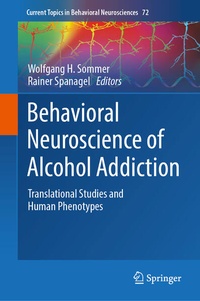
Behavioral Neuroscience of Alcohol Addiction
Description

Behavioral Neurobiology of Alcohol Addiction explores the forefront of addiction research, integrating fundamental neurobiological mechanisms with translational insights into human phenotypes. Alcohol addiction remains a major public health concern with extensive medical and societal implications. Understanding its intricate interplay between neurobiology, behavior, and treatment is essential for developing effective interventions.
This edition is structured into two volumes: Basic Mechanisms and Animal Studies and Translational Studies and Human Phenotypes. The first volume examines addiction conceptualization, stress and reward systems, and chronic pain. It further explores the cellular, synaptic, and circuit-level consequences of alcohol, incorporating computational and neuroimaging approaches. It also addresses the replication crisis in preclinical research and proposes guidelines to mitigate its impact.
The second volume shifts the focus to human studies, covering human laboratory approaches, ecological momentary assessment, molecular imaging, and the challenges of bridging preclinical and clinical research. The book also highlights emerging treatments, including psychological interventions, neuromodulation techniques, and the role of the gut-brain axis.
Alcohol use fundamentally alters mood states via brain mechanisms-an insight widely acknowledged by experts and laypeople alike. However, debates surrounding the brain disease model of addiction have intensified in recent years. This collection of articles contributes to this ongoing discussion by reinforcing the importance of a neurobiological perspective in addiction science and demonstrating how advances in neuroscience translate into more effective therapeutic approaches.
Written by leading experts in the field, both volumes provide a comprehensive yet accessible resource for addiction researchers, neuroscientists, clinicians, and students. The book aims to deepen the understanding of alcohol addiction and inspire new directions in research and treatment.
More details
Other editions
Additional editions
Content
Part 3 Experimental studies to human alcohol use and addiction.- Modelling Relapse Situations in the Human Laboratory.- Etiological Momentary Assessment of alcohol behaviour in humans.- The Dopamine System in Mediating Alcohol Effects in Humans.- Molecular imaging studies of alcohol use disorder.- The continuing challenges of studying parallel behaviors in humans and animal models.- MRI as an objective tool for animal human translation of alcohol effects.- Part 4 Treatment Approaches to AUD.- Approaches to AUD treatment based on Memory Retrieval and Counter Conditioning.- Approach bias retraining and other behavioral approaches in AUD.- New Approaches to Addiction Treatment based on Learning and Memory.- Brain stimulation to modulate alcohol behavior in animals and humans.- Role of the microbiome and the gut-brain axis in alcohol use disorder potential implication for treatment development.
