

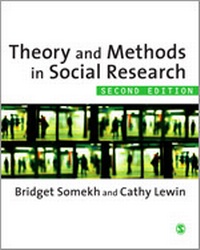
Theory and Methods in Social Research
2nd Edition
Published on 13. January 2011
368 pages
978-1-4462-0999-8 (ISBN)
Description

This new edition provides a scholarly and readable introduction to all the key qualitative and quantitative research methodologies and methods, enabling postgraduate and masters-level students and new researchers to reflect on which ones suit their needs and to receive guidance on how to find out more.
With chapters written by experienced research practitioners, this second edition has been extensively expanded and updated. There are seven completely new chapters, as well as:
- new material on literature reviews
- a new introduction to quantitative methods
- an expanded glossary
- Weblinks with free access to a wide range of peer-reviewed journal articles
- an annotated bibliography with conversational notes from authors in each chapter.
This book will act as your 'expert friend' throughout your research project, providing advice, explaining key concepts and the implications for your research design, and illustrating these with examples of real research studies.
With chapters written by experienced research practitioners, this second edition has been extensively expanded and updated. There are seven completely new chapters, as well as:
- new material on literature reviews
- a new introduction to quantitative methods
- an expanded glossary
- Weblinks with free access to a wide range of peer-reviewed journal articles
- an annotated bibliography with conversational notes from authors in each chapter.
This book will act as your 'expert friend' throughout your research project, providing advice, explaining key concepts and the implications for your research design, and illustrating these with examples of real research studies.
Reviews / Votes
Praise for the first edition:'Not merely a how-to book, it reviews the conceptual framework of research methods in the social and behavioural sciences and provides tangible stories from the field that illustrate the application of specific techniques and the process of conducting research. . . . This work affords a concise overview of qualitative and quantitative methodologies in the social science. . . . Highly recommended' - R.V. Labaree
University of Southern California, CHOICE
All prices
More details
Edition
Second Edition
Language
English
Place of publication
London
United Kingdom
Target group
College/higher education
ISBN-13
978-1-4462-0999-8 (9781446209998)
Copyright in bibliographic data and cover images is held by Nielsen Book Services Limited or by the publishers or by their respective licensors: all rights reserved.
Schweitzer Classification
Other editions
Additional editions
Bridget Somekh | Cathy Lewin
Theory and Methods in Social Research
Book
01/2011
2nd Edition
SAGE Publications Ltd
€98.70
Shipment within 15-20 days
Bridget Somekh | Cathy Lewin
Theory and Methods in Social Research
Book
01/2011
2nd Edition
SAGE Publications Ltd
€195.80
Shipment within 15-20 days
Persons
Bridget Somekh is based at Manchester Metropolitan University as well as University of Canterbury. Cathy Lewin is based at Manchester Metropolitan
University.
University.
Content
PART ONE: READING, REVIEWING AND REFLECTING
Introduction
Research in the Social Sciences - Bridget Somekh et al
Working with Literatures - Barbara Kamler and Pat Thomson
Ethical Issues in Generating Public Knowledge - Heather Piper and Helen Simons
PART TWO: LISTENING, EXPLORING THE CASE AND THEORIZING
Introduction
Ethnography - Jo Frankham and Christina MacRae
Research Diaries - Mary Louise Holly and Herbert Altrichter
Case Study - Charlotte Chadderton and Harry Torrance
Interviewing and Focus Groups - Rosaline SBarbour and John Schostak
PART THREE: ADDRESSING ISSUES OF POWER AND RESEARCHING FOR IMPACT
Introduction
Feminist Methodologies - Diane Burns and Khatidja Chantler
Critical Race Theory and Its Use in Social Science Research - Laurence Parker and Lorna Roberts
Queer Theory / Lesbian and Gay Approaches - Gloria Filax et al
Action Research - Susan Noffke and Bridget Somekh
The Purpose, Practice and Politics of Sponsored Evaluations - Tineke Abma and Thomas A Schwandt
PART FOUR: OBSERVING, QUERYING, INTERPRETING
Introduction
Grounded Theory - Juliet Corbin and Nicholas L Holt
Understanding Phenomenology through Reverse Perspectives - Angie Titchen and Dawn Hobson
Observation - Liz Jones and Bridget Somekh
Discourse Analysis - Alison Lee and Alan Petersen
Researching Online Practices - Colin Lankshear, Kevin M Leander and Michele Knobel
PART FIVE: IDENTITY, COMMUNITY AND REPRESENTATION
Introduction
Life History and Narrative Methods - Scherto Gill and Ivor Goodson
Social Semiotics and Multimodal Texts - Diane Mavers and Gunther Kress
Communities of Practice - David Benzie and Bridget Somekh
Activity Theory - Ines Langemeyer and Morten Nissen
Researching Policy - Jill Blackmore and Hugh Lauder
PART SIX: QUANTITATIVE METHODS: THEORIES AND PERSPECTIVES
Introduction
The Practices of Quantitative Methods - Kelvyn Jones
The Positivist Paradigm in Contemporary Social Research: The Interface of Psychology, Method and Sociocultural Theory - Charles Crook and Dean Garratt
Understanding and Describing Quantitative Data - Cathy Lewin
Differences and Relationships in Quantitative Data - Sally Barnes and Cathy Lewin
An Introduction to Statistical Modelling - Kelvyn Jones
PART SEVEN: QUANTITATIVE METHODS IN ACTION
Introduction
Combining Qualitative and Quantitative Methods in Social Inquiry - Jennifer C Greene, Holly Kreider and Ellen Mayer
Random Reflections on Modelling, Geography and Voting - Kelvyn Jones
Methodological Issues in International Comparative Assessments of Educational Progress - W J Pelgrum
Evaluating Literacy Advance in the Early Years of School - John Ainley
Working Backwards: The Road Less Travelled in Quantitative Methodology - Brian Doig
PART EIGHT: RESEARCHING IN POSTMODERN CONTEXTS
Introduction
Deconstruction - Erica Burman and Maggie Maclure
From Hermeneutics to Post-Structuralism to Psychoanalysis - Tony Brown and Daniel Heggs
From Structuralism to Post-Structuralism - Lee Miller, Joanne 'Bob' Whalley and Ian Stronach
Feminism/Post-Structuralism - Bronwen Davies and Suzanne Gannon
Introduction
Research in the Social Sciences - Bridget Somekh et al
Working with Literatures - Barbara Kamler and Pat Thomson
Ethical Issues in Generating Public Knowledge - Heather Piper and Helen Simons
PART TWO: LISTENING, EXPLORING THE CASE AND THEORIZING
Introduction
Ethnography - Jo Frankham and Christina MacRae
Research Diaries - Mary Louise Holly and Herbert Altrichter
Case Study - Charlotte Chadderton and Harry Torrance
Interviewing and Focus Groups - Rosaline SBarbour and John Schostak
PART THREE: ADDRESSING ISSUES OF POWER AND RESEARCHING FOR IMPACT
Introduction
Feminist Methodologies - Diane Burns and Khatidja Chantler
Critical Race Theory and Its Use in Social Science Research - Laurence Parker and Lorna Roberts
Queer Theory / Lesbian and Gay Approaches - Gloria Filax et al
Action Research - Susan Noffke and Bridget Somekh
The Purpose, Practice and Politics of Sponsored Evaluations - Tineke Abma and Thomas A Schwandt
PART FOUR: OBSERVING, QUERYING, INTERPRETING
Introduction
Grounded Theory - Juliet Corbin and Nicholas L Holt
Understanding Phenomenology through Reverse Perspectives - Angie Titchen and Dawn Hobson
Observation - Liz Jones and Bridget Somekh
Discourse Analysis - Alison Lee and Alan Petersen
Researching Online Practices - Colin Lankshear, Kevin M Leander and Michele Knobel
PART FIVE: IDENTITY, COMMUNITY AND REPRESENTATION
Introduction
Life History and Narrative Methods - Scherto Gill and Ivor Goodson
Social Semiotics and Multimodal Texts - Diane Mavers and Gunther Kress
Communities of Practice - David Benzie and Bridget Somekh
Activity Theory - Ines Langemeyer and Morten Nissen
Researching Policy - Jill Blackmore and Hugh Lauder
PART SIX: QUANTITATIVE METHODS: THEORIES AND PERSPECTIVES
Introduction
The Practices of Quantitative Methods - Kelvyn Jones
The Positivist Paradigm in Contemporary Social Research: The Interface of Psychology, Method and Sociocultural Theory - Charles Crook and Dean Garratt
Understanding and Describing Quantitative Data - Cathy Lewin
Differences and Relationships in Quantitative Data - Sally Barnes and Cathy Lewin
An Introduction to Statistical Modelling - Kelvyn Jones
PART SEVEN: QUANTITATIVE METHODS IN ACTION
Introduction
Combining Qualitative and Quantitative Methods in Social Inquiry - Jennifer C Greene, Holly Kreider and Ellen Mayer
Random Reflections on Modelling, Geography and Voting - Kelvyn Jones
Methodological Issues in International Comparative Assessments of Educational Progress - W J Pelgrum
Evaluating Literacy Advance in the Early Years of School - John Ainley
Working Backwards: The Road Less Travelled in Quantitative Methodology - Brian Doig
PART EIGHT: RESEARCHING IN POSTMODERN CONTEXTS
Introduction
Deconstruction - Erica Burman and Maggie Maclure
From Hermeneutics to Post-Structuralism to Psychoanalysis - Tony Brown and Daniel Heggs
From Structuralism to Post-Structuralism - Lee Miller, Joanne 'Bob' Whalley and Ian Stronach
Feminism/Post-Structuralism - Bronwen Davies and Suzanne Gannon
