

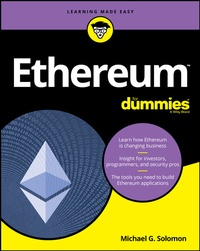
Ethereum For Dummies
1st Edition
Published on 28. March 2019
272 pages
978-1-119-47411-1 (ISBN)
Description

Dive into a secure future
Professionals look to Ethereum as a blockchain-based platform to develop safe applications and conduct secure transactions. It takes a knowledgeable guiding hand to understand how Ethereum works and what it does -- and Ethereum For Dummies provides that guidance. Written by one of the leading voices in the blockchain community and best selling author of Blockchain For Dummies, this book demystifies the workings of Ethereum and shows how it can enhance security, transactions, and investments.
As an emerging application of blockchain technology, Ethereum attracts a wide swath of professionals ranging from financial pros who see it as a way to enhance their business, security analysts who want to conduct secure transactions, programmers who build apps that employ the Ethereum blockchain, or investors interested in cashing in on the rise of cryptocurrency. Ethereum For Dummies offers a starting point to all members of this audience as it provides easy-to-understand explanation of the tools and techniques of using Ethereum.
* Understand the fundamentals of Ethereum
* Build smart contracts
* Create decentralized applications
* Examine public and private chains
If you need to get a grip on one of the biggest applications of blockchain technology, this book makes it easier.
Professionals look to Ethereum as a blockchain-based platform to develop safe applications and conduct secure transactions. It takes a knowledgeable guiding hand to understand how Ethereum works and what it does -- and Ethereum For Dummies provides that guidance. Written by one of the leading voices in the blockchain community and best selling author of Blockchain For Dummies, this book demystifies the workings of Ethereum and shows how it can enhance security, transactions, and investments.
As an emerging application of blockchain technology, Ethereum attracts a wide swath of professionals ranging from financial pros who see it as a way to enhance their business, security analysts who want to conduct secure transactions, programmers who build apps that employ the Ethereum blockchain, or investors interested in cashing in on the rise of cryptocurrency. Ethereum For Dummies offers a starting point to all members of this audience as it provides easy-to-understand explanation of the tools and techniques of using Ethereum.
* Understand the fundamentals of Ethereum
* Build smart contracts
* Create decentralized applications
* Examine public and private chains
If you need to get a grip on one of the biggest applications of blockchain technology, this book makes it easier.
More details
Other editions
Additional editions
Michael G. Solomon
Ethereum For Dummies
Book
05/2019
1st Edition
Wiley
€28.50
Shipment within 15-20 days
Content
- Intro
- Title Page
- Copyright Page
- Table of Contents
- Introduction
- About This Book
- Foolish Assumptions
- Icons Used in This Book
- Beyond the Book
- Where to Go from Here
- Part 1 Getting to Know Blockchain and Ethereum
- Chapter 1 Introducing Ethereum
- Describing Blockchain Technology
- Introducing Ethereum
- Exploring Ethereum's Consensus, Mining, and Smart Contracts
- Buying, Spending, and Trading Ether
- Getting Started with DAO and ICO
- Exploring the Ethereum Ecosystem
- Delving into Development Tools
- Building Blockchain Apps
- Chapter 2 Learning about Blockchain
- Exploring Distributed Applications
- Digging into distributed processing
- Exploring problems with distributed processing
- Presenting some solutions to distributed processing problems
- Examining the Bitcoin Solution to the Distributed Dilemma
- Describing Blockchains
- Examining blockchain details
- Protecting blockchain visibility
- Building Blockchains
- Agreeing to add blocks
- Making blocks immutable
- Reviewing the building process
- Keeping all blockchains consistent
- Understanding How Blockchains and Databases Store Data Differently
- Storing data in a traditional database
- Storing data in a blockchain
- Effectively Using Blockchains
- Transferring value without trust
- Reducing transaction costs by eliminating middlemen
- Increasing efficiency through direct interaction
- Maintaining complete transaction history
- Increasing resilience through replication
- Providing transparency
- Chapter 3 Exploring Use Cases for Ethereum
- Diving Into Ethereum Applications
- Exploring Financial Services
- Banking
- Creating Ethereum escrow applications
- Examining ICOs
- Establishing Digital Identity Management
- Managing individual and device identities
- Reducing fraud and identity theft
- Examining the ERC-725 standard and beyond
- Examining Industry Applications
- Healthcare
- Energy
- Supply chain
- Enabling Effective Governance
- Tax payment
- Government spending
- Voting
- Policy development
- Notary
- Part 2 Setting Up Your Ethereum Development Environment
- Chapter 4 Examining the Ethereum Ecosystem and Development Lifecycle
- Exploring the Ethereum Blockchain Block Structure
- Describing Smart Contracts
- Introducing Solidity, the Language of Smart Contracts
- Working with the Ethereum Virtual Machine
- Fueling Your Code with Gas
- Surveying Tools for Developing, Testing, and Deploying Ethereum Apps
- Ethereum blockchain client
- Development and testing blockchain
- Compiler and testing framework
- Source code editor/IDE
- Describing the Ethereum Development Lifecycle
- Introducing Smart Contract Development Tools
- Chapter 5 Getting and Configuring Ethereum Development Tools
- Examining Why Multiple Ethereum Development Tools Are Available
- Downloading, Installing, and Configuring All the Pieces
- Installing the blockchain client
- Installing the test blockchain
- Installing the testing environment
- Installing the IDE
- Chapter 6 Establishing an Ethereum Wallet
- Unlocking the Secrets of an Ethereum Wallet
- Examining the Types of Ethereum Wallets
- Sorting out software wallets
- Handling hardware wallets
- Perusing paper wallets
- Choosing an Ethereum Wallet
- Software wallets
- Hardware wallets
- Paper wallets
- Installing MetaMask, an Ethereum Wallet
- Part 3 Building Ethereum Distributed Blockchain Apps
- Chapter 7 Building Your First Ethereum Apps
- Validating Your Ethereum Development Environment
- Creating a Truffle project
- Editing the Truffle config file
- Exploring the Ganache Test Environment
- Designing Simple Smart Contracts
- Coding Your First Smart Contract
- Running Your First Smart Contract
- Writing your code
- Compiling your code
- Deploying your code
- Invoking your code's functions
- Paying as You Go
- Chapter 8 Learning about Smart Contracts
- Introducing Supply Chain and Common Challenges
- Describing supply chain
- Explaining difficulties when implementing a supply chain
- Examining How Blockchain Can Help Resolve Supply Chain Problems
- Describing a Blockchain Supply Chain Solution
- Paying for supply chain services
- Managing assets on the supply chain
- Digging into Solidity
- Describing Basic Smart Contract Syntax
- Declaring valid compiler version
- Commenting your code
- Importing external code
- Defining your smart contracts
- Handling Data in Solidity
- Learning about Computation and Gas
- Exploring Access Modes and Visibility o fSmart Contract Functions and Data
- Controlling Execution Flow
- Handling Errors and Exceptions
- Chapter 9 Writing Your Own Smart Contracts with Solidity
- Reviewing Supply Chain Design Specification
- Payment token smart contract
- Supply chain smart contract
- Creating New Smart Contracts
- ERC-20 token interface
- ERC-20 token smart contract
- Supply chain smart contract
- Coding Primary Functions
- ERC-20 token functions
- Supply chain functions
- Using Events
- Defining events
- Triggering events
- Introducing Ownership
- Designing for Security
- Implementing Minimal Functionality
- Part 4 Testing and Deploying Ethereum Apps
- Chapter 10 Testing Ethereum Apps
- Understanding Ethereum dApp Testing
- Writing tests from the beginning
- Choosing the right test blockchain
- Learning the steps in the testing lifecycle
- Testing for software quality
- Deploying a dApp to a Test Ethereum Blockchain
- Telling Truffle to use the Ganache blockchain
- Deploying your code to the Ganache blockchain
- Writing Tests for Ethereum dApps
- Testing using the command line
- Writing test cases in JavaScript
- Logging and Handling Errors
- Handling errors in Solidity
- Logging activity in smart contracts
- Fixing Bugs in a dApp
- Chapter 11 Deploying and Maintaining Ethereum Apps
- Test Blockchain Options versus Live Blockchains
- Testing with the Ganache blockchain
- Deploying your code to other test blockchains
- Anticipating Differences in Live Environments
- Preparing Your Configuration for Deploying to Different Networks
- Deploying a dApp
- Getting enough ether
- Compiling your code
- Deploying your code
- Chapter 12 Integrating Non-Blockchain Apps with Ethereum
- Comparing Blockchain and Database Storage
- Locating control
- Imposing data format
- Updating data
- Optimizing performance
- Protecting confidentiality
- Paying for storage
- Providing integrity and transparency
- Protecting resilience
- Contrasting Execution and Flow in Blockchain dApps and Traditional Applications
- Designing Goals for Incorporating Blockchain into an Existing Application
- Using existing smart contracts
- Developing your own smart contracts
- Identifying Interface Data and Transaction Requirements
- Creating or Modifying Contracts to Provide Data Interface
- Testing Integrated dApps
- Deploying Integrated dApps
- Part 5 The Part of Tens
- Chapter 13 Ten Free Ethereum Resources
- Exploring Alternative Ethereum Development Frameworks
- Managing you development with Populus
- Exploring Ethereum blockchain containers with Cliquebait
- Selecting a Free Integrated Development Environment
- Developing Solidity code with Atom
- Going online with Remix
- Keeping it simple with EthFiddle
- Exploring Ethereum Clients and APIs
- Swapping your Ethereum client to Parity
- Interacting with Ethereum by using Web3.js
- Focusing on Wallets and Security
- Protecting your crypto-assets in Mist
- Securing your dApps with OpenZeppelin
- Learning More About Developing Ethereum dApps
- Chapter 14 Ten Design Principles for Distributed Blockchain Apps
- Designing for Trust
- Enforcing Consistency
- Removing Doubt through Transparency
- Providing Feedback, Guidance, and Setting Expectations
- Handling Mistakes with Class
- Designing Functions that Focus on User Actions, Not Data
- Storing Data Based on User Actions, Not Data Structures
- Keeping It Simple
- Expecting Blockchain Access to Be Expensive
- Staying Out of the User's Way
- Chapter 15 Top Ten Ethereum Projects
- Predicting Future Events with Gnosis
- Crowdsourcing Event Predictions in Augur
- Managing Decentralized Organizations with Aragon
- Breeding and Collecting Cryptokitties
- Exchanging Tokens with IDEX
- Creating Your Digital Identity with uPort
- Sharing Your Thoughts on the Blockchain with EtherTweet
- Searching for Jobs with EthLance
- Using TenX to Pay with Cryptocurrency
- Buying and Selling Computing Power with Golem
- Index
- EULA
