

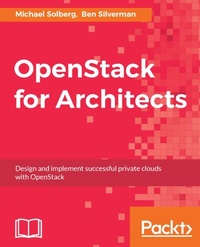
OpenStack for Architects
Design and implement successful private clouds with OpenStack
Published on 8. July 2025
214 pages
978-1-78439-644-2 (ISBN)
Description

Design and implement successful private clouds with OpenStack
Key Features
Explore the various design choices available for cloud architects within an OpenStack deployment
Craft an OpenStack architecture and deployment pipeline to meet the unique needs of your organization
Create a product roadmap for Infrastructure as a Service in your organization using this hands-on guide
Book DescriptionOver the last five years, hundreds of organizations have successfully implemented Infrastructure as a Service (IaaS) platforms based on OpenStack. The huge amount of investment from these organizations, industry giants such as IBM and HP, as well as open source leaders such as Red Hat have led analysts to label OpenStack as the most important open source technology since the Linux operating system. Because of its ambitious scope, OpenStack is a complex and fast-evolving open source project that requires a diverse skill-set to design and implement it. This guide leads you through each of the major decision points that you'll face while architecting an OpenStack private cloud for your organization. At each point, we offer you advice based on the experience we've gained from designing and leading successful OpenStack projects in a wide range of industries. Each chapter also includes lab material that gives you a chance to install and configure the technologies used to build production-quality OpenStack clouds. Most importantly, we focus on ensuring that your OpenStack project meets the needs of your organization, which will guarantee a successful rollout.What you will learn
Familiarize yourself with the components of OpenStack
Build an increasingly complex OpenStack lab deployment
Write compelling documentation for the architecture teams within your organization
Apply Agile configuration management techniques to deploy OpenStack
Integrate OpenStack with your organization s identity management, provisioning, and billing systems
Configure a robust virtual environment for users to interact with
Use enterprise security guidelines for your OpenStack deployment
Create a product roadmap that delivers functionality quickly to the users of your platform
Who this book is forThis book is written especially for those who will design OpenStack clouds and lead their implementation. These people are typically cloud architects, but may also be in product management, systems engineering, or enterprise architecture.
Key Features
Explore the various design choices available for cloud architects within an OpenStack deployment
Craft an OpenStack architecture and deployment pipeline to meet the unique needs of your organization
Create a product roadmap for Infrastructure as a Service in your organization using this hands-on guide
Book DescriptionOver the last five years, hundreds of organizations have successfully implemented Infrastructure as a Service (IaaS) platforms based on OpenStack. The huge amount of investment from these organizations, industry giants such as IBM and HP, as well as open source leaders such as Red Hat have led analysts to label OpenStack as the most important open source technology since the Linux operating system. Because of its ambitious scope, OpenStack is a complex and fast-evolving open source project that requires a diverse skill-set to design and implement it. This guide leads you through each of the major decision points that you'll face while architecting an OpenStack private cloud for your organization. At each point, we offer you advice based on the experience we've gained from designing and leading successful OpenStack projects in a wide range of industries. Each chapter also includes lab material that gives you a chance to install and configure the technologies used to build production-quality OpenStack clouds. Most importantly, we focus on ensuring that your OpenStack project meets the needs of your organization, which will guarantee a successful rollout.What you will learn
Familiarize yourself with the components of OpenStack
Build an increasingly complex OpenStack lab deployment
Write compelling documentation for the architecture teams within your organization
Apply Agile configuration management techniques to deploy OpenStack
Integrate OpenStack with your organization s identity management, provisioning, and billing systems
Configure a robust virtual environment for users to interact with
Use enterprise security guidelines for your OpenStack deployment
Create a product roadmap that delivers functionality quickly to the users of your platform
Who this book is forThis book is written especially for those who will design OpenStack clouds and lead their implementation. These people are typically cloud architects, but may also be in product management, systems engineering, or enterprise architecture.
All prices
More details
Edition
Digital original
Language
English
Place of publication
Birmingham
United Kingdom
Target group
Professional and scholarly
US School Grade: College Graduate Student
Edition type
Digital original
File size
5,17 MB
ISBN-13
978-1-78439-644-2 (9781784396442)
Copyright in bibliographic data and cover images is held by Nielsen Book Services Limited or by the publishers or by their respective licensors: all rights reserved.
Schweitzer Classification
Other editions
New editions
Ben Silverman | Michael Solberg
OpenStack for Architects
Design production-ready private cloud infrastructure
E-Book
09/2024
2nd Edition
Packt Publishing Limited
€28.99
Available for download
Additional editions
Michael Solberg
OpenStack for Architects
Design and implement successful private clouds with OpenStack
Book
02/2017
Packt Publishing
€50.30
Shipment within 3-4 weeks
Persons
Solberg Michael :
Michael Solberg, as a chief architect, is responsible for helping Red Hat customers achieve their key business transformation initiatives through open source architectures and technologies. His previous experience includes building a web hosting infrastructure, helping enterprises migrate to Linux, and designing new Infrastructure-as-a-Service platforms. He is an avid supporter of the OpenStack project and a regular speaker at industry events.Silverman Benjamin :
Ben Silverman, the Chief Cloud Officer for the service provider/Telco team at OnX. Previously, Ben has worked as a Sr. system architect for Mirantis and as the lead architect for American Express's first OpenStack cloud. He is also responsible for the OpenStack Architecture Guide online and leads the Phoenix OpenStack User's group. He holds a degree in English communications and a master's degree in information management from Arizona State University. He has also been a technical reviewer of the book, Learning OpenStack, by Packt Publishing.
Michael Solberg, as a chief architect, is responsible for helping Red Hat customers achieve their key business transformation initiatives through open source architectures and technologies. His previous experience includes building a web hosting infrastructure, helping enterprises migrate to Linux, and designing new Infrastructure-as-a-Service platforms. He is an avid supporter of the OpenStack project and a regular speaker at industry events.Silverman Benjamin :
Ben Silverman, the Chief Cloud Officer for the service provider/Telco team at OnX. Previously, Ben has worked as a Sr. system architect for Mirantis and as the lead architect for American Express's first OpenStack cloud. He is also responsible for the OpenStack Architecture Guide online and leads the Phoenix OpenStack User's group. He holds a degree in English communications and a master's degree in information management from Arizona State University. He has also been a technical reviewer of the book, Learning OpenStack, by Packt Publishing.
Content
Table of Contents
Planning for architecting an OpenStack Cloud
Architecting the Cloud
Planning for Success
Building the Deployment Pipeline
Building to Operate
Designing considering the Tenant Space
Securing the Cloud
Conclusion
Planning for architecting an OpenStack Cloud
Architecting the Cloud
Planning for Success
Building the Deployment Pipeline
Building to Operate
Designing considering the Tenant Space
Securing the Cloud
Conclusion

