

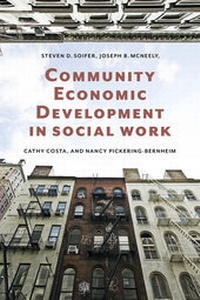
Community Economic Development in Social Work
1st Edition
Published on 11. November 2014
584 pages
978-0-231-50857-5 (ISBN)
Description

Community economic development (CED) is an increasingly essential factor in the revitalization of low- to moderate-income communities. This cutting-edge text explores the intersection of CED and social work practice, which both focus on the well-being of indigent communities and the empowerment of individuals and the communities in which they live.
This unique textbook emphasizes a holistic approach to community building that combines business and real-estate development with a focus on stimulating family self-reliance and community empowerment. The result is an innovative approach to rehabilitating communities in decline while preserving resident demographics. The authors delve deep into the social, political, human, and financial capital involved in effecting change and how race and regional issues can complicate approaches and outcomes. Throughout, they integrate case examples to illustrate their strategies and conclude with a consideration of the critical role social workers can play in developing CED's next phase.
This unique textbook emphasizes a holistic approach to community building that combines business and real-estate development with a focus on stimulating family self-reliance and community empowerment. The result is an innovative approach to rehabilitating communities in decline while preserving resident demographics. The authors delve deep into the social, political, human, and financial capital involved in effecting change and how race and regional issues can complicate approaches and outcomes. Throughout, they integrate case examples to illustrate their strategies and conclude with a consideration of the critical role social workers can play in developing CED's next phase.
All prices
More details
Other editions
Additional editions
Steven D. Soifer | Joseph B. McNeely | Cathy Costa
Community Economic Development in Social Work
Book
11/2014
Columbia University Press
€139.89
Article not available at the moment
Steven D. Soifer | Joseph B. McNeely | Cathy Costa
Community Economic Development in Social Work
Book
11/2014
Columbia University Press
€43.33
Shipment within 10-20 days
Persons
Steven Soifer, Ph.D., MSW is Professor and Chair of the Department of Social Work at the University of Memphis. He has expertise in a wide array of social welfare and social and economic development and research areas with diverse populations and has taught courses on social and economic development, social research, and community planning. Dr. Soifer has published numerous books, book chapters, and articles on community development, effective models and assessment of cooperatives, land trusts, the housing and banking markets, and policy interventions at the local, state, national, and international levels.
Joseph McNeely, MA, JD, is a longtime community development organizer at the grassroots and national level; writes and lectures widely on community economic development; and is currently the executive director of the Central Baltimore Partnership, one of the most powerful community development collaborations in reviving Baltimore.
Cathy L. Costa, MSW, MPH, is director of Baltimore for Healthy Babies, which engages more than one hundred community partners in activating Baltimore City's ten-year strategic plan to reduce infant mortality and improve the health of families with young children. At the Family League of Baltimore, she oversees community-based infant mortality reduction programs, social marketing campaigns, and evaluation, and she leads efforts to increase equity in birth and early-childhood outcomes and create trauma-informed service systems for families.
Nancy Pickering-Bernheim has been writing professionally for more than two decades on a variety of topics as a published author, featured writer for newspapers and magazines, and a nationally-syndicated blog.
Joseph McNeely, MA, JD, is a longtime community development organizer at the grassroots and national level; writes and lectures widely on community economic development; and is currently the executive director of the Central Baltimore Partnership, one of the most powerful community development collaborations in reviving Baltimore.
Cathy L. Costa, MSW, MPH, is director of Baltimore for Healthy Babies, which engages more than one hundred community partners in activating Baltimore City's ten-year strategic plan to reduce infant mortality and improve the health of families with young children. At the Family League of Baltimore, she oversees community-based infant mortality reduction programs, social marketing campaigns, and evaluation, and she leads efforts to increase equity in birth and early-childhood outcomes and create trauma-informed service systems for families.
Nancy Pickering-Bernheim has been writing professionally for more than two decades on a variety of topics as a published author, featured writer for newspapers and magazines, and a nationally-syndicated blog.
Content
Preface
Part I: Settings and Framework
1. What Is Community Economic Development?
Case Study: Bedford Stuyvesant Restoration Corporation
2. Social Workers and Community Economic Development
Case Study: New Community Corporation
3. The Making and Unmaking of Cities and Neighborhoods
Case Study: Warren/Connor Development Corporation
4. History of Community Economic Development: The Nineteenth Century to Lyndon Johnson
5. History of Community Economic Development: Richard Nixon to Barack Obama
Case Study: Chicanos por la Causa
Part II: Strategy, Organization, and Success
6. Choosing a Strategy
Case Study: Marshall Heights Community Development Organization
7. A Taxonomy of Community Development Corporations
Case Study: Coalition of the Hungry and Homeless of Brevard County, Florida, Inc.
Part III: Tools of Development
8. Investing in Human Capital
Case Study: New Economics for Women
9. Building High-Performance Organizations
Case Study: East Bay Asian Local Development Corporation
10. Real Estate: Developing Physical Capital
Case Study: Intercommunity Mercy Housing
11. Financial Capital: Business Development and Financial Infrastructure
12. Lobbying and Advocacy
Part IV: Putting It All Together
13. Expanding Social and Political Capital
Case Study: Dudley Street Neighborhood Initiative
14. Special Challenges in Community Development: Racism and Regionalism
15. Community Building: A New Synthesis
16. Conclusion
Appendix I: Anymidwest City Exercise
References
Index
Part I: Settings and Framework
1. What Is Community Economic Development?
Case Study: Bedford Stuyvesant Restoration Corporation
2. Social Workers and Community Economic Development
Case Study: New Community Corporation
3. The Making and Unmaking of Cities and Neighborhoods
Case Study: Warren/Connor Development Corporation
4. History of Community Economic Development: The Nineteenth Century to Lyndon Johnson
5. History of Community Economic Development: Richard Nixon to Barack Obama
Case Study: Chicanos por la Causa
Part II: Strategy, Organization, and Success
6. Choosing a Strategy
Case Study: Marshall Heights Community Development Organization
7. A Taxonomy of Community Development Corporations
Case Study: Coalition of the Hungry and Homeless of Brevard County, Florida, Inc.
Part III: Tools of Development
8. Investing in Human Capital
Case Study: New Economics for Women
9. Building High-Performance Organizations
Case Study: East Bay Asian Local Development Corporation
10. Real Estate: Developing Physical Capital
Case Study: Intercommunity Mercy Housing
11. Financial Capital: Business Development and Financial Infrastructure
12. Lobbying and Advocacy
Part IV: Putting It All Together
13. Expanding Social and Political Capital
Case Study: Dudley Street Neighborhood Initiative
14. Special Challenges in Community Development: Racism and Regionalism
15. Community Building: A New Synthesis
16. Conclusion
Appendix I: Anymidwest City Exercise
References
Index
Read a case study on the Bedford Stuyvesant Restoration Corporation (BSRC):
