

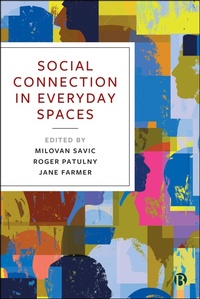
Social Connection in Everyday Spaces
Bristol University Press
1st Edition
Published on 17. October 2025
266 pages
978-1-5292-4672-8 (ISBN)
Description

Available open access digitally under CC-BY-NC-ND licence.
How do we hold onto friends and communities in a world that feels increasingly fragmented?
This timely collection explores how social connection unfolds across personal, physical, community and digital spaces. From loneliness to belonging, the collection explores the broader social forces that shape our interactions. Packed with fresh insights and accessible research, the contributors bridge theory and practice.
Offering practical strategies for policy and practice, this book charts paths to meaningful connection. An essential guide for policy makers, academics and anyone seeking deeper connections, it provides hope - and action - for a more connected future.
How do we hold onto friends and communities in a world that feels increasingly fragmented?
This timely collection explores how social connection unfolds across personal, physical, community and digital spaces. From loneliness to belonging, the collection explores the broader social forces that shape our interactions. Packed with fresh insights and accessible research, the contributors bridge theory and practice.
Offering practical strategies for policy and practice, this book charts paths to meaningful connection. An essential guide for policy makers, academics and anyone seeking deeper connections, it provides hope - and action - for a more connected future.
More details
Edition
First Edition
Language
English
Place of publication
Bristol
United Kingdom
Target group
College/higher education
Illustrations
9 s/w Tabellen, 18 s/w Abbildungen
9 Tables, black and white; 18 Illustrations, black and white
File size
2,22 MB
ISBN-13
978-1-5292-4672-8 (9781529246728)
Copyright in bibliographic data and cover images is held by Nielsen Book Services Limited or by the publishers or by their respective licensors: all rights reserved.
Schweitzer Classification
Other editions
Additional editions
Book
10/2025
1st Edition
Bristol University Press
€35.00
Shipment within 3-4 weeks
Persons
Milovan Savic is Research Fellow at Swinburne University of Technology.
Roger Patulny is Professor of Sociology at Hong Kong Baptist University.
Jane Farmer is Professor of Health & Innovation at Swinburne University of Technology.
Roger Patulny is Professor of Sociology at Hong Kong Baptist University.
Jane Farmer is Professor of Health & Innovation at Swinburne University of Technology.
Content
1. More than Loneliness: The Quest to Understand Social Connection - Milovan Savic, Roger Patulny and Jane Farmer
Part 1: Personal Spaces
2. Male Friendships and Social Connections: Privileges and Pitfalls - Roger Patulny
3. Older Filipina Australians' Local and Transnational Connective Care Practices - Earvin Charles Cabalquinto
4. Social Connection by Design: Finnish Approaches to Long-Term Care - Jasmine Knox and Hannele Komu
5. Companionship in Times of Uncertainty: The Role of Pets for Families with Children During COVID-19 - Shannon Bennetts, Sharinne Crawford, Tiffani Howell, Fiona Giles and Kylie Burke
Part 2: Physical Spaces
6. Can Our Housing Environments Impact Loneliness? A Tale of Two Studies - Marlee Bower, Caitlin Buckle, Jennifer Kent, Lily Teesson, Roger Patulny, Laura McGrath and Emily Rugel
7. Urban-Rural Disparities in Social Network Profiles Among Older Koreans at the Early Stage of the Pandemic - Pildoo Sung
8. The Rise of Parkrun: Collective Positivity, Rituals and Episodic Togetherness in an Age of Loneliness - Nicholas Hookway and Zack Dwyer
9. United by Insects? Insects' Control and Development of Social Connections in a Large City - Oksana Zaporozhets and Olga Brednikova
Part 3: Community Spaces
10. Nature-Based Social Prescribing with Lgbtiqa+ Asylum Seekers and Refugees: A Feasibility Study Using 'Friends in Nature' - Nerkez Opacin, Nicholas Hill, Sarah Bekessy, Ian Seal, Jill Litt,and Katherine Johnson
11. Social Connectedness in Pandemic Times: A Case Study of Australia's Italian-Background Community - Simone Battiston and Damon Alexander
12. Local Place-Based Social Connection in Urban Fringe Areas: Learning from Resident Experiences - Jane Farmer, Tracy de Cotta, Annette Kroen and Andrew Butt
Part 4: Digital Spaces
13. From Disruption to Digital Adaptation: Young Women's Social Connection During Lockdowns - Jessica Franks
14. Technological Bridges and Digital Ambivalences: The Role of Technology in Tackling Loneliness in Later Life - Barbara Barbosa Neves
15. Digital Pathways to Social Connection and Mental Health on the Urban Fringe - Milovan Savic and Anthony McCosker
16. Improving Social Connection in Everyday Spaces: Some Guidelines for Everyday Policy and Practice - Roger Patulny, Milovan Savic and Jane Farmer
Part 1: Personal Spaces
2. Male Friendships and Social Connections: Privileges and Pitfalls - Roger Patulny
3. Older Filipina Australians' Local and Transnational Connective Care Practices - Earvin Charles Cabalquinto
4. Social Connection by Design: Finnish Approaches to Long-Term Care - Jasmine Knox and Hannele Komu
5. Companionship in Times of Uncertainty: The Role of Pets for Families with Children During COVID-19 - Shannon Bennetts, Sharinne Crawford, Tiffani Howell, Fiona Giles and Kylie Burke
Part 2: Physical Spaces
6. Can Our Housing Environments Impact Loneliness? A Tale of Two Studies - Marlee Bower, Caitlin Buckle, Jennifer Kent, Lily Teesson, Roger Patulny, Laura McGrath and Emily Rugel
7. Urban-Rural Disparities in Social Network Profiles Among Older Koreans at the Early Stage of the Pandemic - Pildoo Sung
8. The Rise of Parkrun: Collective Positivity, Rituals and Episodic Togetherness in an Age of Loneliness - Nicholas Hookway and Zack Dwyer
9. United by Insects? Insects' Control and Development of Social Connections in a Large City - Oksana Zaporozhets and Olga Brednikova
Part 3: Community Spaces
10. Nature-Based Social Prescribing with Lgbtiqa+ Asylum Seekers and Refugees: A Feasibility Study Using 'Friends in Nature' - Nerkez Opacin, Nicholas Hill, Sarah Bekessy, Ian Seal, Jill Litt,and Katherine Johnson
11. Social Connectedness in Pandemic Times: A Case Study of Australia's Italian-Background Community - Simone Battiston and Damon Alexander
12. Local Place-Based Social Connection in Urban Fringe Areas: Learning from Resident Experiences - Jane Farmer, Tracy de Cotta, Annette Kroen and Andrew Butt
Part 4: Digital Spaces
13. From Disruption to Digital Adaptation: Young Women's Social Connection During Lockdowns - Jessica Franks
14. Technological Bridges and Digital Ambivalences: The Role of Technology in Tackling Loneliness in Later Life - Barbara Barbosa Neves
15. Digital Pathways to Social Connection and Mental Health on the Urban Fringe - Milovan Savic and Anthony McCosker
16. Improving Social Connection in Everyday Spaces: Some Guidelines for Everyday Policy and Practice - Roger Patulny, Milovan Savic and Jane Farmer
