

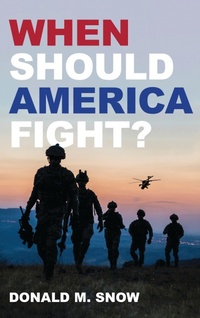
When Should America Fight?
1st Edition
Published on 27. January 2023
224 pages
978-1-5381-6945-2 (ISBN)
Description

Donald M. Snow invites readers to consider what criteria should be evaluated when considering whether the United States should engage in military action across the globe: when its vital interests are at stake and when the endeavor can reasonably be considered feasible, what Snow refers to as the "IF factor." It is hard to justify promoting an application of American military force to a situation where its use will not succeed or where US interests are not clearly vital, but, Snow argues, that is exactly what has happened frequently since Vietnam.
The book is organized into three sections, examining a historical overview of how the United States became involved in intervening in asymmetrical warfare, the problem of internal war in the developing world, and future American military involvement, particularly in conflicts in the Global South and Ukraine.
The book is organized into three sections, examining a historical overview of how the United States became involved in intervening in asymmetrical warfare, the problem of internal war in the developing world, and future American military involvement, particularly in conflicts in the Global South and Ukraine.
More details
Edition
1. Auflage
Language
English
Place of publication
New York
United States
Publishing group
Bloomsbury Publishing Plc
ISBN-13
978-1-5381-6945-2 (9781538169452)
Copyright in bibliographic data and cover images is held by Nielsen Book Services Limited or by the publishers or by their respective licensors: all rights reserved.
Schweitzer Classification
Other editions
Additional editions
Donald M. Snow
When Should America Fight?
Book
01/2023
Rowman & Littlefield Publishers
€43.50
Shipment within 3-4 weeks
Donald M. Snow
When Should America Fight?
Book
01/2023
Rowman & Littlefield Publishers
€119.10
Shipment within 3-4 weeks
Person
Donald M. Snow is Professor Emeritus in Political Science at The University of Alabama, where he served on the faculty for 37 years. During that period, he was also Director of International Studies within the College of Arts and Sciences, Director of Faculty Development and Services within the Office of Academic Affairs, and Chair of the Tenure and Promotions Committee within the Political Science Department. He also served as Visiting Professor at the United States Air, Army, and Naval War Colleges and the Air Command and Staff College. Within the discipline, he served as national Chair of the International Security Studies Section of the International Studies Association and of the Arms Control and International Studies Section of the American Political Science Association. He was a frequent lecturer as professional military education schools and conferences sponsored by organizations such as the Freedoms Foundation at Valley Forge. Snow has published over 60 academic books and monographs on international relations, foreign and national security topics for a variety of publishers. His most recent books include National Security, seventh edition (2020), The Middle East and American National Security (2021), and Cases in International Relations, ninth edition (2022). He resides with his wife on Hilton Head Island, South Carolina, and has a son and three grandchildren who live nearby.
Content
Preface
Introduction: The Withdrawal from Afghanistan and the Continuing Use of American Force
Introducing the IF Factor
Vietnam, Afghanistan, and Beyond
The New Way of Fighting: Asymmetrical Warfare
The IF Contribution
Conclusion: The Legacy of Vietnam, Afghanistan, and Ukraine
Bibliography
Chapter 1: The United States in Vietnam and Beyond
The Context: Why Students Need to Know about War
The Post-World War II Evolution of Warfare
The Effects on Thinking About Warfare
Conclusion
Bibliography
Chapter 2: The Twentieth Century Legacy: The European Model of Warfare, the Impact of Nuclear Weapons, and the Transformation of the Uses of Force
The European Style of War
The Impact of Nuclear Weapons
Conclusion
Bibliography
Chapter 3: The Systemic Shock of 9/11: Afghanistan, Iraq, and Beyond
America in Iraq
The War in Afghanistan
Conclusion: The Past in the Future?
Bibliography
Chapter 4: Russia and Ukraine in 2022: The Face of Modern Mayhem?
Defining Parameters in 2022: The Ukrainian Case
The Incendiary Potential of the 2022 Crisis: A Presage to a Larger War?
And Then There is Putin
The War Worthiness of the Ukrainian Crisis: Before and After the Impact of Nuclear Weapons
Resolving the Ukrainian Crisis
Conclusion: The Nuclear Prophylactic?
Bibliography
Chapter 5: Contemporary Warfare and American Force: Conventional and Asymmetrical Warfare in the World
Fighting in the Developing World: The IF Factor in Application
Contemplating Involvements: The Challenges of Asymmetrical Warfare
Assessing the Prospects: The Middle East Quagmire as Rejoinder
The United States and Potential Deployments Beyond the Traditional Middle East Conflict
Asymmetrical Warfare 101
Asymmetry and the IF Factor
Asymmetrical Warfare Is Not Easy
The Dynamics of Defeating Intervention
Conclusions
Bibliography
Chapter 6: The Briar Patch of Intervention in a Complex Environment: The Developed World
Dealing with the Modal Threats
The Russian Invasion of Ukraine
Conclusion: The Legacy of Ukraine?
Bibliography
Chapter 7: Coping with Asymmetrical and Conventional Forms of War: The Challenge for American Expeditionary Force
"Traditional" War: Russia and Ukraine
Asymmetrical Pasts and Futures?
Asymmetrical Warfare in Europe?
The Ukraine War in Perspective
The Ukraine War, the American Response, and When America Should Fight
The IF Factor and the Ukrainian War
The Ukrainian Precedent
Bibliography
Chapter 8: Conclusion: Where Will and Should the U.S. Fight: The Road Ahead
The Recent Past as Prologue?
The Past as the Model of the Future?
The Ukrainian War
Asymmetrical War in the Developing World
Back to the Future: Where Should America Fight?
Peering into the Future
Projecting Forward
Bibliography
Introduction: The Withdrawal from Afghanistan and the Continuing Use of American Force
Introducing the IF Factor
Vietnam, Afghanistan, and Beyond
The New Way of Fighting: Asymmetrical Warfare
The IF Contribution
Conclusion: The Legacy of Vietnam, Afghanistan, and Ukraine
Bibliography
Chapter 1: The United States in Vietnam and Beyond
The Context: Why Students Need to Know about War
The Post-World War II Evolution of Warfare
The Effects on Thinking About Warfare
Conclusion
Bibliography
Chapter 2: The Twentieth Century Legacy: The European Model of Warfare, the Impact of Nuclear Weapons, and the Transformation of the Uses of Force
The European Style of War
The Impact of Nuclear Weapons
Conclusion
Bibliography
Chapter 3: The Systemic Shock of 9/11: Afghanistan, Iraq, and Beyond
America in Iraq
The War in Afghanistan
Conclusion: The Past in the Future?
Bibliography
Chapter 4: Russia and Ukraine in 2022: The Face of Modern Mayhem?
Defining Parameters in 2022: The Ukrainian Case
The Incendiary Potential of the 2022 Crisis: A Presage to a Larger War?
And Then There is Putin
The War Worthiness of the Ukrainian Crisis: Before and After the Impact of Nuclear Weapons
Resolving the Ukrainian Crisis
Conclusion: The Nuclear Prophylactic?
Bibliography
Chapter 5: Contemporary Warfare and American Force: Conventional and Asymmetrical Warfare in the World
Fighting in the Developing World: The IF Factor in Application
Contemplating Involvements: The Challenges of Asymmetrical Warfare
Assessing the Prospects: The Middle East Quagmire as Rejoinder
The United States and Potential Deployments Beyond the Traditional Middle East Conflict
Asymmetrical Warfare 101
Asymmetry and the IF Factor
Asymmetrical Warfare Is Not Easy
The Dynamics of Defeating Intervention
Conclusions
Bibliography
Chapter 6: The Briar Patch of Intervention in a Complex Environment: The Developed World
Dealing with the Modal Threats
The Russian Invasion of Ukraine
Conclusion: The Legacy of Ukraine?
Bibliography
Chapter 7: Coping with Asymmetrical and Conventional Forms of War: The Challenge for American Expeditionary Force
"Traditional" War: Russia and Ukraine
Asymmetrical Pasts and Futures?
Asymmetrical Warfare in Europe?
The Ukraine War in Perspective
The Ukraine War, the American Response, and When America Should Fight
The IF Factor and the Ukrainian War
The Ukrainian Precedent
Bibliography
Chapter 8: Conclusion: Where Will and Should the U.S. Fight: The Road Ahead
The Recent Past as Prologue?
The Past as the Model of the Future?
The Ukrainian War
Asymmetrical War in the Developing World
Back to the Future: Where Should America Fight?
Peering into the Future
Projecting Forward
Bibliography
