

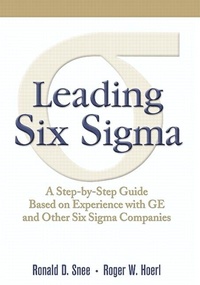
Leading Six Sigma
A Step-by-Step Guide Based on Experience with GE and Other Six Sigma Companies
1st Edition
Published on 1. November 2002
304 pages
978-0-13-204458-5 (ISBN)
Description

Leading Six Sigma is the complete guide to leading quality initiatives in your company. Top Six Sigma consultant Ronald Snee and GE quality leader Roger Hoerl demonstrate how to deploy a Six Sigma plan that reflects your unique organization, and key lessons learned from the world's best implementations. Coverage includes every facet of Six Sigma leadership: strategy, goal setting, metrics, training, roles/responsibilities, processes, reporting, rewards, ongoing review, and much more.
More details
Edition
1. Auflage
Language
English
Place of publication
Boston
United States
Publishing group
Pearson Education (US)
Target group
Professional and scholarly
File size
2,35 MB
ISBN-13
978-0-13-204458-5 (9780132044585)
Copyright in bibliographic data and cover images is held by Nielsen Book Services Limited or by the publishers or by their respective licensors: all rights reserved.
Schweitzer Classification
Other editions
Additional editions
Ron Snee | Ron D. Snee | Roger Hoerl
Leading Six Sigma: A Step-by-Step Guide Based on Experience with GE and Other Six Sigma Companies
A Step-by-Step Guide Based on Experience with GE and Other Six Sigma Companies
Book
09/2009
1st Edition
Addison Wesley
€28.84
Article not available at the moment
Persons
DR. RONALD D. SNEE is Principal in Tunnell Consulting's Performance Excellence Practice, which offers Six Sigma consulting, training, facilitation, and implementation, in addition to other process-improvement approaches. He has an outstanding record of leadership in process and organizational improvement in a wide range of industries, including telecommunications, insurance, financial services, newspapers, clinical diagnostics, and chemical and plastics manufacturing. He designed DuPont's first company-wide continuous improvement curriculum.
Dr. Snee has earned the American Society for Quality's highest honor, the Shewhart Medal, and served as a member of the Malcolm Baldrige National Quality Award Criteria Team.
DR. ROGER W. HOERL is a long-time leader in GE's renowned Six Sigma initiative. As Manager of GE R&D's Applied Statistics Lab, he partners on research projects with GE businesses ranging from NBC and GE Capital to GE Aircraft Engines and GE Power Systems. He has implemented Six Sigma in a wide range of GE processes, from corporate audit to delinquent credit card tracking. A Fellow of both the American Statistical Association (ASA) and the American Society for Quality (ASQ), he won ASQ's 2001 Brumbaugh Award for the published paper with the greatest impact on industrial quality control applications.
Snee and Hoerl are also co-authors of Statistical Thinking: Improving Business Performance, an innovative guide to the strategic use of data and statistics in solving business problems.
Dr. Snee has earned the American Society for Quality's highest honor, the Shewhart Medal, and served as a member of the Malcolm Baldrige National Quality Award Criteria Team.
DR. ROGER W. HOERL is a long-time leader in GE's renowned Six Sigma initiative. As Manager of GE R&D's Applied Statistics Lab, he partners on research projects with GE businesses ranging from NBC and GE Capital to GE Aircraft Engines and GE Power Systems. He has implemented Six Sigma in a wide range of GE processes, from corporate audit to delinquent credit card tracking. A Fellow of both the American Statistical Association (ASA) and the American Society for Quality (ASQ), he won ASQ's 2001 Brumbaugh Award for the published paper with the greatest impact on industrial quality control applications.
Snee and Hoerl are also co-authors of Statistical Thinking: Improving Business Performance, an innovative guide to the strategic use of data and statistics in solving business problems.
Content
Preface.
Acknowledgements.
1. So You Want to Do Six Sigma?
Why You Need This Book. An Overview. Roles of Six Sigma Leaders. Summary. References.
2. Four Case Studies: What Works and What Doesn't.
Inside GE's Experiences. The First Year--1996. The Push for Tangible Benefits. DFSS and a Critical Mass of Green Belts. A Refocus on Customers. Digitization and Six Sigma. A Reinvigoration. The W. R. Grace Story. Less Successful Six Sigma Deployments. Summary. References.
3. How to Successfully Deploy Six Sigma.
Why Were GE and Grace Successful? Why Were Others Less Successful? The Keys to Successful Six Sigma Deployment. A High-Level Roadmap For Six Sigma Deployment. Summary. References.
4. Launching the Initiative.
Full or Partial Deployment? Developing the Deployment Plan. Deployment Plan Elements. Selecting the Right Projects. The Concept of Process Entitlement. Developing the Project Charter. Selecting the Right People. What Training Do I Need? Selecting a Six Sigma Provider. Summary. References.
5. Managing the Effort.
Managerial Systems and Processes. Management Project Reviews. Project Reporting and Tracking System. Communication Plan. Reward and Recognition Plan. Project Identification/Prioritization System. Inclusion of Six Sigma in Budgeting Processes. Deployment Processes for Leaders. Integrating Six Sigma with Current Management Systems. Summary.
6. Sustaining Momentum and Growing.
Playing Defense--Sustaining Momentum. Playing Offense--Growing the Effort. Summary. References.
7. The Way We Work.
Integrating Six Sigma With Process Management Systems. Creating an Overall Organizational Improvement System. Integration of Six Sigma With Other Strategic Initiatives. The Long-Term Impact of Six Sigma. Summary. References.
8. Final Thoughts for Leaders.
Understanding the Role of the Six Sigma Tools--A Case Study. How to Think About the Six Sigma Tools. Advice For Ensuring Project Success. Good Questions to Ask in Project Reviews. Advice for Ensuring Success of the Six Sigma. Initiative. Good Questions to Ask in Reviews of the Overall Initiative. Summary. Additional Six Sigma References.
Deployment Questions and Answers.
General Questions About Six Sigma. Questions Concerning MBB and BB Roles. Project Selection and Review Questions. Training Questions. Questions Concerning Financial Benefits. Other Human Resources Questions. References.
Six Sigma Deployment Plan-An Example. Contents. Introduction. Deployment Plan Elements. Lessons Learned. Key Issues. Action Plan.
Glossary.
Acronyms.
Index.
Acknowledgements.
1. So You Want to Do Six Sigma?
Why You Need This Book. An Overview. Roles of Six Sigma Leaders. Summary. References.
2. Four Case Studies: What Works and What Doesn't.
Inside GE's Experiences. The First Year--1996. The Push for Tangible Benefits. DFSS and a Critical Mass of Green Belts. A Refocus on Customers. Digitization and Six Sigma. A Reinvigoration. The W. R. Grace Story. Less Successful Six Sigma Deployments. Summary. References.
3. How to Successfully Deploy Six Sigma.
Why Were GE and Grace Successful? Why Were Others Less Successful? The Keys to Successful Six Sigma Deployment. A High-Level Roadmap For Six Sigma Deployment. Summary. References.
4. Launching the Initiative.
Full or Partial Deployment? Developing the Deployment Plan. Deployment Plan Elements. Selecting the Right Projects. The Concept of Process Entitlement. Developing the Project Charter. Selecting the Right People. What Training Do I Need? Selecting a Six Sigma Provider. Summary. References.
5. Managing the Effort.
Managerial Systems and Processes. Management Project Reviews. Project Reporting and Tracking System. Communication Plan. Reward and Recognition Plan. Project Identification/Prioritization System. Inclusion of Six Sigma in Budgeting Processes. Deployment Processes for Leaders. Integrating Six Sigma with Current Management Systems. Summary.
6. Sustaining Momentum and Growing.
Playing Defense--Sustaining Momentum. Playing Offense--Growing the Effort. Summary. References.
7. The Way We Work.
Integrating Six Sigma With Process Management Systems. Creating an Overall Organizational Improvement System. Integration of Six Sigma With Other Strategic Initiatives. The Long-Term Impact of Six Sigma. Summary. References.
8. Final Thoughts for Leaders.
Understanding the Role of the Six Sigma Tools--A Case Study. How to Think About the Six Sigma Tools. Advice For Ensuring Project Success. Good Questions to Ask in Project Reviews. Advice for Ensuring Success of the Six Sigma. Initiative. Good Questions to Ask in Reviews of the Overall Initiative. Summary. Additional Six Sigma References.
Deployment Questions and Answers.
General Questions About Six Sigma. Questions Concerning MBB and BB Roles. Project Selection and Review Questions. Training Questions. Questions Concerning Financial Benefits. Other Human Resources Questions. References.
Six Sigma Deployment Plan-An Example. Contents. Introduction. Deployment Plan Elements. Lessons Learned. Key Issues. Action Plan.
Glossary.
Acronyms.
Index.
