


Digital Modernity
Description

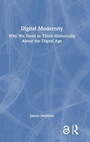
This is the first systematic theorization of digital modernity, arguing that the digital age cannot be understood apart from the long historical arc of modernity.
Bridging digital humanities, critical theory, sociology, philosophy, and global history, Digital Modernity demonstrates that contemporary digital systems are continuations rather than ruptures of the modern project. It offers a robust conceptual framework for examining how technological infrastructures intersect with democracy, governance, colonial legacies, and the public sphere. Across nine chapters, the book moves from conceptual foundations to future-facing proposals. Topics include the cultural logic of Silicon Valley, digital colonialism, digital infrastructure, and the epistemic crisis of the digital public sphere. It also engages philosophical questions about emergence, historicism, and artificial intelligence. Drawing on applied digital humanities, the book rejects technological determinism while offering accessible accounts of computing's technical and political histories. Readers benefit from a coherent theoretical lens that integrates history with socio-technical critique, enabling a clearer understanding of digital modernity's present and future stakes.
This book is intended for scholars and students across digital humanities, media and communication studies, science and technology studies, sociology, the philosophy of technology, and modern history. Its interdisciplinary scope also supports research and teaching in software studies, critical AI, infrastructure studies, and global modernities. Suitable for advanced undergraduate and postgraduate courses, it will be especially valuable for researchers seeking to historicize digital systems while advancing critiques grounded in cultural theory, political economy, and postcolonial perspectives. By placing the digital within a longer history of modernity, the book offers both a foundational text and a springboard for further research in critical digital studies.
The Open Access version of this book, available at www.taylorfrancis.com, has been made available under a Creative Commons Attribution-Non Commercial-No Derivatives (CC BY-NC-ND) 4.0 International license.
More details
Other editions
Additional editions

Person
James Smithies is Professor of Digital Humanities and Director of the Humanities and Social Sciences Digital Research Hub at The Australian National University. Previously, he was Professor of Digital Humanities at King's College London and the founding director of King's Digital Lab.
Content
Introduction: Technology and History 1 Digital Modernities 2 Computational Blueprints 3 The Digital Modern 4 The Public Sphere 5 Colonialism and Power 6 Race, Technology, and History 7 Into the Engine Room of History 8 Emergent Infrastructure 9 Industrialized Cognition Conclusion: The Future of Digital Modernity
