

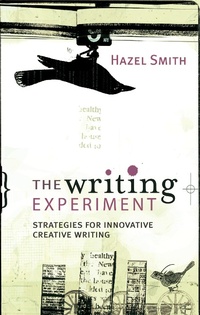
The Writing Experiment
Strategies for innovative creative writing
1st Edition
Published on 16. July 2020
304 pages
978-1-000-25203-3 (ISBN)
Description

'A systematic and engaging approach to creative writing' - Carla Harryman, Wayne State University
By suggesting that students who are not born poets can yet learn to become good ones, Smith performs a very important service.' - Professor Susan M. Schultz, University of Hawaii
This is an impressive book, because it covers areas of creative writing practice and theory that have not been covered in published form It links radical practice with radical (but better-known) theory, and will appeal to anyone looking for a different approach ' - Robert Sheppard, Edge Hill College of Higher Education, UK
The Writing Experiment demystifies the process of creative writing, showing that successful work does not arise from talent or inspiration alone. Hazel Smith breaks down writing into incremental stages, revealing processes that are often unconscious or unacknowledged, and shows how they can become part of a systematic writing strategy.
The book encourages writers to take an explorative and experimental approach to their work. It relates practical strategies for writing to major twentieth century literary and cultural movements, including postmodernism.
Suitable for both beginners and experienced writers, The Writing Experiment covers many genres including fiction, poetry, writing for performance and new media. Each chapter is illustrated with extensive examples of both student work and published writing, and challenging exercises offer writers at all levels opportunities to develop their skills.
By suggesting that students who are not born poets can yet learn to become good ones, Smith performs a very important service.' - Professor Susan M. Schultz, University of Hawaii
This is an impressive book, because it covers areas of creative writing practice and theory that have not been covered in published form It links radical practice with radical (but better-known) theory, and will appeal to anyone looking for a different approach ' - Robert Sheppard, Edge Hill College of Higher Education, UK
The Writing Experiment demystifies the process of creative writing, showing that successful work does not arise from talent or inspiration alone. Hazel Smith breaks down writing into incremental stages, revealing processes that are often unconscious or unacknowledged, and shows how they can become part of a systematic writing strategy.
The book encourages writers to take an explorative and experimental approach to their work. It relates practical strategies for writing to major twentieth century literary and cultural movements, including postmodernism.
Suitable for both beginners and experienced writers, The Writing Experiment covers many genres including fiction, poetry, writing for performance and new media. Each chapter is illustrated with extensive examples of both student work and published writing, and challenging exercises offer writers at all levels opportunities to develop their skills.
Reviews / Votes
'A systematic and engaging approach to creative writing' - Carla Harryman, Wayne State UniversityBy suggesting that students who are not born poets can yet learn to become good ones, Smith performs a very important service.' - Professor Susan M. Schultz, University of Hawaii
This is an impressive book, because it covers areas of creative writing practice and theory that have not been covered in published form It links radical practice with radical (but better-known) theory, and will appeal to anyone looking for a different approach ' - Robert Sheppard, Edge Hill College of Higher Education, UK
More details
Edition
1. Auflage
Language
English
Place of publication
London
United Kingdom
Publishing group
Taylor & Francis Ltd
Target group
College/higher education
ISBN-13
978-1-000-25203-3 (9781000252033)
Copyright in bibliographic data and cover images is held by Nielsen Book Services Limited or by the publishers or by their respective licensors: all rights reserved.
Schweitzer Classification
Other editions
Additional editions
Book
03/2021
1st Edition
Routledge
€179.51
Shipment within 15-20 days
Book
03/2005
1st Edition
Allen & Unwin
€43.30
Shipment within 3-4 weeks
Person
Hazel Smith is Senior Research Fellow in the School of Creative Communication, University of Canberra, Co-leader of the Sonic Communications Research Group and Deputy Director of the University of Canberra Centre for Writing. She founded the creative writing program at the University of New South Wales. She is author of Hyperscapes in the Poetry of Frank O'Hara and co-author of Improvisation, Hypermedia and the Arts Since 1945. She has published two books of poetry, two CDs of performance work and numerous multimedia and hypermedia works.
Content
Preface
Introduction
Part 1: Introductory strategies
Chapter 1: Playing with language, running with referents
Chapter 2: Genre as a moveable feast
Chapter 3: Working out with structures
Chapter 4: Writing as recycling
Chapter 5: Narrative, narratology, power
Chapter 6: Dialoguing
Part 2: Advanced strategies
Chapter 7: Postmodern f(r)ictions
Chapter 8: Postmodern poetry, avant-garde poetics
Chapter 9: The invert, the cross-dresser, the fictocritic
Chapter 10: Tongues, talk and technologies
Chapter 11: New media travels
Chapter 12: Mapping worlds, moving cities
Conclusion: The ongoing editor
Acknowledgments
Index
Introduction
Part 1: Introductory strategies
Chapter 1: Playing with language, running with referents
Chapter 2: Genre as a moveable feast
Chapter 3: Working out with structures
Chapter 4: Writing as recycling
Chapter 5: Narrative, narratology, power
Chapter 6: Dialoguing
Part 2: Advanced strategies
Chapter 7: Postmodern f(r)ictions
Chapter 8: Postmodern poetry, avant-garde poetics
Chapter 9: The invert, the cross-dresser, the fictocritic
Chapter 10: Tongues, talk and technologies
Chapter 11: New media travels
Chapter 12: Mapping worlds, moving cities
Conclusion: The ongoing editor
Acknowledgments
Index
