

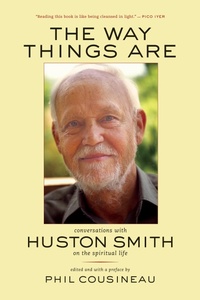
The Way Things Are
Conversations with Huston Smith on the Spiritual Life
1st Edition
Published on 2. September 2003
338 pages
978-0-520-93881-6 (ISBN)
Description

"Where can we find what is ultimately meaningful? How can we discover what is truly worth knowing?" In one form or another Huston Smith has been posing these questions to himself-and the world-all his life. In the course of seeking answers, he has become one of the most interesting, enlightening, and celebrated voices on the subject of religion and spirituality throughout the world. The twenty-three interviews and essays in this volume, edited by cultural historian and filmmaker Phil Cousineau, offer a uniquely personal perspective on Smith's own personal journey, as well as wide-ranging reflection on the nature and importance of the religious quest.
In The Way Things Are, readers will find Smith in conversation with some of the world's most influential personalities and religious leaders, from journalist Bill Moyers to religion scholar Philip Novak, and recounting his personal experiences with such luminaries as Joseph Campbell, Aldous Huxley, Timothy Leary, Daisetz Suzuki, Ram Dass, and the Dalai Lama. Throughout these engaging exchanges Smith speaks with passion and humor of his upbringing as the son of missionary parents in China, of the inspiring and colorful individuals he has known, and of his impressions of the different religious and philosophical traditions he has encountered. A fascinating view of the state of world religion and religious leadership over the past fifty years, the book also looks to the future with a final interview on the vital importance of the transcendent message of religion for the post-9/11 world. Readers will find The Way Things Are to be Huston Smith's most and accessible book to date.
In The Way Things Are, readers will find Smith in conversation with some of the world's most influential personalities and religious leaders, from journalist Bill Moyers to religion scholar Philip Novak, and recounting his personal experiences with such luminaries as Joseph Campbell, Aldous Huxley, Timothy Leary, Daisetz Suzuki, Ram Dass, and the Dalai Lama. Throughout these engaging exchanges Smith speaks with passion and humor of his upbringing as the son of missionary parents in China, of the inspiring and colorful individuals he has known, and of his impressions of the different religious and philosophical traditions he has encountered. A fascinating view of the state of world religion and religious leadership over the past fifty years, the book also looks to the future with a final interview on the vital importance of the transcendent message of religion for the post-9/11 world. Readers will find The Way Things Are to be Huston Smith's most and accessible book to date.
More details
Other editions
Additional editions

Huston Smith | Phil Cousineau
The Way Things Are
Conversations with Huston Smith on the Spiritual Life
Book
03/2005
1st Edition
University of California Press
€30.95
Article exhausted; check different version
Huston Smith | Phil Cousineau
The Way Things Are
Conversations with Huston Smith on the Spiritual Life
Book
09/2003
1st Edition
University of California Press
€35.84
Article exhausted; check different version
Persons
Huston Smith, Professor Emeritus of Philosophy, Syracuse University, is considered the country's preeminent public scholar of world religions. The author of The Religions of Man (1958, republished as The World's Religions in 1991) and Why Religion Matters (2001), Smith has influenced multiple generations of readers, artists, scholars, and students. He has been profiled in a PBS series by Bill Moyers and appears frequently on national TV and radio. Phil Cousineau is the author and editor of numerous books, including, most recently, Once and Future Myths: The Power of Ancient Stories in Modern Times (2001), The Art of Pilgrimage: The Seeker's Guide to Making Travel Sacred (1998), and Soul Moments: Marvelous Stories of Synchronicity (1997).
Content
Preface: The Way Things Are for Huston Smith
No Wasted Journey: A Theological Autobiography
Introduction by Huston Smith
PART ONE: THE HEART OF RELIGION
Chapter 1. The Way Things Are
An interview with Timothy Beneke
Chapter 2. The Primordial Tradition
An interview with John Loudon
Chapter 3. Winnowing the Wisdom Traditions
An interview with Mark Kenaston
Chapter 4. This Is It
An interview with Richard Marranca
Chapter 5. The Soul of the Community
An interview with Philip and Bridgett Novak
Chapter 6. Encountering God
An essay by Huston Smith
PART TWO: THE STRUGGLE BETWEEN SCIENCE AND RELIGION
Chapter 7. The Place of Science
An interview with Steve Reuys
Chapter 8. The Limits of the Scientific Worldview
An interview with Jeffrey Mishlove
Chapter 9. Science as the Oracle of Our Age
An interview with Michael Toms
Chapter 10. Science, Faith, and Infinity
An interview with Tracy Knauss and the Reverend Jack Young
Chapter 11. Toward a Partnership between Science and Religion
An interview with April Thompson
Chapter 12. The Battle for the Human Mind
An interview with Richard Gazdayka
Chapter 13. The New Paradigm
An interview with Richard Smoley and Jay Kinney
Chapter 14. Countering Scientism
An essay by Marsha Newman
Chapter 15. The Striking Parallels
An interview with Phil Cousineau
PART THREE: FROM PLATO'S CAVE TO THE ENCHANTED GARDEN
Chapter 16. The Sacred Dimensions of Everyday Life
An interview with Jeffrey Kane
Chapter 17. Demystifying Spiritual Practice
An essay by Huston Smith, with commentary by Sarah Ban Breathnach
Chapter 18. The Varieties of Religious Explorations
An interview with Jeffrey Mishlove
Chapter 19. Cleansing the Doors of Perception
An interview with Richard Scheinin
Chapter 20. Fathoming Psychedelic Mysticism
An interview with Timothy White
Chapter 21. The Wisdom of Faith
An interview with Bill Moyers
Chapter 22. Why Religion Matters Now More Than Ever
An interview with Phil Cousineau
References
Acknowledgments
Index
No Wasted Journey: A Theological Autobiography
Introduction by Huston Smith
PART ONE: THE HEART OF RELIGION
Chapter 1. The Way Things Are
An interview with Timothy Beneke
Chapter 2. The Primordial Tradition
An interview with John Loudon
Chapter 3. Winnowing the Wisdom Traditions
An interview with Mark Kenaston
Chapter 4. This Is It
An interview with Richard Marranca
Chapter 5. The Soul of the Community
An interview with Philip and Bridgett Novak
Chapter 6. Encountering God
An essay by Huston Smith
PART TWO: THE STRUGGLE BETWEEN SCIENCE AND RELIGION
Chapter 7. The Place of Science
An interview with Steve Reuys
Chapter 8. The Limits of the Scientific Worldview
An interview with Jeffrey Mishlove
Chapter 9. Science as the Oracle of Our Age
An interview with Michael Toms
Chapter 10. Science, Faith, and Infinity
An interview with Tracy Knauss and the Reverend Jack Young
Chapter 11. Toward a Partnership between Science and Religion
An interview with April Thompson
Chapter 12. The Battle for the Human Mind
An interview with Richard Gazdayka
Chapter 13. The New Paradigm
An interview with Richard Smoley and Jay Kinney
Chapter 14. Countering Scientism
An essay by Marsha Newman
Chapter 15. The Striking Parallels
An interview with Phil Cousineau
PART THREE: FROM PLATO'S CAVE TO THE ENCHANTED GARDEN
Chapter 16. The Sacred Dimensions of Everyday Life
An interview with Jeffrey Kane
Chapter 17. Demystifying Spiritual Practice
An essay by Huston Smith, with commentary by Sarah Ban Breathnach
Chapter 18. The Varieties of Religious Explorations
An interview with Jeffrey Mishlove
Chapter 19. Cleansing the Doors of Perception
An interview with Richard Scheinin
Chapter 20. Fathoming Psychedelic Mysticism
An interview with Timothy White
Chapter 21. The Wisdom of Faith
An interview with Bill Moyers
Chapter 22. Why Religion Matters Now More Than Ever
An interview with Phil Cousineau
References
Acknowledgments
Index
