

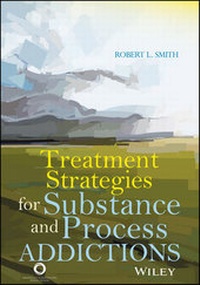
Treatment Strategies for Substance Abuse and Process Addictions
Description

Reviews / Votes
"Substance addiction and abuse permeate modern life at unrecognized levels, and many behavioral addictions go completely unrecognized or untreated. Dr. Smith and his colleagues present realistic examples of the complete spectrum of substance and process addictions with integrated models of assessment, diagnosis, and treatment. It is important for all professionals to learn how pervasive this problem is and how to create effective client treatment plans. This book should be mandatory reading for all counselors and therapists."--Jon Carlson, PsyD, EdD, Distinguished Professor, Governors State University "This important resource for practitioners, counselor educators, and students uniquely addresses the behavioral addictions particularly relevant in contemporary society. This is a 'must have' for any professional working with addiction issues. I look forward to using this text in my practice and in the classroom!"--Thelma Duffey, PhD, President, American Counseling Association (2015-2016) "This book offers readers a bevy of case studies and evidenced-based strategies for effectively counseling clients struggling with addictive disorders. It highlights the importance of assessing and treating the cooccurrence of substance and process addictions, resulting in improved treatment outcomes for clients."--W. Bryce Hagedorn, PhD, President, Association for Spiritual, Ethical, & Religious Values in Counseling (ASERVIC), Program Director of Counselor Education, University of Central FloridaMore details
Other editions
Additional editions
Person
Robert L. Smith, PhD, is the department chair and professor in the Counseling and Educational Psychology Department at Texas A&M University-Corpus Christi, as well as president of the American Counseling Association (2014-2015).
Content
PREFACE ix
ABOUT THE AUTHOR/EDITOR xi
ABOUT THE CONTRIBUTORS xiii
ACKNOWLEDGMENTS xv
CHAPTER 1 ADDICTIONS: AN OVERVIEW 1
Robert L. Smith
Student Learning Outcomes 1
Case and Case Discussion 1
Addiction Defi ned 3
Criteria for Addiction 6
Substance and Process Addictions 11
The Prevalence of Addictions 12
The Etiology of Addictions 14
Treatment Strategies 18
Conclusions 25
Resources 27
References 28
CHAPTER 2 ALCOHOL ADDICTION 33
Todd F. Lewis
Student Learning Outcomes 33
Case and Case Discussion 33
Overview of Alcohol Addiction 34
Assessment and Diagnosis 37
Treatment Settings 40
Evidence-Based Research: Treatment of Alcoholism 40
Armed Services Substance Abuse Treatment Programs 47
Hospital Treatment Programs 48
The Matrix Model 49
Conclusions 51
Resources 51
References 51
CHAPTER 3 NICOTINE ADDICTION 57
Robert L. Smith
Student Learning Outcomes 57
Case and Case Discussion 57
Overview of Nicotine Addiction 58
Diagnosis of Nicotine Addiction 64
Treatment of Nicotine Addiction 67
Treatment Guidelines for Evidence-Based Practices 70
Conclusions 72
Resources 72
References 73
CHAPTER 4 MARIJUANA ADDICTION 75
Richard S. Balkin
Student Learning Outcomes 75
Case and Case Discussion 75
Overview of Marijuana Addiction 76
Assessment and Diagnosis 78
Treatment 80
Models and Approaches 81
Evidence-Based Research 85
Conclusions 87
Resources 88
References 88
CHAPTER 5 METHAMPHETAMINE ADDICTION 91
Helena G. Rindone
Student Learning Outcomes 91
Case and Case Discussion 91
Overview of Methamphetamine Addiction 93
Effects of Methamphetamines 98
Addiction to Methamphetamine 101
Treatment 103
Conclusions 119
Resources 120
References 120
CHAPTER 6 PRESCRIPTION DRUG ADDICTION 127
Todd F. Lewis
Student Learning Outcomes 127
Case and Case Discussion 127
Overview of Prescription Drug Addiction 128
Assessment, Diagnosis, and Treatment Settings 133
Treatment of Prescription Drug Addiction 138
Conclusions 143
Resources 144
References 145
CHAPTER 7 PATHOLOGICAL GAMBLING 149
Stephen Southern and Katherine Hilton
Student Learning Outcomes 149
Case and Case Discussion 149
Overview of Pathological Gambling 150
Special Populations of Pathological Gamblers 153
Diagnosis and Assessment 155
Empirically Supported Treatments 158
Treatment Packages for Pathological Gambling 162
Concurrent Treatment of Trauma and
Pathological Gambling 167
Integrative Treatment in the Case of Sarah 169
Conclusions 170
Resources 172
References 173
CHAPTER 8 SEXUAL ADDICTION 177
Stephen Southern, Dawn Ellison, and Mark Hagwood
Student Learning Outcomes 177
Case and Case Discussion 177
Overview of Sexual Addiction 178
Special Populations of Sexual Addicts 182
Diagnosis of Sexual Addiction and
Hypersexual Disorder 184
Assessment Methods 186
Treatment of Sexual Addiction and Hypersexual Disorder 193
Integrative Treatment Package for Sexual Addiction and Life Trauma 196
Integrative Treatment in the Case of Sarah 198
Conclusions 200
Resources 201
References 202
CHAPTER 9 DISORDERED EATING 207
Tamara Duarte and Fredericka DeLee
Student Learning Outcomes 207
Cases and Case Discussion 207
Overview of Disordered Eating 209
Diagnosis 215
Assessment 219
Treatment Models and Approaches 221
Conclusions 229
Resources 230
References 231
CHAPTER 10 WORK ADDICTION 237
Summer M. Reiner
Student Learning Outcomes 237
Case and Case Discussion 237
Overview of Work Addiction 238
Work Addiction Around the World 243
Impact of Work Addiction 244
Antecedents of Work Addiction 245
Defi nitions, Costs, and Demographics 248
Assessment and Diagnosis 249
Treatment 252
Models and Approaches 254
Evidence-Based Approaches 255
Conclusions 256
Resources 256
References 257
CHAPTER 11 EXERCISE ADDICTION 263
Michele Kerulis
Student Learning Outcomes 263
Cases and Case Discussion 263
Overview of Exercise Addiction 264
Exercise Addiction and Exercise Dependence 266
Exercise and Disordered Eating 267
Inpatient and Outpatient Treatment Settings 270
Evidence-Based Models and Assessments 271
Conclusions 273
Resources 274
References 274
CHAPTER 12 COMPULSIVE BUYING/SHOPPING ADDICTION 277
Kimberly Frazier
Student Learning Outcomes 277
Case and Case Discussion 277
Overview of Compulsive Buying/Shopping Addiction 278
Assessment and Diagnosis 280
The Brain and Compulsive Buying/Shopping Addiction 284
Treatment Approaches 285
Conclusions 288
Resources 288
References 289
CHAPTER 13 INTERNET ADDICTION 293
Joshua C. Watson
Student Learning Outcomes 293
Case and Case Discussion 293
Overview of Internet Addiction 294
Assessment and Diagnosis 299
Treatment 303
Conclusions 308
Resources 308
References 309
CHAPTER 14 ADDICTIONS: STATUS, RESEARCH, AND FUTURE 313
Robert L. Smith
Student Learning Outcomes 313
Cases and Case Discussion 313
Common Features and Components of Assessment and Treatment 315
Issues Related to Addictions 317
Research and Evidence-Based Treatment 321
The Future 323
Treatment in Context 323
Additional Issues 324
Conclusions 325
References 326
INDEX 329
Addictions: An Overview
Robert L. Smith
Student Learning Outcomes
At the conclusion of this chapter students will
- Be able to define addictions
- Identify the criteria used when defining addictions
- Distinguish between substance and process addictions
- Identify the etiology and prevalence of addictions
- Identify addiction treatment strategies, interventions, and programs
- Identify practitioner characteristics considered essential when working with addictions
Case and Case Discussion
Individuals who directly or indirectly experience the chaos associated with addictions come from all sectors of society. The case of Angie, a 34-year-old Caucasian woman, represents the vast number of individuals who have struggled with and lost their lives to co-occurring addictions. The particulars of this case resemble those of family members, friends, neighbors, colleagues, supervisors, doctors, homeless individuals, and others across the globe who have been, or currently are, severely impacted by multiple addictions.
Angie, a 34-year-old Caucasian woman, experienced a high-risk lifestyle. As a bright, attractive, and entertaining young person she enjoyed the attention of others, and as an impulsive risk taker she exhibited minimal restraint in satisfying her personal needs. Angie had been a popular and smart, capricious adolescent. Her energy and athleticism were assets that had helped her gain recognition as a cheerleader and member of the debate team. She craved the attention of others and took pleasure in being recognized. She also enjoyed the excitement and the high from using alcohol, marijuana, cocaine, and mixed drugs. Her obsession with weight and her personal appearance led to bulimic episodes that were preceded by negative self-talk. Body image and weight were life-long concerns.
Family stressors existed throughout Angie's adolescent years that had affected her development. Angie's father, a gifted athlete, introduced her to golf when she was 12 years old. Angie initially enjoyed the attention provided by her father and her success as a young golfer. She enjoyed the high of being recognized as an up-and-coming athlete within her age group. She was victorious in several tournaments. She worked hard and participated in several golf seminars and intense practice sessions. However, the attention given to Angie by her father and family expectations led her to withdraw from both her family and golf.
The stress placed on Angie by her family and the competition was overwhelming. An additional family stressor, however, was more significant. After practice sessions, Angie would sit with her father, often on his lap, discussing golf and how she was growing up so fast. This time together led to fondling and inappropriate touching by her father. Angie at first was confused but soon realized that something was wrong. She eventually quit golf and distanced herself from her father. She soon withdrew from all of her family members, including her mother, who she felt was aware of but did nothing to stop her husband's behavior.
With excellent grades and a record of leadership, Angie was offered several college scholarships. She selected a university known for its communications department, theatrical productions, and social life. Both students and professors immediately noticed Angie as an attractive, radiant, and fun individual. During her first semester, she was invited to audition for acting roles in the department's theatrical productions. For Angie, it was exciting to be viewed on campus and within the community as a future entertainer.
While in college, Angie misused substances, mainly alcohol and marijuana. Her exposure in local productions, along with some nude modeling, attracted Hollywood associates. These contacts led to auditions for television commercials. Angie's new lifestyle provided access to cocaine, methamphetamines, and designer drugs. Angie also frequently mixed alcohol with other drugs that had initially been prescribed to relieve anxiety.
Angie was popular and met influential executives in the entertainment field. Her contacts led to additional commercials and minor roles in television. She craved recognition and imagined herself in movies.
After years of drug abuse and violent relationships, Angie experienced health issues, career disappointment, and financial problems. Following the stress of an abortion, she became depressed and viewed herself as a failure. Angie lost hope for the future she once imagined. Her severed relationships from family and friends further contributed to her depression. Feelings of being used by others led to distrust and withdrawal from society. Angie continued abusing alcohol and prescription medications, even when receiving help from psychiatrists, psychologists, substance abuse counselors, and family therapists. Angie was hospitalized following a suicide attempt. She attended, but was reluctant to participate in, a mandated inpatient program for substance dependence. Resenting these treatment attempts, Angie withdrew further from others and continued to self-medicate with alcohol and other drugs.
Angie spent most of her time alone and craving drugs. Her health deteriorated, leading to a loss of appetite, weight loss, muscle loss, loss of strength, liver failure, internal bleeding, and kidney failure. The 15-plus years of drug abuse had taken its toll on Angie's body and hijacked her brain. While in hospice care, she began to go in and out of consciousness. Angie died at the age of 34.
Angie's story provides a brief look at someone whose life ended as the result of co-occurring addictions. Her body broke down because of her habitual abuse of substances. Her brain was hijacked by the pleasure she craved as the result of substance and process addictions. The continuous mixing of drugs caused permanent harm to her brain and body. She craved substances and the high obtained from a repeated behavior pattern. Angie's drug addiction and the behavior pattern used to gain personal recognition became her top priority, despite physical, psychological, career, and social consequences.
Both substance and process addictions are presented in the case of Angie. Co-occurring addictions are frequent, as process and substance addictions work together, influencing the continuation of the self-defeating behavior and substance misuse. Treatment therefore takes more time and is complex.
After reviewing this case, one might conclude that the professionals and treatment programs failed Angie. Treatment attempts, whether individual, group, or multidimensional, seemed to have little or no effect on her misuse of drugs or her self-defeating behaviors. Interventions also failed to provide Angie with a sense of hope or relief from her depression. Coping strategies, if learned, were not enacted. This case thus emphasizes the complex nature of addictions.
In this chapter, I first review genetic influences, environmental influences, family factors, stress/trauma factors, and other factors that play a role in the addictions process, with a focus on the brain. Then I address the practitioner characteristics considered necessary when working with clients who have addictions. I conclude the chapter by discussing evidence-based practices and treatment strategies/interventions.
Addiction Defined
The term addiction is derived from the Latin addc meaning "enslaved by" or "bound to," and for many individuals like Angie, this derivative has meaning. The term addiction is frequently attached to a substance and viewed as dependence. Opium and morphine were two of the first addictive substances identified because of misuse of prescriptions. Society today often also characterizes individuals who participate in repetitive behaviors as being addicted. Thus, the term addiction currently applies to the misuse of alcohol, other drugs, and substances and to a large number of behavior patterns. It is safe to say that a large number of individuals can be viewed as being addicted to something. Perhaps someone you know has been accused of having a food addiction, such as to chocolate, ice cream, coffee, or a certain brand of soda. Maybe you know someone who is addicted to golf or to a special series on television. The conversational use of the term addiction has convoluted its meaning and definition.
Scientifically speaking, individuals are considered addicted when they relentlessly pursue a sensation or activity, whether it is a substance such as alcohol or a behavior like gambling, despite consequences to their health or well-being (W. R. Miller, Forcehimes, & Zweben, 2011). Similarly, addiction has been defined as the condition of being habitually or compulsively occupied with or involved in something. W. R. Miller et al. (2011) identified three kinds of actions that define an addiction: (a) an action that is habitual, done regularly, and repeated; (b) an action that appears to be compulsive in nature and at least partially outside of one's conscious control; and (c) an action that does not necessarily involve a drug.
The American Society of Addiction Medicine (ASAM; 2011) refers to addiction as follows:
Addiction is a primary, chronic disease involving brain reward, motivation, memory and related circuitry; it can lead to relapse, progressive development, and the potential for fatality if not treated. While pathological use of alcohol and, more recently, psychoactive substances have been accepted as addictive diseases,...
