

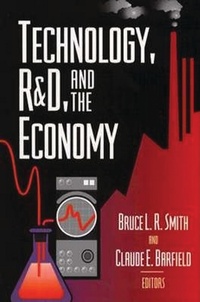
Technology, R&D, and the Economy
1st Edition
Published on 1. December 2010
222 pages
978-0-8157-2096-6 (ISBN)
Description

""How and how much should we seek R&D knowledge to pursue 21st century human and economic goals? The valid options are clearly presented here with incomparable diversity and depth of thought.""¿Robert W. Galvin, Motorola, Inc.
What are the links between technology and the economy? How much does research and development contribute to economic growth and productivity? In 1972, the National Science Foundation sponsored an historic colloquium on research and development and economic growth/productivity. At that time, the entire field of inquiry was in its infancy. Since then, a great deal of research has been devoted to the subject. This authoritative volume revisits the themes of the original conference and summarizes the contributions of research to the economy and society since that time.
In this volume, some of the nation's most distinguished economists and science policy specialists assess the current state of knowledge and note the advances since the initial colloquium; examine recent contributions in light of the heightened awareness of the complexity of the R&D process and the increased international competition in many high-technology sectors; and review the broader implications of the contributions of research in areas such as education, health, the environment, and quality of life. They present a broad and up-to-date summary of how R&D and innovation contribute to economic growth and society. Their essays address such issues as the contributions of targeted national research investment, the differences in social and private rates of return from research, the appropriate mix of public and private support for research, and other critical issues.
While the book authoritatively answers many questions, new analytical and policy puzzles have arisen. As the nation moves into a new era, the context and assumptions underlying the research system have undergone a transformation. The future roles of industrial research departments, national laboratories, and research universities will be subject to intense debate and scrutiny. This volume presents compelling evidence of the continuing importance of research and technology to vital national goals.
In addition to the editors, the contributors are Michael J. Boskin, Harvey Brooks, Susan E. Cozzens, Bronwyn H. Hall, Lawrence J. Lau, Shirley M. Malcom, Edwin Mansfield, Ernest J. Moniz, David C. Mowery, Van Doorn Ooms, Paul Romer, and Charles L. Schultze.
Copublished with the American Enterprise Institute
What are the links between technology and the economy? How much does research and development contribute to economic growth and productivity? In 1972, the National Science Foundation sponsored an historic colloquium on research and development and economic growth/productivity. At that time, the entire field of inquiry was in its infancy. Since then, a great deal of research has been devoted to the subject. This authoritative volume revisits the themes of the original conference and summarizes the contributions of research to the economy and society since that time.
In this volume, some of the nation's most distinguished economists and science policy specialists assess the current state of knowledge and note the advances since the initial colloquium; examine recent contributions in light of the heightened awareness of the complexity of the R&D process and the increased international competition in many high-technology sectors; and review the broader implications of the contributions of research in areas such as education, health, the environment, and quality of life. They present a broad and up-to-date summary of how R&D and innovation contribute to economic growth and society. Their essays address such issues as the contributions of targeted national research investment, the differences in social and private rates of return from research, the appropriate mix of public and private support for research, and other critical issues.
While the book authoritatively answers many questions, new analytical and policy puzzles have arisen. As the nation moves into a new era, the context and assumptions underlying the research system have undergone a transformation. The future roles of industrial research departments, national laboratories, and research universities will be subject to intense debate and scrutiny. This volume presents compelling evidence of the continuing importance of research and technology to vital national goals.
In addition to the editors, the contributors are Michael J. Boskin, Harvey Brooks, Susan E. Cozzens, Bronwyn H. Hall, Lawrence J. Lau, Shirley M. Malcom, Edwin Mansfield, Ernest J. Moniz, David C. Mowery, Van Doorn Ooms, Paul Romer, and Charles L. Schultze.
Copublished with the American Enterprise Institute
More details
Edition
1. Auflage
Language
English
Place of publication
New York
United States
Publishing group
Bloomsbury Publishing Plc
ISBN-13
978-0-8157-2096-6 (9780815720966)
DOI
10.5771/9780815720966
Copyright in bibliographic data and cover images is held by Nielsen Book Services Limited or by the publishers or by their respective licensors: all rights reserved.
Schweitzer Classification
Other editions
Additional editions
Bruce Smith | Claude E. Barfield
Technology, R&D, and the Economy
Book
04/1996
Brookings Institution
€31.30
Shipment within 10-20 days
Persons
Bruce L. R. Smith is a visiting professor at the School of Public Policy at George Mason University. He was previously professor of political science at Columbia University and a senior staff member of the Center for Public Policy Education at t
Content
- Cover
- Contents
- 1. Contributions of Research and Technical Advance to the Economy
- 2. The Evolution of U.S. Science Policy
- Comment by Ernest J. Moniz
- 3. Science, Economic Growth, and Public Policy
- 4. Contributions of R&D to Economic Growth
- Comment by Charles L. Schultze
- 5. Contributions of New Technology to the Economy
- 6. The Private and Social Returns to Research and Development
- Comment by Van Doom Ooms
- Comment by David C. Mowery
- 7. Quality of Life Returns from Basic Research
- Comment by Shirley M. Malcom
- Contributors
- Index
- A
- B
- C
- D
- E
- F
- G
- H
- I
- J
- K
- L
- M
- N
- O
- P
- Q
- R
- S
- T
- U
- W
- Z
