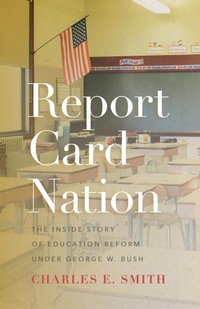
Report Card Nation
Description

In Report Card Nation, Charles E. Smith offers an insider's perspective on a pivotal moment in American education reform. In 2003, under the mandate of President George W. Bush's No Child Left Behind initiative, Smith and a team of public servants brought the National Assessment of Educational Progress (NAEP)-also known as the Nation's Report Card-to the forefront of federal education policy. Once a respected but relatively obscure measure, the NAEP quickly became the primary tool for assessing the successes and failures of public education across the country.
Smith's account details the complexities of implementing a national assessment program with far-reaching consequences under intense political scrutiny. As the Nation's Report Card became a centerpiece of federal accountability measures, its impact reverberated throughout the educational landscape. While the reforms led to budgetary windfalls and documented successes in some areas, they also exposed deep divides, particularly in urban school districts where standardized testing policies contributed to school closures and increased private school enrollments.
Drawing on his thirty-two years in Tennessee state government and six years as executive director of the National Assessment Governing Board, Smith explores both the promises and the pitfalls of the No Child Left Behind era. He provides readers with an honest, behind-the-scenes account of the shifts in American education policy during this transformative decade, including the groundwork for implementation of Common Core standards. Smith's clear-eyed, well-researched narrative provides an essential look at how national policy shaped local realities, and how one of the most controversial periods in public education still reverberates today.
More details
Other editions
Additional editions