

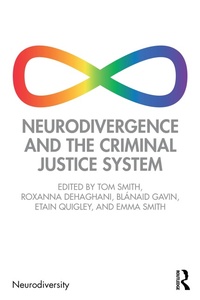
Neurodivergence and the Criminal Justice System
1st Edition
Will be published approx. on 20. July 2026
258 pages
978-1-040-64266-5 (ISBN)
Description

This book explores key topics in the area of neurodivergence and the criminal justice system (CJS) of England and Wales, encompassing a synopsis of up-to-date academic literature, key challenges in the area, and the practical implications for fair and effective justice processes.
Neurodivergent individuals are more likely to encounter the CJS as victims and accused persons, in addition to being more likely to face barriers and adverse outcomes associated with CJS involvement. It is increasingly recognised that specifically adapted approaches are required to address this at all stages of the CJS, from policing through to prisons. This book explores and critically appraises existing scholarship and practices in this context, signposting areas for further research and policy development, and highlighting best practice approaches which have demonstrated potential in England and Wales. Whilst there are books that touch on neurodivergence generally, or specific forms of neurodivergence (e.g., autism or developmental language disorder) and the CJS, this will be the first to deal specifically with neurodivergence as a broader phenomenon in justice processes, providing a novel contribution to the field. Each chapter includes recommendations and tips for practice with a focus on pragmatic application for practitioners.
This book will appeal to anyone working in the fields of neurodiversity or criminal justice, as well as those working therapeutically with offenders. It will also appeal to researchers, policy makers, and academic faculty.
Neurodivergent individuals are more likely to encounter the CJS as victims and accused persons, in addition to being more likely to face barriers and adverse outcomes associated with CJS involvement. It is increasingly recognised that specifically adapted approaches are required to address this at all stages of the CJS, from policing through to prisons. This book explores and critically appraises existing scholarship and practices in this context, signposting areas for further research and policy development, and highlighting best practice approaches which have demonstrated potential in England and Wales. Whilst there are books that touch on neurodivergence generally, or specific forms of neurodivergence (e.g., autism or developmental language disorder) and the CJS, this will be the first to deal specifically with neurodivergence as a broader phenomenon in justice processes, providing a novel contribution to the field. Each chapter includes recommendations and tips for practice with a focus on pragmatic application for practitioners.
This book will appeal to anyone working in the fields of neurodiversity or criminal justice, as well as those working therapeutically with offenders. It will also appeal to researchers, policy makers, and academic faculty.
More details
Series
Edition
1. Auflage
Language
English
Place of publication
London
United Kingdom
Publishing group
Taylor & Francis Ltd
Target group
College/higher education
Professional and scholarly
Product notice
Reflowable
Illustrations
1 Tables, black and white
File size
0,59 MB
ISBN-13
978-1-040-64266-5 (9781040642665)
Copyright in bibliographic data and cover images is held by Nielsen Book Services Limited or by the publishers or by their respective licensors: all rights reserved.
Schweitzer Classification
Other editions
Additional editions

Tom Smith | Roxanna Dehaghani | Blanaid Gavin
Neurodivergence and the Criminal Justice System
Book
approx. 07/2026
1st Edition
Routledge
€185.50
Not yet published
Tom Smith | Roxanna Dehaghani | Blanaid Gavin
Neurodivergence and the Criminal Justice System
Book
approx. 07/2026
1st Edition
Routledge
€44.00
Not yet published
Persons
Tom Smith, LLB, PhD, is Associate Professor in Law at the University of the West of England (UWE), UK, specialising in criminal justice, fair trial, and neurodivergence.
Roxanna Dehaghani, LLB, LLM, PhD, is Reader in Law at Cardiff University, UK, specialising in vulnerability in the criminal process.
Blanaid Gavin, PhD, is Associate Professor at University College Dublin, Ireland and a Consultant Child and Adolescent Psychiatrist. She is the co-founding editor of the journal Neurodiversity
Etain Quigley, PhD, is Lecturer in Law at Maynooth University, Ireland. Her research specialisms are neurodiversity and mental health. She is the co-founding editor of the journal Neurodiversity.
Emma Smith, PhD, received her Doctoriate in Communication and Culture from Toronto Metropolitan University and York University, Canada. She is an independent researcher and consultant in Toronto.
Roxanna Dehaghani, LLB, LLM, PhD, is Reader in Law at Cardiff University, UK, specialising in vulnerability in the criminal process.
Blanaid Gavin, PhD, is Associate Professor at University College Dublin, Ireland and a Consultant Child and Adolescent Psychiatrist. She is the co-founding editor of the journal Neurodiversity
Etain Quigley, PhD, is Lecturer in Law at Maynooth University, Ireland. Her research specialisms are neurodiversity and mental health. She is the co-founding editor of the journal Neurodiversity.
Emma Smith, PhD, received her Doctoriate in Communication and Culture from Toronto Metropolitan University and York University, Canada. She is an independent researcher and consultant in Toronto.
Content
Chapter 1: Neurodivergent Perspectives in Policing: Embracing Diversity for an Inclusive Criminal Justice System Victoria Bell, Adam Greenslade, and Alice Siberry
Chapter 2: Autistic and under Arrest: Challenges Faced by Autistic People
Bobbie Jay White
Chapter 3: Confabulation: Considering Neurodivergence and Confession CredibilityMichelle White
Chapter 4: Understanding the Impact of FASD in Forensic Interviews: Challenges, Implications, and Recommendations
David Junior Gilbert, Uzma Naseem, Tania Goddard, Alan D. Price, Raja A.S. Mukherjee, Penny A. Cook, and Clare S. Allely
Chapter 5: It Needs to be a More Holistic Approach: Person-Centred Care to Support Autistic People and People with Learning Disabilities in PrisonsRachael Mason, Lauren Smith, Niko Kargas, Jim Rogers, and Todd Hogue
Chapter 6: Supporting Autistic Individuals in the English Prison System
Kim Turner, Alexandra Lewis, and Mo Foster
Chapter 7: Being a Safe Harbour in the Storm: Mitigating the Double Vulnerability of Neurodivergence in Youth Justice through an Expericence-Sensitive Approach
Claire Westwood and Victoria Turley
Chapter 8: Don't Ask Him - Ask Me
David Wilkin
Chapter 9: The Challenge and Promise of Understanding the Criminal Justice Response to Neurodivergent Children and Violent Extremism
Gina Vale and Craig Webber
Chapter 10: Neurodiversity, the Criminal Justice System, and Mutual Aid Theory
Mel Jordan, Anne-Marie Day, Andrew Forrester, Jane McCarthy, James Tangen, Emma Joyes, and Eddie Chaplin
Chapter 2: Autistic and under Arrest: Challenges Faced by Autistic People
Bobbie Jay White
Chapter 3: Confabulation: Considering Neurodivergence and Confession CredibilityMichelle White
Chapter 4: Understanding the Impact of FASD in Forensic Interviews: Challenges, Implications, and Recommendations
David Junior Gilbert, Uzma Naseem, Tania Goddard, Alan D. Price, Raja A.S. Mukherjee, Penny A. Cook, and Clare S. Allely
Chapter 5: It Needs to be a More Holistic Approach: Person-Centred Care to Support Autistic People and People with Learning Disabilities in PrisonsRachael Mason, Lauren Smith, Niko Kargas, Jim Rogers, and Todd Hogue
Chapter 6: Supporting Autistic Individuals in the English Prison System
Kim Turner, Alexandra Lewis, and Mo Foster
Chapter 7: Being a Safe Harbour in the Storm: Mitigating the Double Vulnerability of Neurodivergence in Youth Justice through an Expericence-Sensitive Approach
Claire Westwood and Victoria Turley
Chapter 8: Don't Ask Him - Ask Me
David Wilkin
Chapter 9: The Challenge and Promise of Understanding the Criminal Justice Response to Neurodivergent Children and Violent Extremism
Gina Vale and Craig Webber
Chapter 10: Neurodiversity, the Criminal Justice System, and Mutual Aid Theory
Mel Jordan, Anne-Marie Day, Andrew Forrester, Jane McCarthy, James Tangen, Emma Joyes, and Eddie Chaplin
